Animatronics Bring Engineered Storytelling to Life
Animatronics Bring Engineered Storytelling to Life
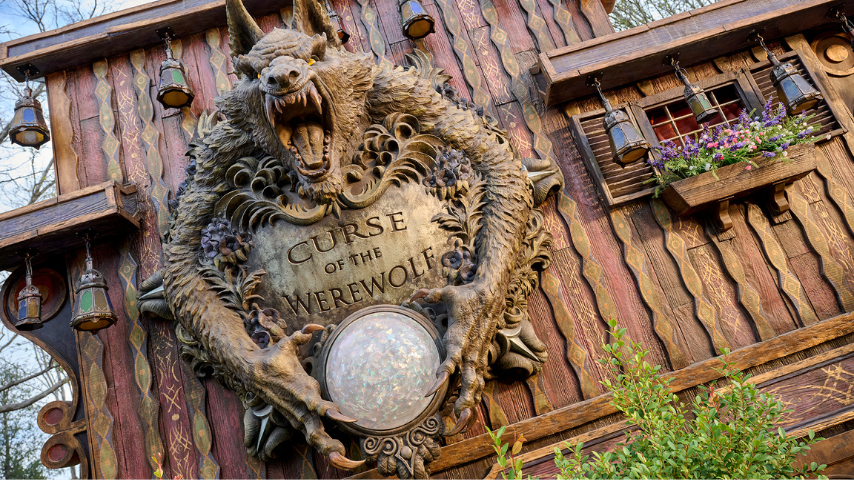
Mechanical engineers can turn creativity into a career in animatronics, a field that blends technical skill, storytelling, and themed entertainment.
Frankenstein greets a group of visitors and invites them to join him for an adventure in which he and his maker will conquer Dracula. Instead, the visitors come face-to-face with a group of enraged monsters as Dracula leads a revolt.
This encounter—which is actually a ride in the Dark Universe in Universal Epic Universe in Orlando—will make you believe that monsters are real. But behind these animated monsters is a team of engineers, artists, and designers who brought them to life through the magic of animatronics.
Animatronics is a unique field that combines technical engineering skills with creativity, and mechanical engineer Michael Wadsworth was drawn to this discipline from a young age. “Right out of college, I started working at Disney. So, themed entertainment has always been in my blood,” said Wadsworth, vice president of design and engineering at LF Studios, which builds animatronics for theme parks, museums, and other entertainment venues.
Animatronics are also used in movies. Some well-known examples are the shark in Jaws, the alien in E.T., and some of the dinosaurs in the original Jurassic Park.
Some might equate animatronics to robotics, and while it’s true that robotics are involved, Wadsworth sees some key differences. “If I make a robot, at the end of the day, I’ve completely failed at my job,” Wadsworth said. “My job is to make sure people have an emotional connection with my animatronic. An animatronic is a figure that comes to life, tells a story, and builds an emotional connection with guests.”
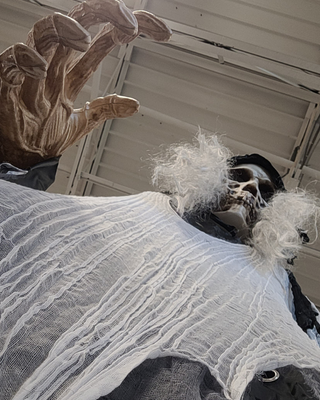 The global market for entertainment robots is projected to grow to nearly $113 billion by 2032, reports Data Bridge Market Research. Photo: Cathy Cecere
Modern animatronics started with Walt Disney World in the 1960s, but an earlier technique known as automaton was used by clockmakers as early as the 1600s. During that time, advanced mechanical clocks featured miniature animated characters, according to the website of the Stan Winston School of Character Arts, which teaches animatronics and other special effects techniques for movies.
The global market for entertainment robots is projected to grow to nearly $113 billion by 2032, reports Data Bridge Market Research. Photo: Cathy Cecere
Modern animatronics started with Walt Disney World in the 1960s, but an earlier technique known as automaton was used by clockmakers as early as the 1600s. During that time, advanced mechanical clocks featured miniature animated characters, according to the website of the Stan Winston School of Character Arts, which teaches animatronics and other special effects techniques for movies.
The website goes on to say that animatronics is the modern adaptation of automaton, and it has gotten increasingly sophisticated over the years, thanks to advances in robotics, programming, rapid prototyping, surfacing materials, and various techniques.
Wadsworth said improvements have continued since he entered the field in 2016, but “probably a little before my time was when there were some of the bigger changes. It went from pneumatic and hydraulic to electric.”
Artificial intelligence (AI) is now also starting to make an impact on animatronics. Disney recently introduced Olaf, the snowman from the movie Frozen, as a free-roaming animatronic with an AI brain, according to the technology news site CNET. This Olaf robot, which is currently appearing at Disneyland Paris, has the ability to walk through the park and interact with guests.
As animatronics continues to evolve, creators seek to develop more immersive experiences like the one described earlier from the Universal theme park, where guests actually enter the world of the characters.
The technology behind animatronics makes it a great option for mechanical engineers who are looking for a creative career, Wadsworth said. People with a mechanical engineering degree are often a natural fit for this industry because “the dynamics and kinematics portion of animatronics is very technical,” he said. For example, creating animatronic figures involves hand calculations, finite element analysis (FEA), and rigid body dynamic (RBD) simulation, which are areas of expertise for mechanical engineers.
“I think the portion that is a little more difficult, and what we work hard to find, is engineers with creative empathy,” Wadsworth said. It can be challenging for an engineer, someone who is rooted in math and physics, to communicate with creative professionals, understand the creative goals, and then work within the laws of physics to meet those goals, he said.
But a career in animatronics is ideal for a mechanical engineer who has an interest in themed entertainment—which is exactly why it is perfect for Wadsworth.
Wadsworth has had the opportunity to work on several notable characters featured at Disney and Universal Studios in Orlando.
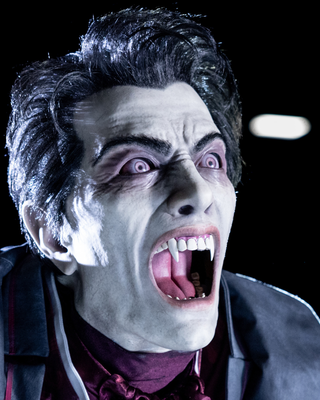 Guests of Dark Universe encounter Dracula throughout the attraction. Photo: Universal Parks USA
As a Disney intern, he was thrilled to help build animatronics for the Star Wars: Rise of the Resistance ride at Disney’s Hollywood Studios. Later, as a full-time employee, he created the animatronics for the Mickey and Minnie Runaway Railway ride at Hollywood Studios, which was “the first animatronics design I owned from start to finish, so that’s a very special attraction to me,” Wadsworth said.
Guests of Dark Universe encounter Dracula throughout the attraction. Photo: Universal Parks USA
As a Disney intern, he was thrilled to help build animatronics for the Star Wars: Rise of the Resistance ride at Disney’s Hollywood Studios. Later, as a full-time employee, he created the animatronics for the Mickey and Minnie Runaway Railway ride at Hollywood Studios, which was “the first animatronics design I owned from start to finish, so that’s a very special attraction to me,” Wadsworth said.
He also worked on figures for the Star Wars Hotel, the Gran Fiesta Tour Starring the Three Caballeros ride at Disney’s EPCOT, and a few other rides at Disney.
Later as an employee at Universal, he worked on animatronics for the Epic Universe theme park, including Harry Potter characters and monsters.
“The monsters [group] is one of the most special groupings of animatronics I’ve ever worked on. I was one of the inventors for the preshow Frankenstein that walks toward guests,” he said. “There’s a Phantom of the Opera that plays the organ, and I was involved in coming up with the creative intent behind that.”
While the projects are special and interesting to work on, they are also full of challenges, Wadsworth said.
“There’s no such thing as an easy animatronic, but they’re all fun challenges,” he said. “For example, if a figure is based [on] a cartoon world, a cartoon doesn’t always move with the laws of physics, so how do I make a large, heavy thing move fast? That takes a little extra engineering oversight.”
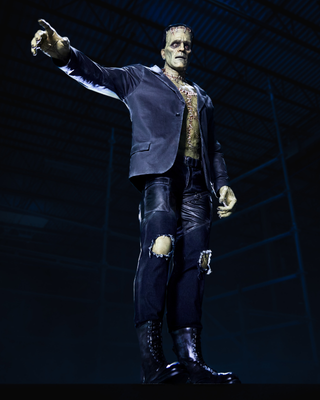 Frankenstein’s Monster walks tall at nine feet and weighs over 800 pounds. Photo: Universal Parks USA
Communication is key for mechanical engineers working in animatronics because there are so many people involved. At LF Studios, Wadsworth oversees engineering, design, and controls, and his team includes designers, animators, and engineers. So, creative and technical professionals work closely with one another.
Frankenstein’s Monster walks tall at nine feet and weighs over 800 pounds. Photo: Universal Parks USA
Communication is key for mechanical engineers working in animatronics because there are so many people involved. At LF Studios, Wadsworth oversees engineering, design, and controls, and his team includes designers, animators, and engineers. So, creative and technical professionals work closely with one another.
On the creative side, digital designers and animators sculpt the figure, modify the creative intent, and make sure it moves the way they want it to. There are also shell designers, who design the outer surface to give the figure the look they want and ensure the outer surface integrates appropriately with the inner mechanism.
On the technical side, mechanical engineers put the motors, bearings, and linkages in the right places to meet the design needs and creative goals. Mechanical engineers also do the analysis—RBDs and FEAs, Wadsworth said.
In addition, controls engineers “design the control box to make sure the correct power supplies, drives, and communication are available,” he said.
In addition to Wadsworth’s team, there are many others at LF Studios involved in animatronics, including the departments of 3D printing, mold making, costume design, painting, welding, fit-up, mechanical and electrical assembly, and programming.
For young mechanical engineers and students who are interested in animatronics, Wadsworth recommends taking a stab at creating your own animatronics using affordable tools like Arduino, Raspberry Pi, hobby servos, and 3D printing. “I think building an animatronic… is a very beneficial thing. Go design something, make mistakes, and learn from them,” he said.
 Networking is also key, he added. Join the Themed Entertainment Association, go to their events, and meet other people in the industry. That will increase your chances of getting internships and jobs, which are available at places like theme parks, museums, and entertainment vendors such as LF Studios.
While the entertainment industry is small and competitive, engineers can break into it if they practice the techniques, get to know others in the business, and persistently pursue opportunities, Wadsworth said. For engineers who want to solve complex technical problems, collaborate with artists and storytellers, and create compelling characters, animatronics offers a very rewarding career.
Claudia Hoffacker is an independent writer in Minneapolis.
This encounter—which is actually a ride in the Dark Universe in Universal Epic Universe in Orlando—will make you believe that monsters are real. But behind these animated monsters is a team of engineers, artists, and designers who brought them to life through the magic of animatronics.
Engineering creative characters
Animatronics is a unique field that combines technical engineering skills with creativity, and mechanical engineer Michael Wadsworth was drawn to this discipline from a young age. “Right out of college, I started working at Disney. So, themed entertainment has always been in my blood,” said Wadsworth, vice president of design and engineering at LF Studios, which builds animatronics for theme parks, museums, and other entertainment venues. Animatronics are also used in movies. Some well-known examples are the shark in Jaws, the alien in E.T., and some of the dinosaurs in the original Jurassic Park.
Some might equate animatronics to robotics, and while it’s true that robotics are involved, Wadsworth sees some key differences. “If I make a robot, at the end of the day, I’ve completely failed at my job,” Wadsworth said. “My job is to make sure people have an emotional connection with my animatronic. An animatronic is a figure that comes to life, tells a story, and builds an emotional connection with guests.”
History of animatronics
The global market for entertainment robots is projected to grow to nearly $113 billion by 2032, reports Data Bridge Market Research. Photo: Cathy Cecere
The website goes on to say that animatronics is the modern adaptation of automaton, and it has gotten increasingly sophisticated over the years, thanks to advances in robotics, programming, rapid prototyping, surfacing materials, and various techniques.
Wadsworth said improvements have continued since he entered the field in 2016, but “probably a little before my time was when there were some of the bigger changes. It went from pneumatic and hydraulic to electric.”
Artificial intelligence (AI) is now also starting to make an impact on animatronics. Disney recently introduced Olaf, the snowman from the movie Frozen, as a free-roaming animatronic with an AI brain, according to the technology news site CNET. This Olaf robot, which is currently appearing at Disneyland Paris, has the ability to walk through the park and interact with guests.
As animatronics continues to evolve, creators seek to develop more immersive experiences like the one described earlier from the Universal theme park, where guests actually enter the world of the characters.
Career path for mechanical engineers
The technology behind animatronics makes it a great option for mechanical engineers who are looking for a creative career, Wadsworth said. People with a mechanical engineering degree are often a natural fit for this industry because “the dynamics and kinematics portion of animatronics is very technical,” he said. For example, creating animatronic figures involves hand calculations, finite element analysis (FEA), and rigid body dynamic (RBD) simulation, which are areas of expertise for mechanical engineers.“I think the portion that is a little more difficult, and what we work hard to find, is engineers with creative empathy,” Wadsworth said. It can be challenging for an engineer, someone who is rooted in math and physics, to communicate with creative professionals, understand the creative goals, and then work within the laws of physics to meet those goals, he said.
But a career in animatronics is ideal for a mechanical engineer who has an interest in themed entertainment—which is exactly why it is perfect for Wadsworth.
It’s full of fun challenges
Wadsworth has had the opportunity to work on several notable characters featured at Disney and Universal Studios in Orlando.
Guests of Dark Universe encounter Dracula throughout the attraction. Photo: Universal Parks USA
He also worked on figures for the Star Wars Hotel, the Gran Fiesta Tour Starring the Three Caballeros ride at Disney’s EPCOT, and a few other rides at Disney.
Later as an employee at Universal, he worked on animatronics for the Epic Universe theme park, including Harry Potter characters and monsters.
“The monsters [group] is one of the most special groupings of animatronics I’ve ever worked on. I was one of the inventors for the preshow Frankenstein that walks toward guests,” he said. “There’s a Phantom of the Opera that plays the organ, and I was involved in coming up with the creative intent behind that.”
While the projects are special and interesting to work on, they are also full of challenges, Wadsworth said.
“There’s no such thing as an easy animatronic, but they’re all fun challenges,” he said. “For example, if a figure is based [on] a cartoon world, a cartoon doesn’t always move with the laws of physics, so how do I make a large, heavy thing move fast? That takes a little extra engineering oversight.”
It’s a team sport
Frankenstein’s Monster walks tall at nine feet and weighs over 800 pounds. Photo: Universal Parks USA
On the creative side, digital designers and animators sculpt the figure, modify the creative intent, and make sure it moves the way they want it to. There are also shell designers, who design the outer surface to give the figure the look they want and ensure the outer surface integrates appropriately with the inner mechanism.
On the technical side, mechanical engineers put the motors, bearings, and linkages in the right places to meet the design needs and creative goals. Mechanical engineers also do the analysis—RBDs and FEAs, Wadsworth said.
In addition, controls engineers “design the control box to make sure the correct power supplies, drives, and communication are available,” he said.
In addition to Wadsworth’s team, there are many others at LF Studios involved in animatronics, including the departments of 3D printing, mold making, costume design, painting, welding, fit-up, mechanical and electrical assembly, and programming.
Advice for young engineers
For young mechanical engineers and students who are interested in animatronics, Wadsworth recommends taking a stab at creating your own animatronics using affordable tools like Arduino, Raspberry Pi, hobby servos, and 3D printing. “I think building an animatronic… is a very beneficial thing. Go design something, make mistakes, and learn from them,” he said.
The Importance of Mechatronics
Mechatronics is behind the development of a wide range of products and machines—from household items as simple as a diaper to innovative technology as sophisticated as electric vehicles.
While the entertainment industry is small and competitive, engineers can break into it if they practice the techniques, get to know others in the business, and persistently pursue opportunities, Wadsworth said. For engineers who want to solve complex technical problems, collaborate with artists and storytellers, and create compelling characters, animatronics offers a very rewarding career.
Claudia Hoffacker is an independent writer in Minneapolis.


The use of robotics in industrial settings continues to accelerate at a rapid pace. Explore this collection to learn more about automation, cobots, AI-enabled robots, customized robots, and drones.