Boilers and Fired Pressure Equipment Inspection, Repairs, and Alterations Industry Best Practices (Virtual Classroom)
Course Type:
 Virtual Classroom
Course Number:
 VCPD770
Credits:
Language:
Gain knowledge of boiler inspection and methods for repairs and alterations in compliance with ASME BPV, NBIC and API regulations.
{{activeProduct.Title}}
Digital products are restricted to one per purchase.
{{activeProduct.CurrencySymbol}}{{ formatPrice(activeProduct.ListPrice) }} was {{activeProduct.CurrencySymbol}}{{ formatPrice(originalPrice) }}
{{activeProduct.CurrencySymbol}}{{ formatPrice(activeProduct.ListPriceSale) }} was {{activeProduct.CurrencySymbol}}{{ formatPrice(activeProduct.ListPrice) }}
{{activeProduct.CurrencySymbol}}{{ formatPrice(activeProduct.ListPrice) }} was {{activeProduct.CurrencySymbol}}{{ formatPrice(originalPrice) }}
{{activeProduct.CurrencySymbol}}{{ formatPrice(activeProduct.ListPriceSale) }} was {{activeProduct.CurrencySymbol}}{{ formatPrice(originalPrice) }}
{{activeProduct.CurrencySymbol}}{{ formatPrice(activeProduct.MemberPrice) }} was {{activeProduct.CurrencySymbol}}{{ formatPrice(originalPrice) }}
{{activeProduct.CurrencySymbol}}{{ formatPrice(activeProduct.MemberPriceSale) }} was {{activeProduct.CurrencySymbol}}{{ formatPrice(originalPrice) }}
*Excluding Lite Members
Final invoices will include applicable sales and use tax.
Print or Share
Product Options
Schedule
The course will run from 9:30 AM to 1:30 PM and 2:00PM to 6:00 PM Eastern each day.
| Quantity | Item |
|---|---|
| {{ package.Quantity }} | {{ package.Title }} |
Are you focused on in-service boilers and fire pressure equipment, and need to understand requirements of the codes and standards, jurisdictional guidelines, and recommended best practices better? Leveraging real-world industry expertise, this course provides a comprehensive overview of the cross-industry organizations’ requirements, classification of the equipment, and provides insight into authorized inspection, repairs, and quality control of boilers and fired pressure equipment.
For in-service boiler or fired pressure equipment, ongoing inspection, repairs, and alterations are critical for safe and reliable continued operation. Authorized inspection is not only required by most jurisdictions, but it determines operational integrity and reliability of boiler and pressure equipment. The purpose of inspection is to determine operational integrity, ensure reliability, and improve performance of boiler plants and fired pressure vessels. Such equipment is required to be inspected at a regular interval by an inspector who is qualified by a jurisdiction or by the plant owner. The inspection is performed in accordance with the jurisdictional requirements, inspection standards or national codes and ensures that boilers are maintained and optimized for peak performance in conjunction with the original code of construction.
Leveraging authentic, real world examples, attendees will perform calculations for inspection, repair, and alteration scenarios as well as practice writing reports for inspection, examination, and testing.
The techniques and requirements of boiler inspection are covered by the following Codes and Standards:
- NB23 – 2023 National Board Inspection Code
- ASME POM 101 – 2013 (R2019) Performance – Related Outage Inspection
- ASME POM 102 – 2014 (R2019) Operating Walkdowns of Power Plants
- ASME Section VI – 2023 Recommended Rules for the Care and Operation of Heating Boilers
- ASME Section VII – 2023 Recommended Guidelines for the Care of Power Boilers
- API RP 573 – 2013 Inspection of Fired Boilers and Heaters
By participating in this course, you will learn how to successfully:
- Identify the appropriate codes and standards for inspection, repair, and alteration based on the types of boilers and fired pressure equipment.
- Identify degradation and failure modes of pressure equipment.
- Determine methodologies for repairs to pressure equipment.
- Apply jurisdictional requirements for inspection, repair, and alteration of boilers and fired pressure equipment using the latest technology.
- Explain how to conduct inspection and testing of pressure relief values and causes of failures, and deterioration mechanism.
- Identify required components of a Process Safety Program and why Mechanical Integrity is important.
- Develop written reports based on the results of inspection, examination, and testing.
Topics include:
- Boiler and Fired Pressure Equipment Classification
- Quality Control Programs
- Installation
- Inspection
- Repairs and Alterations
- Overpressure Protection
- Process Safety Management (PSM)
Who Should Attend?
This course has been designed for the personnel responsible for inspection, repair, and alteration of all types of boilers and fired pressure equipment, including, owners, mechanical engineers, inspectors, repair personnel consultants, plant supervisors and managers, as well as refinery inspectors, reliability engineers and maintenance engineers.
Course Materials (included in purchase of course)
Digital course notes via ASME’s Learning Platform
Pre-requisite
If taking this course separately from Boilers and Fired Pressure Equipment Operation and Maintenance (VCPD769), there are pre-requisite modules that should be completed prior to the first day of class to ensure that you are familiar with the terminology and Code and Standards that will be used during the presentation of this course. The modules were recorded for your review, as well as in downloadable files on the learning platform. For those taking both courses (i.e., the combo), you do not need to review the recordings before class starts.
This ASME Virtual Classroom course is held live with an instructor on our online learning platform. Certificate of completion will be issued to registrants who successfully attend and complete the course.
Module 1: Introduction
- Describe the relationship between safety authorities, jurisdiction and codes and standards for boilers and fired pressure equipment
- Distinguish the differences between a code and standard, guidelines and recommended practice in the operation and maintenance of boiler and fired pressure equipment
- Understand the importance of how ASME BPV and NBIC came into existence
- Summarize the purpose of the ASME B&PV, NBIC, API and OSHA for boilers and fired pressure equipment
- Explain the application of the different codes and standards
Module 2: Boiler and Fired Pressure Equipment Classification
- Explain the design, construction and materials of boilers (fired and unfired) and fired pressure vessels
- Summarize the construction standards and how each defines its scope
- Identify boiling principles
- Illustrate the different boiler and fired heater and pressure vessel designs
Module 3 – Process Safety Management (PSM) – Mechanical Integrity
- Identify the needs for Process Safety Management
- Understand how to apply PSM for Mechanical Integrity
- Identify the fundamentals of a RAM program and they benefit a mechanical integrity program
Module 4 – Quality Management Systems
- Identify the need for Quality Management Systems
- Explain the different requirements of a Quality Control Program
- Discuss documentation requirements for QC programs
- Differentiate between Quality Management, Quality Control, and Quality Assurance
Module 5 – Installations
- Identify installation requirements by recommended practices and standards
- Identify required actions to ensure the installation is compliant and “ready” for service
- Recognize the importance of installation requirements and why they must be met
- Elaborate on specific equipment installation requirements that apply to the industry
Module 6 – Readiness Review (Inspections)
- Distinguish between the different inspection types
- Identify the different types of inspection activities
- Identify required actions to ensure the installation is Code and Contractually compliant and “ready” for continued service
- Discuss the necessary inspection requirements for auxiliary equipment
- Identify the importance of inspection reporting
Module 7 – Repairs and Alterations
- Explain the difference between a repair and an alteration
- Review different degradation mechanisms and failure modes for In-Service Equipment
- Identify industry best practices for repairs based on damage and degradation mechanisms
- Identify the various repair methods based on industry standards and guidelines
- Apply reporting requirements to repairs
- Identify alteration requirements based on industry guidelines
Module 8 – Over Pressure Protection
- Identify over pressure code requirements
- Recognize marking and certification requirements for pressure relief valves
- Identify varying installation requirements
- Explain operational and testing requirements
- Understand repair and alteration quality programs
Module 9: Workshop for Calculations and Reporting
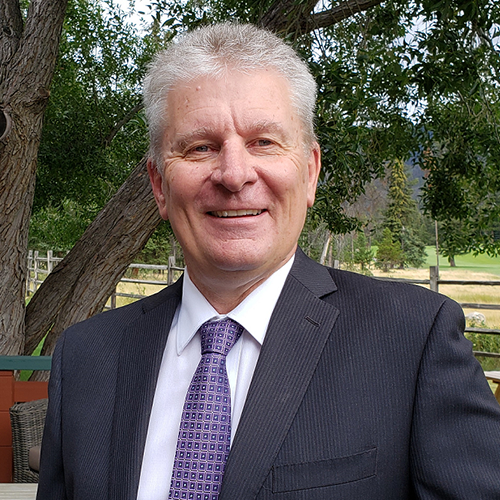
Daniel Tompkins
Daniel E. Tompkins has over 40 years’ experience in Boiler and Pressure Vessel design, construction, commissioning, operation, maintenance, and inspection.
More Information

Virtual Classroom
Live course with an instructor and peers held in an online learning environment with digital enhancements and online materials.Please review our L&D Refund and Cancellation Policy before you buy.
If you have any additional questions please review our FAQs, or Contact Us.
Please review ASME's policies applicable to Learning & Development courses:
Sorry, we only have available spots for this course. Would you like to add those to your cart?