ASME/API Boilers and Fired Pressure Equipment Operation and Maintenance (Virtual Classroom)
Course Type:
 Virtual Classroom
Course Number:
 VCPD769
Credits:
Language:
Gain knowledge of boiler operation and maintenance per the requirements of ASME BPVC Sections I, III, IV, VI, VII, and VIII.
{{activeProduct.Title}}
Digital products are restricted to one per purchase.
{{activeProduct.CurrencySymbol}}{{ formatPrice(activeProduct.ListPrice) }} was {{activeProduct.CurrencySymbol}}{{ formatPrice(originalPrice) }}
{{activeProduct.CurrencySymbol}}{{ formatPrice(activeProduct.ListPriceSale) }} was {{activeProduct.CurrencySymbol}}{{ formatPrice(activeProduct.ListPrice) }}
{{activeProduct.CurrencySymbol}}{{ formatPrice(activeProduct.ListPrice) }} was {{activeProduct.CurrencySymbol}}{{ formatPrice(originalPrice) }}
{{activeProduct.CurrencySymbol}}{{ formatPrice(activeProduct.ListPriceSale) }} was {{activeProduct.CurrencySymbol}}{{ formatPrice(originalPrice) }}
{{activeProduct.CurrencySymbol}}{{ formatPrice(activeProduct.MemberPrice) }} was {{activeProduct.CurrencySymbol}}{{ formatPrice(originalPrice) }}
{{activeProduct.CurrencySymbol}}{{ formatPrice(activeProduct.MemberPriceSale) }} was {{activeProduct.CurrencySymbol}}{{ formatPrice(originalPrice) }}
*Excluding Lite Members
Final invoices will include applicable sales and use tax.
Print or Share
Product Options
Schedule
The course commences at 9:30 AM and ends at 6:00 PM Eastern each day.
| Quantity | Item |
|---|---|
| {{ package.Quantity }} | {{ package.Title }} |
Boiler and Fired Pressure Equipment operation is complicated, especially for modern equipment that may be fully automatic. Safety, efficiency, and constant generation of steam, hot water, or other products, such as oil and gas or LPG fluids depend on the smooth operation of such equipment. Moreover, some jurisdictions have regulations on boiler operation and boiler operator personnel, as well as fired pressure equipment oversight. Maintenance on this equipment can increase efficiency, maximize cost savings, ensure safety, and prevent unscheduled shutdowns. A maintenance program should be established based on the type of boiler or fired pressure equipment, history, and the age of the systems being operated and maintained.
This course features a deep investigation of the care, operation, and maintenance of Power and Heating Boilers according to the applicable codes and standards. Fired and unfired boilers, as well as many applications of fired pressure equipment are discussed. Topics are enhanced by ensuring the boiler and fired pressure equipment Manufacturer s recommendations are also considered.
This broad scope covers ASME Boiler & Pressure Vessel Code, Sections I, III, IV, VI, VII, VIII, XIII, and covers API recommendations to reflect the current changes to industry practices. Case studies and assignments are used to reinforce the participants' knowledge and application of the codes and standards. Finally, the course addresses how safety requirement measures can increase efficiency and prevent unscheduled shutdowns in refineries and other industrial applications.
By participating in this course, you will learn how to successfully:
- Explain the different basis for applying ASME BPV Code and related Codes & Standards.
- Identify the fundamentals of boiler and fired pressure equipment operations.
- Demonstrate the rules for safe operation of boilers and fired pressure equipment.
- Describe the fundamentals of boilers and fired equipment maintenance and repairs.
- Apply boiler and fired pressure equipment calculations to ensure safety and maintenance.
- Describe the fundamentals of boilers and fired equipment maintenance and repairs.
Topics include:
- Boiler and Fired Pressure Equipment Classification
- Auxiliary Systems
- Combustion Systems
- Control and Safety Equipment
- Water Treatment
- Design Fundamentals
- Calculation Workshop
- Boiler and Fired Pressure Vessel Operations
- Boiler and Fired Pressure Vessel Maintenance
- Causes of Failures
Who Should Attend?
This course is designed for the personnel responsible for operation and maintenance of all types of boilers and fired pressure vessels. The following personnel should attend the course: Boiler and Fired Pressure Equipment engineers and operators; Mechanical Engineers, Maintenance Engineers; Plant Engineers, Process Engineers; Boiler and Fired Pressure Equipment consultants, contractors; and Plant supervisors, and managers.
Course Materials (included in purchase of course)
Digital course notes via ASME’s Learning Platform
This ASME Virtual Classroom course is held live with an instructor on our online learning platform. Certificate of completion will be issued to registrants who successfully attend and complete the course.
Can't make one of the scheduled sessions? This course is also available On Demand.
Module 1: Introduction
- Describe the relationship between safety authorities, jurisdiction and codes and standards for boilers and fired pressure equipment
- Distinguish the differences between a code and standard, guidelines and recommended practice in the operation and maintenance of boiler and fired pressure equipment
- Understand the importance of how ASME BPV and NBIC came into existence
- Summarize the purpose of the ASME B&PV, NBIC, API and OSHA for boilers and fired pressure equipment
- Explain the application of the different codes and standards
Module 2: Boiler and Fired Pressure Equipment Classification
- Explain the design, construction and materials of boilers (fired and unfired) and fired pressure vessels
- Summarize the construction standards and how each defines its scope
- Identify boiling principles
- Illustrate the different boiler and fired heater and pressure vessel designs
Module 3: Auxiliary Systems
- Systems, stream & vapor systems, feed water & liquid systems) in terms of descriptions, types and functionalities of the systems
- Differentiate between appurtenances and accessories and the importance of these items
- Provide examples of where appurtenances and accessories are located in the systems
- Distinguish between different types of fired pressure equipment, heaters and/or systems
- Demonstrate types of boiler accessories and functionalities based upon each type
Module 4: Combustion Systems
- Distinguish between complete combustion, incomplete combustion and perfect combustion
- Provide information about the combustion process.
- Recognize the combustion process and how the chemical combines and reacts towards heat, oxygen, and fuel.
- Distinguish between the philosophy of the different burners and environmental equipment
- Identify different fuel types and fuel handling equipment
Module 5: Control and Safety Equipment
- Evaluate the various types of boiler control loops and the necessary functions that improve performance and safety
- Discuss situations or scenarios where basic boiler safety controls are applied
- Identify the time frames and steps to perform periodic testing of boiler and fired pressure equipment
- Provide examples of how the various boiler control applications operate
Module 6: Water Treatment
- Discuss the significance of water treatment for safety and operations of boiler and fired pressure equipment
- List the criteria to determine the type of water treatment factors
- Explain the problems that arise from the water treatment process
- Provide examples of tests that analyze the condition of boiler water
- Apply industry guidelines and recommendation for water quality according to the types of boilers.
Module 7: Operations
- Differences in Design Fundamentals of Section I, IV, VIII Fired/Unfired Pressure Equipment
- Maximum Allowable Working Pressure (MAWP) Calculations
- Materials
- Fabrication Methods
- Heat Treatment
- Inspection/Examination
- Boiler Piping (BEP, NBEP)
- Over Pressure Protection (Steaming/Heating Capacities)
- Hydrostatic Testing
- Certification/Stamping
Module 7A: Workshop
Module 8: Maintenance
- Identify key competency skills of operating personnel
- List the duties of operator and engineer to be able to prevent a plant shutdown or even explosion
- Explain how Standard Operating Procedures (SOP’s) are developed and implemented
- Provide information of the importance of monitoring and checklists
- Recognize how to troubleshoot various operations problems and solutions for them
Module 9: Causes of Failures
- Explain the importance of maintenance for boiler and fired pressure equipment
- List the maintenance activities for both on-line and off-line operations
- Elaborate on the specific methods for regular maintenance
- Assess the importance of previous failures for safety of boilers and fired pressure equipment
Module 10 – Causes of Boiler Failures
- Provide examples of boiler failure incidents and their impacts
- Explain how to identify various types of boiler failures
- Evaluate the causes of boiler failures and preventative measures in the maintenance, operations and safety of boiler and fired pressure equipment
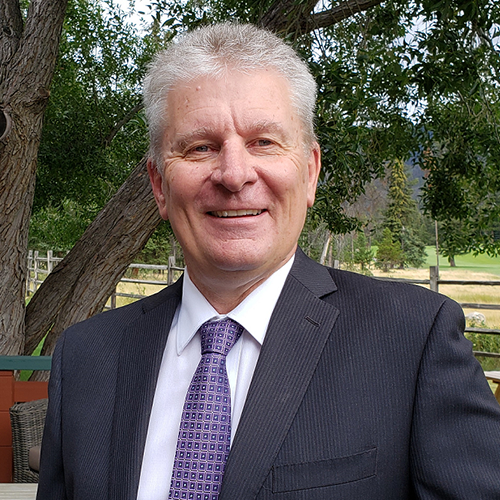
Daniel Tompkins
Daniel E. Tompkins has over 40 years’ experience in Boiler and Pressure Vessel design, construction, commissioning, operation, maintenance, and inspection.
More Information

Virtual Classroom
Live course with an instructor and peers held in an online learning environment with digital enhancements and online materials.Please review our L&D Refund and Cancellation Policy before you buy.
If you have any additional questions please review our FAQs, or Contact Us.
Please review ASME's policies applicable to Learning & Development courses:
Sorry, we only have available spots for this course. Would you like to add those to your cart?