Meeting the Demand for Mechanical Engineers: Looking Forward with a Local Focus
Meeting the Demand for Mechanical Engineers: Looking Forward with a Local Focus
The mechanical engineering profession is experiencing a moment of unprecedented change and growth. Today, more than 293,000 mechanical engineers are working across the United States, according to the U.S. Bureau of Labor Statistics. Over the next decade, the field is expected to grow by 26,500 new jobs—an increase of 9%. Compare this to the predicted employment increase across all occupations, which is just 3%.
There is a reason why mechanical engineers are so sought after: our field is the backbone of innovation across industries. Mechanical engineers promote advances in design and production including automation, 3D printing, robotics, artificial intelligence, and machine learning.
The manufacturing industry also plays a key role in the growing demand for mechanical engineers. Both light and heavy manufacturing is coming back to the U.S. In addition, manufacturing is projected to remain the largest employer of mechanical engineers, accounting for roughly 45% of the profession.
A Transforming Industry Requires Skills for the Future
The pace of technological evolution demands that mechanical engineers adopt new tools and competencies to stay ahead. Trends shaping the field include:
- AI/ML‑Integrated Design: Computer‑aided engineering systems are rapidly incorporating artificial intelligence and machine learning to increase efficiency and innovation.
- Advanced Digital Tools: CAD and design tools appear in 75% of engineering job postings, underscoring their critical role in employability.
- Precision‑Driven Design Skills: As product development becomes more interconnected, fluency in Geometric Dimensioning and Tolerancing (GD&T) remains essential for ensuring clear communication, quality, and consistency across design and manufacturing teams. ASME provides a wide selection of GD&T courses.
- New Areas of Expertise: From robotics and automation to digital manufacturing, employers are seeking mechanical engineers who can navigate a hybrid landscape of physical and digital systems.
Engineers entering the workforce must prioritize adaptability and digital proficiency to remain competitive.
Local Hiring and Community Partnerships: A Growing Solution
As the demand for engineers grows, so does the challenge of addressing workforce shortages and talent gaps.
One of the most promising strategies for addressing workforce shortages is local talent development. In an increasingly complex job market employers are competing for talent on a global scale, but creating opportunities for local students to learn future-ready skills and secure employment within their communities is also essential to meeting employers’ hiring needs. In a recent ASME Insights podcast episode, ASME President Lester Su interviews renowned technology strategist Chandrakant Patel about how local hiring and community investment can help build a skilled workforce. Listen to the full conversation here:
This vision aligns directly with ASME’s Community College Engineering Pathways (CCEP) Program, launched in 2021 to increase access to engineering and technical careers for students from different backgrounds. By the 2027–2028 academic year, ASME expects to engage 80+ community colleges and more than 2,200 students across the United States in its multi-channel program that attracts, develops and accelerates careers in skilled technical roles.
CCEP student Michelle Rivera recently shared with ASME, “I feel more confident now. Before I only had one project and some certifications that I gained in high school. I feel now that I have something that sets me apart and can continue to grow. It makes me feel more relaxed about getting an internship and job.”
Stories like Michelle’s represent the future of the mechanical engineering profession—one built on opportunity, inclusion, and technical excellence.
Looking Ahead
The state of the mechanical engineering industry is strong, with rising demand and unprecedented technological transformation. Meeting this moment will require continuous learning, investment in local talent, and a commitment to preparing the next generation of engineers for the opportunities ahead.
ASME is proud to lead this charge, supporting engineers across disciplines and career stages as they build the future.
With regards,

Tom Costabile, P. E., FASME
ASME Executive Director/CEO

P.E., FASME Executive Director/CEO
Related Content


Sep 16, 2026
Mechanical Engineers Find Purpose in Public Service


Mechanical engineers in public service shape policy, strengthen infrastructure, improve public safety, and solve complex challenges at every government level.
Sep 15, 2026
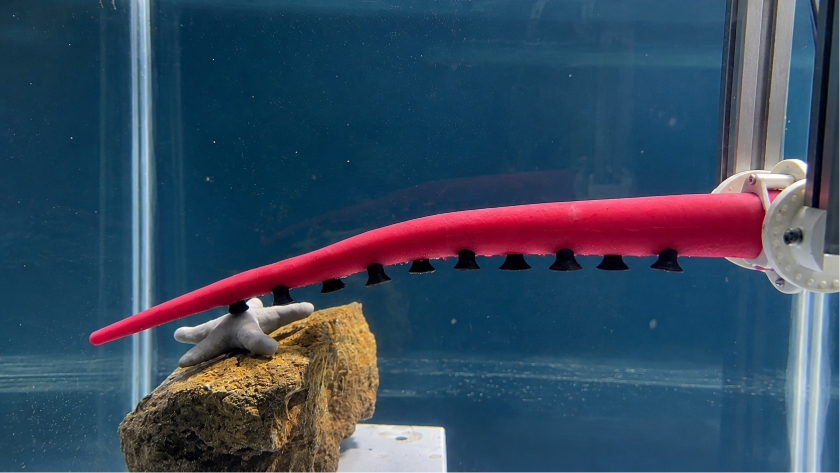
Octopus-Inspired Robot Gets a Better Grip


A new soft robotic arm shows how distributed sensing and control could help robots move and grasp more like living organisms.

Sep 15, 2026
Animatronics Bring Engineered Storytelling to Life
Mechanical engineers can turn creativity into a career in animatronics, a field that blends technical skill, storytelling, and themed entertainment.

Sep 11, 2026
Three Ventures from India Earn Places in Annual ASME ISHOW Cohort with Innovative Solutions to Address Agricultural, Water, and Healthcare Challenges