A Contaminated Site, Reclaimed for Energy
A Contaminated Site, Reclaimed for Energy
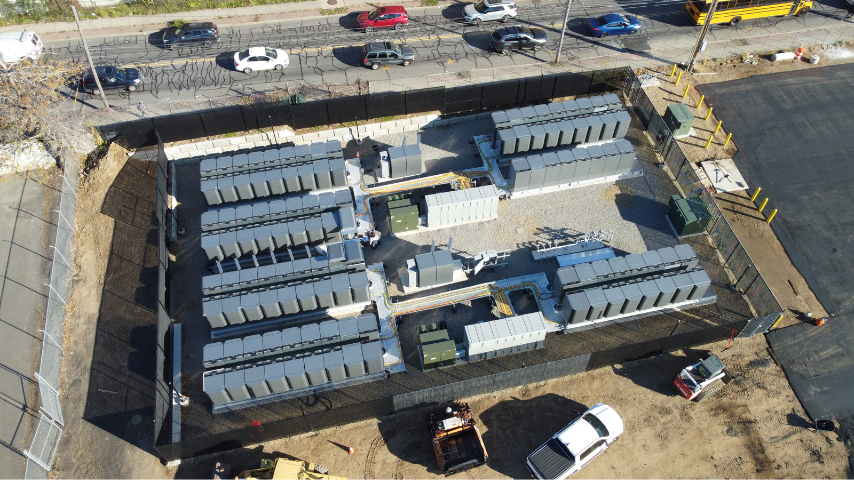
Fuel cell power plants are on the rise. A fresh one in Connecticut has revitalized a neighborhood.
The Bunnell Block of Connecticut’s Seaview Industrial Park was once written off as a wasteland. Plastic manufacturing and other industries had left the soil contaminated with lead and hydrocarbons, and it seemed as if the lot would stay that way for decades.
But now it holds something clean and quintessentially modern: a fuel cell power plant—one of a small handful in the country.
Dispatch Energy, with the help of project manager Advanced Energy Efficiencies and developer Venture Funding Specialists, changed the blighted land to a clean rectangle of refrigerator-sized units. They now pump electricity onto the grid and will soon power the homes of roughly 3,400 households.
“It was just a horrible wasteland,” said Ben Samways, Dispatch Energy’s senior director of origination. “No fences, stray dogs, nasty abandoned buildings—so the first part of the project was basically to do an EPA brownfields restoration.” Thanks, in part, to the help of a grant from the Bridgeport Economic Development Corporation, they were able to do that, turning the block into a “clean patch of dirt that people and the community can actually use and be prepared to invest in,” he said.
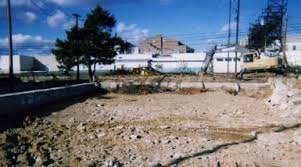 The Seaview Industrial Park during construction. Image: United States Environmental Protection Agency (EPA)
The investment made sense for Bridgeport, Dispatch Energy, and everyone else involved because of the skyrocketing cost of power, thanks mostly to the rise of data centers. “It's a crazy time on the grid right now, with increased demand that we haven't seen in the U.S. for a decade,” Samways said. “What’s happened in the last two or three years, as the price of power has gone up and the demand for power has increased, is that it’s justified more investment in not just the core tech of the cell, but making it operate outside the lab at maximum efficiency, all the time, with very low degradation.”
The Seaview Industrial Park during construction. Image: United States Environmental Protection Agency (EPA)
The investment made sense for Bridgeport, Dispatch Energy, and everyone else involved because of the skyrocketing cost of power, thanks mostly to the rise of data centers. “It's a crazy time on the grid right now, with increased demand that we haven't seen in the U.S. for a decade,” Samways said. “What’s happened in the last two or three years, as the price of power has gone up and the demand for power has increased, is that it’s justified more investment in not just the core tech of the cell, but making it operate outside the lab at maximum efficiency, all the time, with very low degradation.”
The cleanup and the subsequent power plant were made possible by Connecticut’s Shared Clean Energy Facility (or SCEF) program, which requires utilities to provide a fixed, fair rate to “edge-of-grid” energy providers. Dispatch Energy made a bid and secured a 20-year agreement from the utility, United Illuminating. “That allows us to take those future cash flows, what we earn from the power—less fuel, maintenance, and stuff like that—and then use that to pay back the investment we make in the fuel cell project,” Samways said.
You Might Also Like: Redefining Fuel Cell Durability
That part is crucial because fuel cells are not cheap. In fact, Dispatch Energy opted for one of the more expensive types of fuel cells, the solid oxide fuel cell. They’re more efficient and cleaner than less expensive options, and therefore are more likely to help pay for themselves over those 20 years and beyond. In other settings, however, less expensive fuel cells could make more sense, particularly where waste heat can be used.
Dispatch Energy is a “distributed energy solution provider,” so they handle the permitting and financing, and contract out the work to engineers and builders. That has allowed them to work with locals who will benefit from both the work and the outcome.
“We contracted a local contractor for both the general construction and the electrical works, WC McBride Electrical Contractors,” Samways said. “Willie McBride actually grew up in the area, including a number of years in the housing project just a few blocks away. He previously installed solar systems, but was skeptical of fuel cells—but now, having installed them, he is impressed with how little space they take up and how they produce power all the time.”
Discover the Benefits of ASME Membership
The plant is already putting electrons on the grid (though the ribbon cutting will come later, “when it’s a little bit warmer,” Samways said) and will eventually be outputting four megawatts. The entire plant is small—roughly a quarter of an acre—sleek, odor-free, and quiet. “It’s got no NOx and no SOx because there’s no combustion, which helps from an air permitting perspective as well,” he added.
Despite the project’s success, replication remains limited—it all depends on the cost of the substation upgrade. Few states offer a program comparable to SCEF, and long-term revenue certainty is essential to finance projects like this. “When you show up at a community, there needs to be somebody who’s going to be around for 20 years to pay you for the power,” Samways said. “We need that long-term, 20-year deal to be able to pay back the asset.”
Michael Abrams is a writer in Westfield, N.J.
But now it holds something clean and quintessentially modern: a fuel cell power plant—one of a small handful in the country.
Dispatch Energy, with the help of project manager Advanced Energy Efficiencies and developer Venture Funding Specialists, changed the blighted land to a clean rectangle of refrigerator-sized units. They now pump electricity onto the grid and will soon power the homes of roughly 3,400 households.
“It was just a horrible wasteland,” said Ben Samways, Dispatch Energy’s senior director of origination. “No fences, stray dogs, nasty abandoned buildings—so the first part of the project was basically to do an EPA brownfields restoration.” Thanks, in part, to the help of a grant from the Bridgeport Economic Development Corporation, they were able to do that, turning the block into a “clean patch of dirt that people and the community can actually use and be prepared to invest in,” he said.
The Seaview Industrial Park during construction. Image: United States Environmental Protection Agency (EPA)
The cleanup and the subsequent power plant were made possible by Connecticut’s Shared Clean Energy Facility (or SCEF) program, which requires utilities to provide a fixed, fair rate to “edge-of-grid” energy providers. Dispatch Energy made a bid and secured a 20-year agreement from the utility, United Illuminating. “That allows us to take those future cash flows, what we earn from the power—less fuel, maintenance, and stuff like that—and then use that to pay back the investment we make in the fuel cell project,” Samways said.
You Might Also Like: Redefining Fuel Cell Durability
That part is crucial because fuel cells are not cheap. In fact, Dispatch Energy opted for one of the more expensive types of fuel cells, the solid oxide fuel cell. They’re more efficient and cleaner than less expensive options, and therefore are more likely to help pay for themselves over those 20 years and beyond. In other settings, however, less expensive fuel cells could make more sense, particularly where waste heat can be used.
Dispatch Energy is a “distributed energy solution provider,” so they handle the permitting and financing, and contract out the work to engineers and builders. That has allowed them to work with locals who will benefit from both the work and the outcome.
“We contracted a local contractor for both the general construction and the electrical works, WC McBride Electrical Contractors,” Samways said. “Willie McBride actually grew up in the area, including a number of years in the housing project just a few blocks away. He previously installed solar systems, but was skeptical of fuel cells—but now, having installed them, he is impressed with how little space they take up and how they produce power all the time.”
Discover the Benefits of ASME Membership
The plant is already putting electrons on the grid (though the ribbon cutting will come later, “when it’s a little bit warmer,” Samways said) and will eventually be outputting four megawatts. The entire plant is small—roughly a quarter of an acre—sleek, odor-free, and quiet. “It’s got no NOx and no SOx because there’s no combustion, which helps from an air permitting perspective as well,” he added.
Despite the project’s success, replication remains limited—it all depends on the cost of the substation upgrade. Few states offer a program comparable to SCEF, and long-term revenue certainty is essential to finance projects like this. “When you show up at a community, there needs to be somebody who’s going to be around for 20 years to pay you for the power,” Samways said. “We need that long-term, 20-year deal to be able to pay back the asset.”
Michael Abrams is a writer in Westfield, N.J.
Fuel cell power plants are on the rise. A fresh one in Connecticut has revitalized a neighborhood.

Freelance writer based in New Jersey
Related Content


Apr 23, 2026
Podcast: Clean Tech and the Reboot of American Manufacturing


Tesla alum Milo Werner breaks down what’s driving clean tech investments and how a standard process for commercializing these technologies could accelerate re-industrialization.


Apr 23, 2026
A PFAS-Free Membrane for Cleaner Hydrogen


Ultra-thin silica film could replace industry-standard materials that rely on “forever chemicals.”

Apr 15, 2026
Blog: ASME STLLC’s Role in Shaping Tomorrow
A look at two projects at ASME STLLC, whose mission is to provide new standards-related products and services to advance the application of emerging and newly commercialized science and technology.

Mar 3, 2026
Bubbles to Gently Scrub Algae Bioreactors

Electrochemically generated bubbles are the key to a new nontoxic defouling method.