Training and Certifying GD&T: The Universal Language of Precision Manufacturing
Training and Certifying GD&T: The Universal Language of Precision Manufacturing
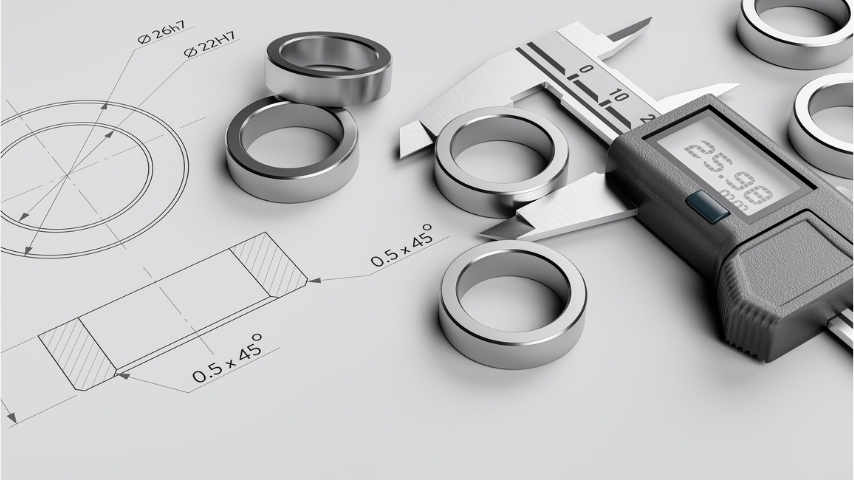
As design, sourcing, and manufacturing grow ever more complex, GD&T remains essential to clear engineering communication, better drawings, and stronger manufacturing outcomes.
When a mechanical engineer asked Reddit for recommendations on the best YouTube channel to learn more about geometric dimensioning and tolerancing (GD&T), one name came up immediately: Dean Odell. “That guy is great,” one commenter said. Another admitted he had been watching the instructor’s videos for years before realizing he was a professor at the college he used to attend.
And while engineers may not know some of the details, such as the country of origin of the symbols, rules, and logic behind modern technical drawings, their enthusiasm for GD&T training reflects a broader reality in manufacturing and product development. Despite its critical role in ensuring complete and unambiguous product definition, there is a persistent skills gap in the U.S. engineering workforce when it comes to GD&T knowledge. That is where Odell comes in—as a GD&T trainer and consultant and an assistant professor at Hudson Valley Community College in Troy, N.Y.
GD&T plays a significant role in the lifecycle of a product, especially when it comes to aerospace and medical devices. “All the defense contractors use it,” said the mechanical engineer who graduated from SUNY Polytechnic. Odell explained high-end, high-risk industries understand the value of GD&T and as products become more complex and collaborate across companies, countries, and disciplines become more common, the ability to clearly communicate design intent will become foundational.
In a profession where a fraction of a millimeter can determine whether a part functions as intended, training engineers to master that language has become a career-long mission for Odell who has a YouTube channel and regularly travels to companies and classrooms to teach GD&T.
 GD&T expert Dean Odell joined an interactive panel discussion at ASME Live 2026. Highlighting the launch of the GDTP 2018 exam, he answered questions about the application process, what to study, and even walked through sample practice questions.
“It’s a language… instead of writing paragraph after paragraph, trying to explain what the thing part is supposed to do, you put it all in dimensions with tolerances,” he explained. “And the geometric part is just kind of an expansion of that. So instead of saying something could be this big or this small, it could be this flat or this parallel. So, it just adds that kind of three dimensionality.”
GD&T expert Dean Odell joined an interactive panel discussion at ASME Live 2026. Highlighting the launch of the GDTP 2018 exam, he answered questions about the application process, what to study, and even walked through sample practice questions.
“It’s a language… instead of writing paragraph after paragraph, trying to explain what the thing part is supposed to do, you put it all in dimensions with tolerances,” he explained. “And the geometric part is just kind of an expansion of that. So instead of saying something could be this big or this small, it could be this flat or this parallel. So, it just adds that kind of three dimensionality.”
GD&T serves as a universal language that helps engineers, machinists, inspectors, and manufacturers stay aligned. And when applied correctly, it is a powerful system for improving communication, reducing manufacturing costs, and ensuring products perform as designers intended.
“[When it comes to mastering GD&T], I wouldn’t necessarily say it’s hard. The way calculus is hard. But you still need to learn it like anything else,” Odell explained. “The issue is [universities] just don’t prioritize teaching it.”
Through decades of teaching, consulting, and training, Odell has shown thousands of students and professionals that GD&T is far more than a collection of symbols on a drawing.
And in an era of global supply chains, digital models, and AI tools, GD&T remains a critical bridge between design and manufacturing.
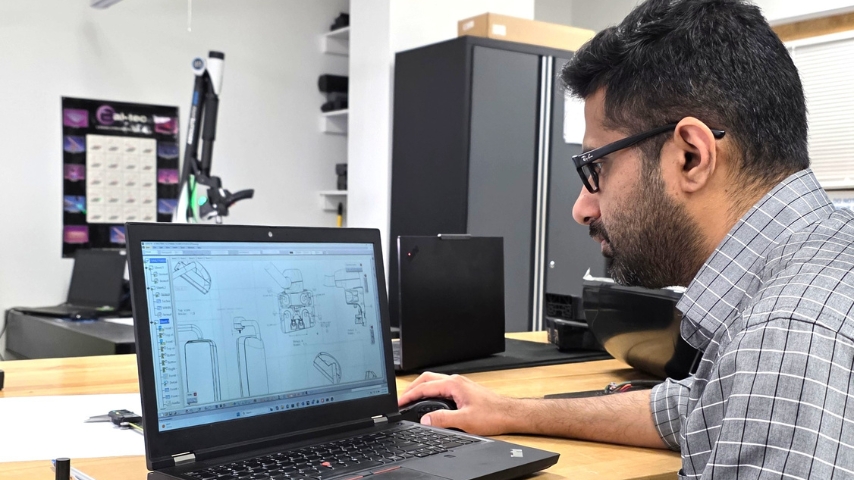 Symbols, dimensions, and tolerances describe exactly what a part can and cannot be, replacing long written explanations with a compact, standardized system. “You got to document that product or else why even bother?” Odell said plainly. “The design, documentation, all that boring stuff nobody wants to hear about. But if you fumble that, then what’s the point of all your calculations and all the analysis, the science, and the research?”
GD&T reduces ambiguity between designers, engineers, machinists, inspectors, suppliers, and customers. Unclear drawings not only waste time in rework but introduce quality issues and system complications.
“You should never have to call the person that made the drawing,” Odell explained. “Everything should be there. It should be explicit. You shouldn’t have to ask, ‘What do you mean by this?’ It just wastes time with calls and emails that go back and forth… Some companies can make drawing changes super easy, some can’t.”
And sometimes, the person who designed the part is no longer available to ask questions. In aerospace, for example, a jet may remain in service long after the engineer who designed its parts has moved on. “It’s simply clear communication,” Odell said.
For engineers such as Milo Del Bigio, founder of Axis GD&T Services, there was no shortcut to attaining certification in GD&T. Instead, for the mechanical engineer who graduated from the University of Manitoba in Canada, senior certification “validated years of study and practical experience and gave additional credibility as I transitioned into consulting, teaching, and creating educational content.”
Like Odell, Del Bigio can be found online providing educational content focused on ASME Y14.5. But when he began his career as a Production EIT supporting the production of large transmission assemblies in the defense industry, he learned quickly about “unnecessary manufacturing non-conformances“ as GDTP-certified consultants resolved drawing issues on the factory floor.
 Milo Del Bigio, Lead GD&T Specialist and GDTP – 2009 Senior Certification holder.
He became hooked after moving into a design engineering role at a startup, where he focused on creating clear, functional engineering drawings and mentoring coworkers in GD&T.
Milo Del Bigio, Lead GD&T Specialist and GDTP – 2009 Senior Certification holder.
He became hooked after moving into a design engineering role at a startup, where he focused on creating clear, functional engineering drawings and mentoring coworkers in GD&T.
Both Del Bigio and Odell understand that many students are intimidated by GD&T. “You can study on your own, for sure. It’s not impossible to just learn it and take the test and become certified,” Odell admitted.
For Odell, in-person training is especially effective for GD&T. Participants who attend in person often arrive motivated to learn, he said, and the classroom setting allows the instructor to read the room and adjust the lesson as needed. The format also tends to encourage greater engagement, with whiteboard instruction prompting note-taking and active learning in a way slide presentations just don’t. For professionals who use GD&T but may not fully understand it, training can build both knowledge and, more importantly, confidence.
 And training is just part of the battle. The ASME certification test for GD&T is “serious,” Odell explained. And certification holds credibility not just because people trust the ASME brand, but because the exam “is no joke.” The testing environment is strict with the in-person exam proctored and timed.
ASME GD&T certification is valid for three years, underscoring that certification is not a one-time achievement but an ongoing professional credential. Certificate holders can maintain their certification through available recertification options, helping demonstrate that their knowledge remains current as standards, practices, and industry needs evolve.
It is really different from the “flood of certifications, where you log into a website, you watch a couple videos, maybe answer some questions,” Odell said. This certification has a body of knowledge behind it, Odell explained, “with which early career designers will be able to stand out in a tough job market.”
And for those experienced designers who have years of work under their belt and are taking the senior-level exam, certification can help you become a subject matter expert or go-to resource within a company.
Del Bigio is careful not to frame certification as the end point. “It is not the end of your education,” he said, noting that even experienced GD&T practitioners continue to refine their understanding and debate interpretations of the standard. What certification does provide, he explained, is a deeper command of the standard and greater credibility when offering technical guidance.
In a world where 3D models, digital tools, and AI become more common, GD&T remains essential to engineering communication. Many companies still use 3D models alongside 2D drawings and PDFs for documentation, manufacturing, inspection, and long-term reference.
And while AI may help with modeling or save time, much like CAD software, Odell has not seen it reliably replace engineering judgment or correctly apply GD&T. Further software skills and adoption vary widely. Further, companies often support products for decades and those archived formats remain important.
For him, an engineering drawing translates the product into practical terms. Engineers can complete calculations, analysis, FEA, research, and design, but unclear documentation can still prevent a product from being made as intended.
That is where GD&T provides a critical quality step. A clear drawing helps ensure a product can be manufactured, inspected, and reproduced consistently, even as it moves between companies, countries, suppliers, and time. A poor drawing, by contrast, leaves too much open to interpretation.
GD&T certification matters because it validates a professional’s ability to use the manufacturing language that turns design intent into finished parts.
Cathy Cecere is membership content program manager.
Whether you're new to geometric dimensioning and tolerancing or looking to deepen your expertise, ASME offers a comprehensive collection of GD&T courses covering everything from fundamentals and drawing interpretation to advanced applications and tolerance stack analysis. Not sure where to start? Take the GD&T Course Finder Quiz to identify the training program that best matches your experience level and professional goals.
And while engineers may not know some of the details, such as the country of origin of the symbols, rules, and logic behind modern technical drawings, their enthusiasm for GD&T training reflects a broader reality in manufacturing and product development. Despite its critical role in ensuring complete and unambiguous product definition, there is a persistent skills gap in the U.S. engineering workforce when it comes to GD&T knowledge. That is where Odell comes in—as a GD&T trainer and consultant and an assistant professor at Hudson Valley Community College in Troy, N.Y.
Manufacturing and critical communication
GD&T plays a significant role in the lifecycle of a product, especially when it comes to aerospace and medical devices. “All the defense contractors use it,” said the mechanical engineer who graduated from SUNY Polytechnic. Odell explained high-end, high-risk industries understand the value of GD&T and as products become more complex and collaborate across companies, countries, and disciplines become more common, the ability to clearly communicate design intent will become foundational.
In a profession where a fraction of a millimeter can determine whether a part functions as intended, training engineers to master that language has become a career-long mission for Odell who has a YouTube channel and regularly travels to companies and classrooms to teach GD&T.
GD&T expert Dean Odell joined an interactive panel discussion at ASME Live 2026. Highlighting the launch of the GDTP 2018 exam, he answered questions about the application process, what to study, and even walked through sample practice questions.
GD&T serves as a universal language that helps engineers, machinists, inspectors, and manufacturers stay aligned. And when applied correctly, it is a powerful system for improving communication, reducing manufacturing costs, and ensuring products perform as designers intended.
“[When it comes to mastering GD&T], I wouldn’t necessarily say it’s hard. The way calculus is hard. But you still need to learn it like anything else,” Odell explained. “The issue is [universities] just don’t prioritize teaching it.”
Through decades of teaching, consulting, and training, Odell has shown thousands of students and professionals that GD&T is far more than a collection of symbols on a drawing.
And in an era of global supply chains, digital models, and AI tools, GD&T remains a critical bridge between design and manufacturing.
Communicating Design with Precision
A working design engineer offers another perspective on GD&T and its role in turning design intent into manufacturable parts.
GD&T reduces ambiguity between designers, engineers, machinists, inspectors, suppliers, and customers. Unclear drawings not only waste time in rework but introduce quality issues and system complications.
“You should never have to call the person that made the drawing,” Odell explained. “Everything should be there. It should be explicit. You shouldn’t have to ask, ‘What do you mean by this?’ It just wastes time with calls and emails that go back and forth… Some companies can make drawing changes super easy, some can’t.”
And sometimes, the person who designed the part is no longer available to ask questions. In aerospace, for example, a jet may remain in service long after the engineer who designed its parts has moved on. “It’s simply clear communication,” Odell said.
Certification as a credibility marker
For engineers such as Milo Del Bigio, founder of Axis GD&T Services, there was no shortcut to attaining certification in GD&T. Instead, for the mechanical engineer who graduated from the University of Manitoba in Canada, senior certification “validated years of study and practical experience and gave additional credibility as I transitioned into consulting, teaching, and creating educational content.”
Like Odell, Del Bigio can be found online providing educational content focused on ASME Y14.5. But when he began his career as a Production EIT supporting the production of large transmission assemblies in the defense industry, he learned quickly about “unnecessary manufacturing non-conformances“ as GDTP-certified consultants resolved drawing issues on the factory floor.
Milo Del Bigio, Lead GD&T Specialist and GDTP – 2009 Senior Certification holder.
Both Del Bigio and Odell understand that many students are intimidated by GD&T. “You can study on your own, for sure. It’s not impossible to just learn it and take the test and become certified,” Odell admitted.
For Odell, in-person training is especially effective for GD&T. Participants who attend in person often arrive motivated to learn, he said, and the classroom setting allows the instructor to read the room and adjust the lesson as needed. The format also tends to encourage greater engagement, with whiteboard instruction prompting note-taking and active learning in a way slide presentations just don’t. For professionals who use GD&T but may not fully understand it, training can build both knowledge and, more importantly, confidence.
GDTP-2018 Exams Now Open
Be among the first to apply for the ASME GDTP 2018 (Technologist & Senior) exams.
ASME GD&T certification is valid for three years, underscoring that certification is not a one-time achievement but an ongoing professional credential. Certificate holders can maintain their certification through available recertification options, helping demonstrate that their knowledge remains current as standards, practices, and industry needs evolve.
It is really different from the “flood of certifications, where you log into a website, you watch a couple videos, maybe answer some questions,” Odell said. This certification has a body of knowledge behind it, Odell explained, “with which early career designers will be able to stand out in a tough job market.”
And for those experienced designers who have years of work under their belt and are taking the senior-level exam, certification can help you become a subject matter expert or go-to resource within a company.
Del Bigio is careful not to frame certification as the end point. “It is not the end of your education,” he said, noting that even experienced GD&T practitioners continue to refine their understanding and debate interpretations of the standard. What certification does provide, he explained, is a deeper command of the standard and greater credibility when offering technical guidance.
GD&T in a digital and AI-driven world
In a world where 3D models, digital tools, and AI become more common, GD&T remains essential to engineering communication. Many companies still use 3D models alongside 2D drawings and PDFs for documentation, manufacturing, inspection, and long-term reference.
And while AI may help with modeling or save time, much like CAD software, Odell has not seen it reliably replace engineering judgment or correctly apply GD&T. Further software skills and adoption vary widely. Further, companies often support products for decades and those archived formats remain important.
For him, an engineering drawing translates the product into practical terms. Engineers can complete calculations, analysis, FEA, research, and design, but unclear documentation can still prevent a product from being made as intended.
That is where GD&T provides a critical quality step. A clear drawing helps ensure a product can be manufactured, inspected, and reproduced consistently, even as it moves between companies, countries, suppliers, and time. A poor drawing, by contrast, leaves too much open to interpretation.
GD&T certification matters because it validates a professional’s ability to use the manufacturing language that turns design intent into finished parts.
Cathy Cecere is membership content program manager.
Whether you're new to geometric dimensioning and tolerancing or looking to deepen your expertise, ASME offers a comprehensive collection of GD&T courses covering everything from fundamentals and drawing interpretation to advanced applications and tolerance stack analysis. Not sure where to start? Take the GD&T Course Finder Quiz to identify the training program that best matches your experience level and professional goals.


Learning is a lifelong journey. Explore our growing collection of free learning resources and articles.