From Student Section Builder to Aerospace Engineer
From Student Section Builder to Aerospace Engineer
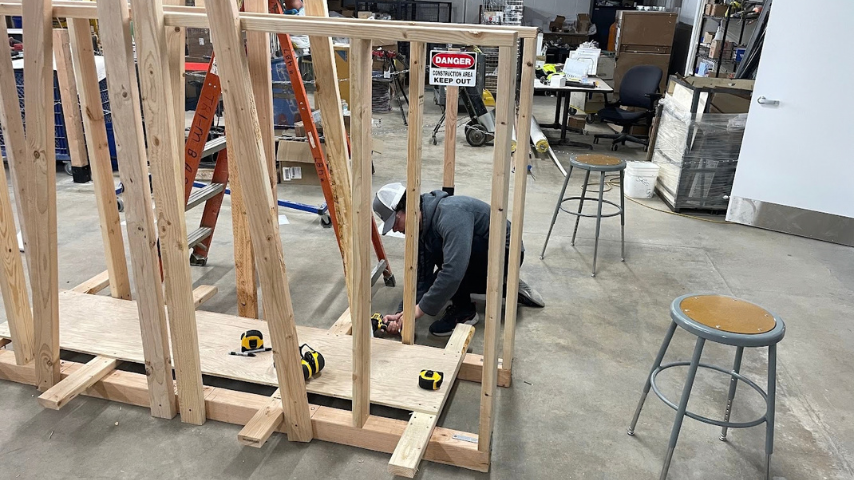
By learning to rebuild an ASME student section and mentoring student leaders, Kenny Madden gained the technical, professional, and leadership skills needed to pursue an aerospace career.
Kenny Madden dreams of working as a NASA engineer. Although he began college focused on the technical skills he would need for an aerospace career, his involvement with ASME challenged him to become a leader, mentor, and community builder, experiences that may prove as valuable as his engineering education.
Working with ASME “you can get engineering experience, professional development, and leadership development,” Madden said. He first experienced those benefits while revitalizing the University of Delaware’s ASME student section.
Now a graduate student at Purdue University, his resume includes a stent as Student Section Ambassador and continued work on the university’s team on technical projects, career preparation, and community building.
When Madden arrived at the University of Delaware, the mechanical engineering student from Philadelphia knew he wanted to pursue an aerospace career but had not yet mapped out his path.
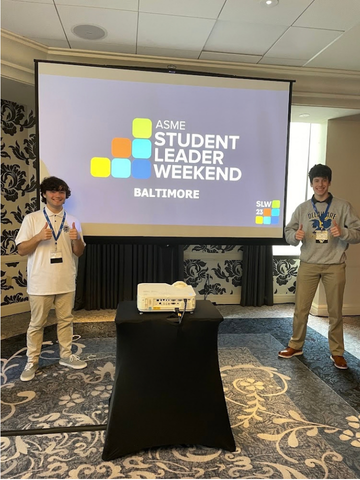 Kenny Madden (left) and then Social Media Chair Cayden Walker at Baltimore Student Leader Weekend in Fall 2023.
Madden graduated from high school in spring 2020, as the COVID-19 pandemic disrupted school and campus life. In fact, he did not begin attending classes fully in person at Delaware until the spring of his sophomore year. “By that point, I had done very little networking,” he said.
Kenny Madden (left) and then Social Media Chair Cayden Walker at Baltimore Student Leader Weekend in Fall 2023.
Madden graduated from high school in spring 2020, as the COVID-19 pandemic disrupted school and campus life. In fact, he did not begin attending classes fully in person at Delaware until the spring of his sophomore year. “By that point, I had done very little networking,” he said.
Madden did have one important industry connection: mentor Ellen Gillespie, a longtime ASME member and Professional Section Ambassador. Gillespie encouraged him to become involved with an ASME student section.
Madden soon discovered that the University of Delaware no longer had an active ASME student section. Rather than walk away, he decided to rebuild it. He recruited three friends to join him as vice chair, secretary, and treasurer, forming the four-person leadership team the section required to get started.
Madden then needed to recruit additional members because the University of Delaware required a club to have at least 10 people on its roster. “And then the real work started,” he said.
Although ASME considered the Delaware section inactive rather than dissolved, the university treated it as a newly founded club. Because the section had not been active since 2018, Madden first had to determine what students needed from it and how ASME could meet those needs.
“Anyone can start a club on paper,” Madden said, “but it takes a little more to have it really mean something.” He wanted the section to be more than another club, but to help members develop technical and interpersonal skills while also building connections with one another.
“I just started talking to students of all different ages and I started talking to professors,” Madden said. “I especially like professors that had been around years ago when the section was alive. And I really just tried to figure out what ASME could do.”
He ended up shaping the section around three priorities: hands-on technical projects, professional development strategies, and community building after the isolation of the pandemic. The section’s technical projects offered students a low-pressure way to apply what they were learning in class. Its professional development activities included résumé reviews, interview preparation, job connections, and networking.
And the last aspect was “of course, the community and the social aspect of it,” Madden said. “Following [COVID] there was a huge need for people to reconnect again because we had gotten so isolated.” Madden admitted that “It was a lot of hard work.” But the hard work paid off. The section grew into a thriving community.
Within a year of revitalizing the section, Madden and the other members had built a competition-ready trebuchet for a pumpkin-chunking event. During his senior year, the section organized a tour of a NASA center. “When I started, [if someone told me] you're going to take 50 people to NASA. Like that sounds crazy, but we did it,” he said proudly.
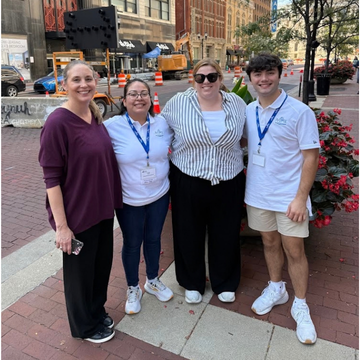 Kenny Madden as student section ambassador with student section ambassador Lesly Aguilar, along with student section coordinators Janice Parker and Aly Trevino at Indianapolis Student Leader Weekend in Fall 2025.
Madden did not initially see himself as a natural leader. When he met with the three friends who had agreed to form the executive board, he asked which of them wanted to serve as president, the position ASME calls chair. Everyone agreed that because Madden had initiated the effort, he should lead the section. “And I was like, ‘No, no, no, no,’” he said.
Kenny Madden as student section ambassador with student section ambassador Lesly Aguilar, along with student section coordinators Janice Parker and Aly Trevino at Indianapolis Student Leader Weekend in Fall 2025.
Madden did not initially see himself as a natural leader. When he met with the three friends who had agreed to form the executive board, he asked which of them wanted to serve as president, the position ASME calls chair. Everyone agreed that because Madden had initiated the effort, he should lead the section. “And I was like, ‘No, no, no, no,’” he said.
Despite his reluctance, he became chair in the spring of his sophomore year and remained in the role until he graduated. During that time, he learned to apply his organizational skills (he described himself as “a little Type A”) along with persistence and careful listening. “I really learned how to apply that and my other strengths to leadership,” he said.
One particularly difficult period began when Madden’s original executive board resigned while the section was pursuing an ambitious trebuchet project. He continued the project, rebuilt the leadership team, and helped grow the section from a small group of recruited friends to more than 135 active members.
The experience taught Madden to assess members’ needs, create enjoyable activities, and give people meaningful reasons to stay involved. “I had to really make sure that I was providing myself and all of my members with the opportunity to do meaningful engineering work and to have stories that would matter and that would build the skills that will prepare them to go into the industry and get a job,” he explained.
Madden then joined an established ASME section at Purdue but still had so much to learn from other student leaders even after finishing his time as Chair of the UD student section.
One person, in particular, Julia Long was then a former vice chair (the year before) and was on the student advisory council stood out for him. “And I just remember I met her the first event that I went to,” Madden explained. He actually organized it over the summer without the advantage of being on campus.
He got to meet and know Long at this event as they gave out cookies to attendees. It was her passion and “her ability to think critically and think strategically about ASME, it was one of the best conversations that I've ever had in my life.” Such long-term and meaningful friendships are the experiences that set ASME apart, Madden explained.
During his second year at Purdue, Madden chaired the university’s Student Advisory Council. The council allows former ASME chairs and vice chairs, typically seniors or students completing Purdue’s combined bachelor’s and master’s program, to remain involved for another year and advise the current student leaders when needed.
ASME also invited Madden to become its first Student Section Ambassador, advising student leaders nationwide and helping struggling sections with practical, experience-based guidance. He described helping establish ASME’s student section ambassador program and creating practical resources on section structure, leadership transitions, strategic planning, and event organization.
“I published documents on how to organize, like how to structure a student section and also how to go about thinking strategically,” Madden explained. Documents such as a transition report help future student leaders His best idea was an “event in a box.” With these resources it takes “minimal effort for them to run a successful event.”
Madden is more than happy to give back, especially to those who have supported him in the past. ”And being an ambassador has been really great because first of all, like I can't even begin to describe how meaningful and rewarding it has been to connect with other student leaders across the country,” he said. “ASME leaders are not made from a cookie cutter,” Madden said. As an ambassador, he learned to tailor his advice to different student leaders—a skill he continues to strengthen.
Madden is beginning the third year of his master’s program in aeronautical and astronautical engineering at Purdue. His research in astrodynamics is conducted through Purdue’s Multibody Dynamics Research Group under Kathleen Howell.
Despite being part of classwork, study teams, and research groups, Madden acknowledges that the idea of networking can feel forced and anxiety-inducing. ASME’s range of activities, however, allows students to begin with a subject they genuinely enjoy. “Shared interests make conversations easier and allow professional relationships to develop naturally,” he suggested.
Madden said successful student organizations also need to make participation enjoyable. “People really like to enjoy life,” he said. “If you can help someone enjoy something and recognize that they’re enjoying it, you can get them hooked.”
 Madden’s experience shows how technical work, service, and community can reinforce one another. By rebuilding a student section, mentoring leaders across the country, and pursuing graduate research in aeronautical and astronautical engineering, he has developed skills and relationships that continue to move him closer to his goal of working for NASA.
“ASME has everything. You are building your technical skills. You are preparing yourself for a career, not just because of the skills that you have and the experience that you have, but also in refining and polishing yourself with your resume,” Madden explained.
“You can get the engineering experience, you can get the professional development, you can get the leadership development if you go into executive positions within these sections, you really develop as a leader,” Madden said. “And most importantly, you can get that community, and you can get that connection with people, which is the heart of it all.”
Cathy Cecere is membership content program manager.
Working with ASME “you can get engineering experience, professional development, and leadership development,” Madden said. He first experienced those benefits while revitalizing the University of Delaware’s ASME student section.
Now a graduate student at Purdue University, his resume includes a stent as Student Section Ambassador and continued work on the university’s team on technical projects, career preparation, and community building.
Rebuilding at UD
When Madden arrived at the University of Delaware, the mechanical engineering student from Philadelphia knew he wanted to pursue an aerospace career but had not yet mapped out his path.
Kenny Madden (left) and then Social Media Chair Cayden Walker at Baltimore Student Leader Weekend in Fall 2023.
Madden did have one important industry connection: mentor Ellen Gillespie, a longtime ASME member and Professional Section Ambassador. Gillespie encouraged him to become involved with an ASME student section.
Madden soon discovered that the University of Delaware no longer had an active ASME student section. Rather than walk away, he decided to rebuild it. He recruited three friends to join him as vice chair, secretary, and treasurer, forming the four-person leadership team the section required to get started.
Madden then needed to recruit additional members because the University of Delaware required a club to have at least 10 people on its roster. “And then the real work started,” he said.
Although ASME considered the Delaware section inactive rather than dissolved, the university treated it as a newly founded club. Because the section had not been active since 2018, Madden first had to determine what students needed from it and how ASME could meet those needs.
“Anyone can start a club on paper,” Madden said, “but it takes a little more to have it really mean something.” He wanted the section to be more than another club, but to help members develop technical and interpersonal skills while also building connections with one another.
“I just started talking to students of all different ages and I started talking to professors,” Madden said. “I especially like professors that had been around years ago when the section was alive. And I really just tried to figure out what ASME could do.”
He ended up shaping the section around three priorities: hands-on technical projects, professional development strategies, and community building after the isolation of the pandemic. The section’s technical projects offered students a low-pressure way to apply what they were learning in class. Its professional development activities included résumé reviews, interview preparation, job connections, and networking.
And the last aspect was “of course, the community and the social aspect of it,” Madden said. “Following [COVID] there was a huge need for people to reconnect again because we had gotten so isolated.” Madden admitted that “It was a lot of hard work.” But the hard work paid off. The section grew into a thriving community.
Developing as a leader
Within a year of revitalizing the section, Madden and the other members had built a competition-ready trebuchet for a pumpkin-chunking event. During his senior year, the section organized a tour of a NASA center. “When I started, [if someone told me] you're going to take 50 people to NASA. Like that sounds crazy, but we did it,” he said proudly.
Kenny Madden as student section ambassador with student section ambassador Lesly Aguilar, along with student section coordinators Janice Parker and Aly Trevino at Indianapolis Student Leader Weekend in Fall 2025.
Despite his reluctance, he became chair in the spring of his sophomore year and remained in the role until he graduated. During that time, he learned to apply his organizational skills (he described himself as “a little Type A”) along with persistence and careful listening. “I really learned how to apply that and my other strengths to leadership,” he said.
One particularly difficult period began when Madden’s original executive board resigned while the section was pursuing an ambitious trebuchet project. He continued the project, rebuilt the leadership team, and helped grow the section from a small group of recruited friends to more than 135 active members.
The experience taught Madden to assess members’ needs, create enjoyable activities, and give people meaningful reasons to stay involved. “I had to really make sure that I was providing myself and all of my members with the opportunity to do meaningful engineering work and to have stories that would matter and that would build the skills that will prepare them to go into the industry and get a job,” he explained.
Mentoring student sections and building community
Madden then joined an established ASME section at Purdue but still had so much to learn from other student leaders even after finishing his time as Chair of the UD student section.One person, in particular, Julia Long was then a former vice chair (the year before) and was on the student advisory council stood out for him. “And I just remember I met her the first event that I went to,” Madden explained. He actually organized it over the summer without the advantage of being on campus.
He got to meet and know Long at this event as they gave out cookies to attendees. It was her passion and “her ability to think critically and think strategically about ASME, it was one of the best conversations that I've ever had in my life.” Such long-term and meaningful friendships are the experiences that set ASME apart, Madden explained.
During his second year at Purdue, Madden chaired the university’s Student Advisory Council. The council allows former ASME chairs and vice chairs, typically seniors or students completing Purdue’s combined bachelor’s and master’s program, to remain involved for another year and advise the current student leaders when needed.
ASME also invited Madden to become its first Student Section Ambassador, advising student leaders nationwide and helping struggling sections with practical, experience-based guidance. He described helping establish ASME’s student section ambassador program and creating practical resources on section structure, leadership transitions, strategic planning, and event organization.
“I published documents on how to organize, like how to structure a student section and also how to go about thinking strategically,” Madden explained. Documents such as a transition report help future student leaders His best idea was an “event in a box.” With these resources it takes “minimal effort for them to run a successful event.”
Madden is more than happy to give back, especially to those who have supported him in the past. ”And being an ambassador has been really great because first of all, like I can't even begin to describe how meaningful and rewarding it has been to connect with other student leaders across the country,” he said. “ASME leaders are not made from a cookie cutter,” Madden said. As an ambassador, he learned to tailor his advice to different student leaders—a skill he continues to strengthen.
Networking, graduate studies, and future goals
Madden is beginning the third year of his master’s program in aeronautical and astronautical engineering at Purdue. His research in astrodynamics is conducted through Purdue’s Multibody Dynamics Research Group under Kathleen Howell.Despite being part of classwork, study teams, and research groups, Madden acknowledges that the idea of networking can feel forced and anxiety-inducing. ASME’s range of activities, however, allows students to begin with a subject they genuinely enjoy. “Shared interests make conversations easier and allow professional relationships to develop naturally,” he suggested.
Madden said successful student organizations also need to make participation enjoyable. “People really like to enjoy life,” he said. “If you can help someone enjoy something and recognize that they’re enjoying it, you can get them hooked.”
Discover How ASME Helps Students Lead, Learn, and Grow
ASME student sections help engineering students build technical, professional, and leadership skills through hands-on projects, career development, and community.
“ASME has everything. You are building your technical skills. You are preparing yourself for a career, not just because of the skills that you have and the experience that you have, but also in refining and polishing yourself with your resume,” Madden explained.
“You can get the engineering experience, you can get the professional development, you can get the leadership development if you go into executive positions within these sections, you really develop as a leader,” Madden said. “And most importantly, you can get that community, and you can get that connection with people, which is the heart of it all.”
Cathy Cecere is membership content program manager.


Learning is a lifelong journey. Explore our growing collection of free learning resources and articles.