Building a Career at the Intersection of GD&T, 3D Scanning, and AI
Building a Career at the Intersection of GD&T, 3D Scanning, and AI
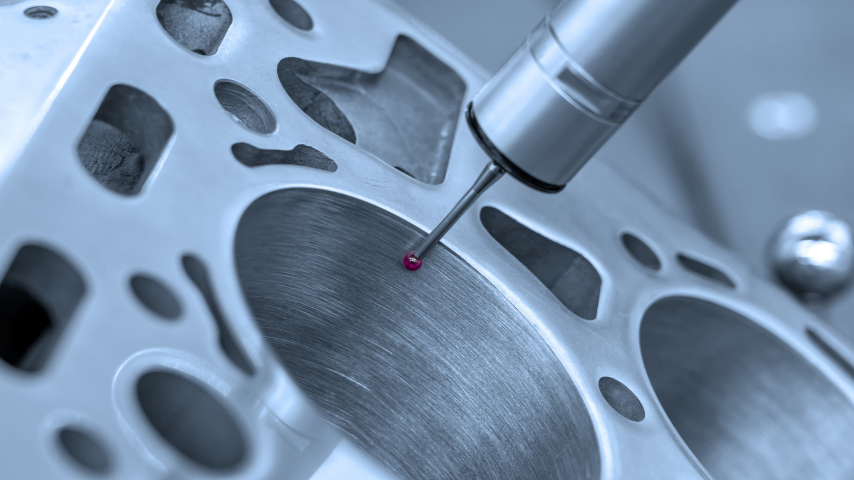
For dimensional engineer Narasimha Sainath Akella, GD&T certification helped open the door to a specialized career shaped by digital inspection, 3D scanning, and AI.
As products grow more complex, engineering teams face increasing pressure to move faster and work more efficiently while maintaining greater accuracy. It makes sense, therefore, that engineers in this environment can no longer rely solely on traditional tools and inspection routines.
That shift is especially clear in the work of dimensional engineers. Their field now sits at the intersection of long-established metrology practices and the growing power of digital inspection, 3D scanning, and AI-driven analysis.
Such a shift has helped shape the career of Narasimha Sainath Akella, a dimensional engineer at Tesla, a motor vehicle manufacturer in Houston, Texas. Beginning with hands-on design work and expanding into GD&T, he expanded his knowledge into dimensional strategy and advanced inspection methods.
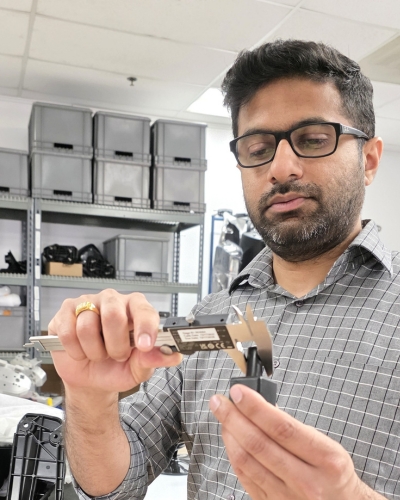
 Narasimha Sainath Akella, Dimensional Engineer at Tesla
His work responsibilities include ensuring products not only meet specifications but can be built reliably at scale. “I began my career as a design engineer, responsible for developing plastic and sheet metal components and assemblies for a U.S.-based consumer electronics manufacturer,” Akella explained of his work at a company based in Louisville, Ky.
Narasimha Sainath Akella, Dimensional Engineer at Tesla
His work responsibilities include ensuring products not only meet specifications but can be built reliably at scale. “I began my career as a design engineer, responsible for developing plastic and sheet metal components and assemblies for a U.S.-based consumer electronics manufacturer,” Akella explained of his work at a company based in Louisville, Ky.
It was at this job that the organization transitioned from traditional design practices to digital inspection methodologies. “I was fortunate to play a key role in this transformation, gaining exposure to GD&T principles and advanced digital inspection techniques such as 3D scanning,” Akella explained. It was this experience that motivated him to pursue the ASME GDTP certification.
In fact, the training helped him differentiate himself and “ultimately guided my career toward becoming a strong dimensional engineering professional,” he explained.
A dimensional engineer ensures that every part and assembly meets the intended design requirements before it reaches production. “On a day to day basis, I review supplier components, guide technicians through precision measurement methods such as CMM and 3D scanning and analyze the resulting data to identify any dimensional deviations,” Akella said.
His job allows him to work closely with design, manufacturing, and quality teams to assess risks, resolve variation issues, and ensure the product can be built reliably at scale. “Essentially, my role is to make sure the product fits, functions, and performs exactly as intended,” he said.
For Akella, GD&T played a pivotal role in helping his transition into his current role. “In today’s competitive environment, many engineers may apply for a single position, so hiring teams look for profiles that stand out,” he explained. “The ASME GD&T certification is one such differentiator. Beyond the theoretical knowledge, my hands on experience applying GD&T in real world scenarios and executing 3D stack up analysis strengthened my technical credibility and ultimately helped me secure the position [at Tesla].”
 Earning GD&T certification also “significantly strengthened” Akella’s confidence. Decisions regarding dimensional strategy have become substantially clearer and more manageable. His ability to transition into a full time dimensional engineering role means that he has “complete end to end engineering ownership.”
It was when he was assigned as the dedicated dimensional engineer for a major product, that he reached an important milestone that marked considerable progression into a “specialized and trusted technical role,” he explained.
The number of metrology or dimensional engineers in an organization is typically very small, Akella said. Often, only one or two dimensional engineers support design teams of 10 to 20 people. “This clearly reflects how specialized and unique dimensional engineering is within product design and development, as well as the scarcity of experts in this field,” he explained.
“I strongly encourage early career engineers to consider this path and begin building their expertise early,” Akella said. This is especially true with the adoption of AI. “With AI becoming a major force in today’s engineering landscape, I see significant potential for its integration into digital inspection workflows,” he explained.
“I had the opportunity to apply AI based tools for the dimensional inspection of surgical components, giving me firsthand exposure to how metrology is evolving toward AI driven methodologies,” Akella concluded. “This experience allowed me to witness—and contribute to—the transition from traditional metrology to intelligent, automated inspection.”
Cathy Cecere is membership content program manager.
Whether you're new to geometric dimensioning and tolerancing or looking to deepen your expertise, ASME offers a comprehensive collection of GD&T courses covering everything from fundamentals and drawing interpretation to advanced applications and tolerance stack analysis. Not sure where to start? Take the GD&T Course Finder Quiz to identify the training program that best matches your experience level and professional goals.
That shift is especially clear in the work of dimensional engineers. Their field now sits at the intersection of long-established metrology practices and the growing power of digital inspection, 3D scanning, and AI-driven analysis.
The move to digital inspection
Such a shift has helped shape the career of Narasimha Sainath Akella, a dimensional engineer at Tesla, a motor vehicle manufacturer in Houston, Texas. Beginning with hands-on design work and expanding into GD&T, he expanded his knowledge into dimensional strategy and advanced inspection methods.
Narasimha Sainath Akella, Dimensional Engineer at Tesla
It was at this job that the organization transitioned from traditional design practices to digital inspection methodologies. “I was fortunate to play a key role in this transformation, gaining exposure to GD&T principles and advanced digital inspection techniques such as 3D scanning,” Akella explained. It was this experience that motivated him to pursue the ASME GDTP certification.
In fact, the training helped him differentiate himself and “ultimately guided my career toward becoming a strong dimensional engineering professional,” he explained.
A dimensional engineer ensures that every part and assembly meets the intended design requirements before it reaches production. “On a day to day basis, I review supplier components, guide technicians through precision measurement methods such as CMM and 3D scanning and analyze the resulting data to identify any dimensional deviations,” Akella said.
His job allows him to work closely with design, manufacturing, and quality teams to assess risks, resolve variation issues, and ensure the product can be built reliably at scale. “Essentially, my role is to make sure the product fits, functions, and performs exactly as intended,” he said.
Certification and growth
For Akella, GD&T played a pivotal role in helping his transition into his current role. “In today’s competitive environment, many engineers may apply for a single position, so hiring teams look for profiles that stand out,” he explained. “The ASME GD&T certification is one such differentiator. Beyond the theoretical knowledge, my hands on experience applying GD&T in real world scenarios and executing 3D stack up analysis strengthened my technical credibility and ultimately helped me secure the position [at Tesla].”
GDTP-2018 Exams Now Open
Be among the first to apply for the ASME GDTP 2018 (Technologist & Senior) exams.
It was when he was assigned as the dedicated dimensional engineer for a major product, that he reached an important milestone that marked considerable progression into a “specialized and trusted technical role,” he explained.
The number of metrology or dimensional engineers in an organization is typically very small, Akella said. Often, only one or two dimensional engineers support design teams of 10 to 20 people. “This clearly reflects how specialized and unique dimensional engineering is within product design and development, as well as the scarcity of experts in this field,” he explained.
“I strongly encourage early career engineers to consider this path and begin building their expertise early,” Akella said. This is especially true with the adoption of AI. “With AI becoming a major force in today’s engineering landscape, I see significant potential for its integration into digital inspection workflows,” he explained.
“I had the opportunity to apply AI based tools for the dimensional inspection of surgical components, giving me firsthand exposure to how metrology is evolving toward AI driven methodologies,” Akella concluded. “This experience allowed me to witness—and contribute to—the transition from traditional metrology to intelligent, automated inspection.”
Cathy Cecere is membership content program manager.
Whether you're new to geometric dimensioning and tolerancing or looking to deepen your expertise, ASME offers a comprehensive collection of GD&T courses covering everything from fundamentals and drawing interpretation to advanced applications and tolerance stack analysis. Not sure where to start? Take the GD&T Course Finder Quiz to identify the training program that best matches your experience level and professional goals.


Learning is a lifelong journey. Explore our growing collection of free learning resources and articles.