The End of Brittle Solar
The End of Brittle Solar

Flexible carbon nanotubes replace brittle ITO in perovskite solar cells, boosting durability, efficiency, and lowering costs for next generation renewable energy.
The global transition to renewable energy hinges on a material that shatters as easily as a smartphone screen. For years, the brittleness of indium tin oxide (ITO) stalled the development of truly resilient solar technology. Traditional solar panels cracked under physical stress, immediately breaking electrical connections and killing power output.
Now researchers at the University of Surrey in the United Kingdom have solved this durability problem by ditching fragile ceramics for a high-tech carbon mesh. By using single-walled carbon nanotubes (SWCNTs)—flexible as fabric yet conductive as metal—researchers created a new generation of solar modules. These devices outperformed industry standards in durability while costing significantly less to produce.
To best understand the advance, it helps to look at how conventional panels are built. Standard solar panels function like layered sandwiches. A brittle ITO layer forms the top electrode, while a metal layer serves as the bottom. Between them sits the perovskite layer, which absorbs sunlight to generate excitons. These split into electrons, which flow downward to the metal electrode, and holes, which move upward through the nickel “bridge” layer to the top electrode.
Researchers replaced brittle ITO with a carbon nanotube layer that lets light pass through while maintaining electrical conductivity. Mechanically, the nanotubes slid over one another during twists and folds, behaving more like durable fabric than stiff electronics.
To finish the assembly, a thin, transparent encapsulation resin covered the entire stack. This shield acted like a driver’s license laminate, sealing the system against oxygen and moisture. Unlike metal layers that corroded, these carbon nanotubes remained chemically lazy, protecting the delicate perovskite engine without adding bulk or stiffness.
“Single-walled nanotubes proved vital because their tiny size naturally allowed for extreme flexibility. Even under tight curves, today’s high-quality, low-cost nanotubes competed directly with the electrical performance and transparency of ITO,” explained Ravi Silva, distinguished professor and director of the Advanced Technology Institute at the University of Surrey.
Traditional panels relied on ITO to move electricity. While clear and conductive, ITO performs well until bent. These fractures blocked power flow and crippled the device. By switching to flexible carbon wiring, researchers protected the delicate perovskite engine underneath from the typical mechanical failures of older tech. This upgrade transformed a fragile laboratory miracle into a durable power source.
During manufacturing, researchers applied a concentrated sulfuric acid wash to the SWCNT mesh. This “p-type doping” process pulled electrons away from the carbon atoms. This created holes that accelerated electrical flow. “A single treatment of sulfuric acid doping changed the surface properties of the carbon nanotube to maintain high conductivity and good transmissivity,” explained Silva.
The team used a precise, tiny quantity of acid that reacted instantly with the carbon before settling into a permanent, stable state. This molecular transformation eliminated the need for reapplication and mitigated risk of liquid acid leaking into other layers.
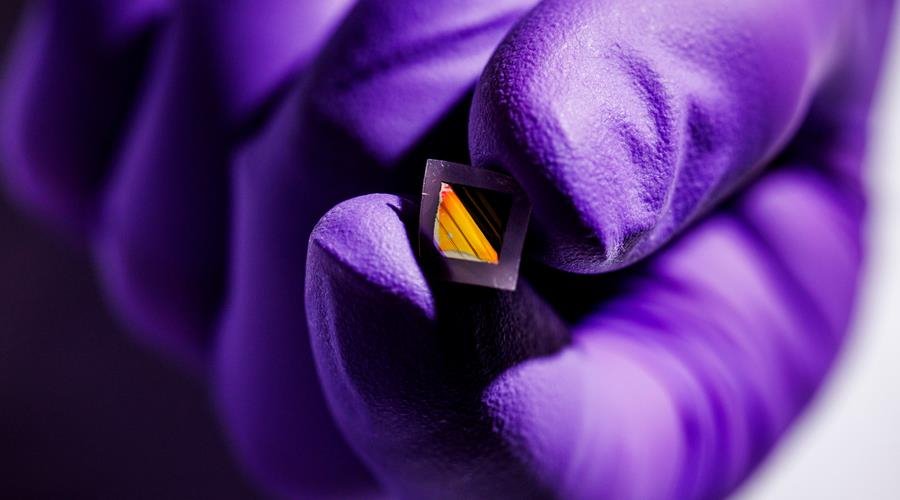 The nickel-based bridge layer (a mix of nickel oxide and nickel sulfate) functioned as a hole transport layer, pulling positive charges away from the perovskite engine. It aligned energy levels between the internal cell and the nanotube mesh, preventing charges from trapping at the border and wasting away as heat.
During testing, the researchers discovered an unexpected chemical synergy: the acid-treated carbon nanotubes bonded to the nickel layer at an atomic level. This structure tripled charge transport speed while reducing energy loss from recombination. “The nickel oxide layer worked well with the sulfuric acid carbon nanotube mixture. This allowed extra preferential surface chemistry to help the process of a smooth transition without having trapped states or barrier states created at that interface,” Silva explained.
Atomic-level adhesion kept the nanotubes firmly attached even during physical stress. This perfect pairing also acted as chemical armor, sealing the delicate perovskite from environmental damage. This unified system maintained peak efficiency even after hundreds of bending cycles and exposure to heat, showing almost no performance loss over a month of simulated operation.
“If you took all the silicon solar cells currently deployed over the world and moved overnight from 20 percent efficient devices to 30 percent by simply adding this few-micron-thick layer of perovskite, the amount of power generated would run a country such as Germany,” Silva explained.
The University of Surrey’s breakthrough represents a significant step forward in flexible solar technology. The team published their findings in the journal Joule. By replacing scarce, brittle materials with abundant carbon nanotubes and a clever nickel bridge, they proved that high-efficiency energy collection no longer required fragile components. This engineering shift removed the physical limitations of older, rigid designs, creating a solar cell capable of surviving the mechanical stresses of the real world.
Beyond technical resilience, the move to carbon-based electrodes slashed manufacturing costs. This massive reduction in price offered a clear, affordable path to mass production, potentially moving perovskite technology out of specialized labs and onto the global market. As the industry moved toward greener processing methods, this research paved the way for a future where clean energy remained sustainable for the planet and tough enough for the wear and tear of everyday life.
Nicole Imeson is an engineer and writer in Calgary, Alberta.
Now researchers at the University of Surrey in the United Kingdom have solved this durability problem by ditching fragile ceramics for a high-tech carbon mesh. By using single-walled carbon nanotubes (SWCNTs)—flexible as fabric yet conductive as metal—researchers created a new generation of solar modules. These devices outperformed industry standards in durability while costing significantly less to produce.
Traditional panels and what changed
To best understand the advance, it helps to look at how conventional panels are built. Standard solar panels function like layered sandwiches. A brittle ITO layer forms the top electrode, while a metal layer serves as the bottom. Between them sits the perovskite layer, which absorbs sunlight to generate excitons. These split into electrons, which flow downward to the metal electrode, and holes, which move upward through the nickel “bridge” layer to the top electrode.
Researchers replaced brittle ITO with a carbon nanotube layer that lets light pass through while maintaining electrical conductivity. Mechanically, the nanotubes slid over one another during twists and folds, behaving more like durable fabric than stiff electronics.
To finish the assembly, a thin, transparent encapsulation resin covered the entire stack. This shield acted like a driver’s license laminate, sealing the system against oxygen and moisture. Unlike metal layers that corroded, these carbon nanotubes remained chemically lazy, protecting the delicate perovskite engine without adding bulk or stiffness.
“Single-walled nanotubes proved vital because their tiny size naturally allowed for extreme flexibility. Even under tight curves, today’s high-quality, low-cost nanotubes competed directly with the electrical performance and transparency of ITO,” explained Ravi Silva, distinguished professor and director of the Advanced Technology Institute at the University of Surrey.
Traditional panels relied on ITO to move electricity. While clear and conductive, ITO performs well until bent. These fractures blocked power flow and crippled the device. By switching to flexible carbon wiring, researchers protected the delicate perovskite engine underneath from the typical mechanical failures of older tech. This upgrade transformed a fragile laboratory miracle into a durable power source.
Chemically engineered breakthrough
During manufacturing, researchers applied a concentrated sulfuric acid wash to the SWCNT mesh. This “p-type doping” process pulled electrons away from the carbon atoms. This created holes that accelerated electrical flow. “A single treatment of sulfuric acid doping changed the surface properties of the carbon nanotube to maintain high conductivity and good transmissivity,” explained Silva.
The team used a precise, tiny quantity of acid that reacted instantly with the carbon before settling into a permanent, stable state. This molecular transformation eliminated the need for reapplication and mitigated risk of liquid acid leaking into other layers.
Flexible Film Could Be Key to Better Infrared Goggles
The film, at about 10-nanometers in size, senses changes in heat from objects, which helps better locate items that are typically not visible.
During testing, the researchers discovered an unexpected chemical synergy: the acid-treated carbon nanotubes bonded to the nickel layer at an atomic level. This structure tripled charge transport speed while reducing energy loss from recombination. “The nickel oxide layer worked well with the sulfuric acid carbon nanotube mixture. This allowed extra preferential surface chemistry to help the process of a smooth transition without having trapped states or barrier states created at that interface,” Silva explained.
Atomic-level adhesion kept the nanotubes firmly attached even during physical stress. This perfect pairing also acted as chemical armor, sealing the delicate perovskite from environmental damage. This unified system maintained peak efficiency even after hundreds of bending cycles and exposure to heat, showing almost no performance loss over a month of simulated operation.
“If you took all the silicon solar cells currently deployed over the world and moved overnight from 20 percent efficient devices to 30 percent by simply adding this few-micron-thick layer of perovskite, the amount of power generated would run a country such as Germany,” Silva explained.
Reshaping solar energy
The University of Surrey’s breakthrough represents a significant step forward in flexible solar technology. The team published their findings in the journal Joule. By replacing scarce, brittle materials with abundant carbon nanotubes and a clever nickel bridge, they proved that high-efficiency energy collection no longer required fragile components. This engineering shift removed the physical limitations of older, rigid designs, creating a solar cell capable of surviving the mechanical stresses of the real world.
Beyond technical resilience, the move to carbon-based electrodes slashed manufacturing costs. This massive reduction in price offered a clear, affordable path to mass production, potentially moving perovskite technology out of specialized labs and onto the global market. As the industry moved toward greener processing methods, this research paved the way for a future where clean energy remained sustainable for the planet and tough enough for the wear and tear of everyday life.
Nicole Imeson is an engineer and writer in Calgary, Alberta.


Explore ASME's commitment to sustainability, addressing climate challenges through innovation, policy, & workforce development. Get informed and involved!