Engineers Must Prepare for an AI-Driven Future
Engineers Must Prepare for an AI-Driven Future
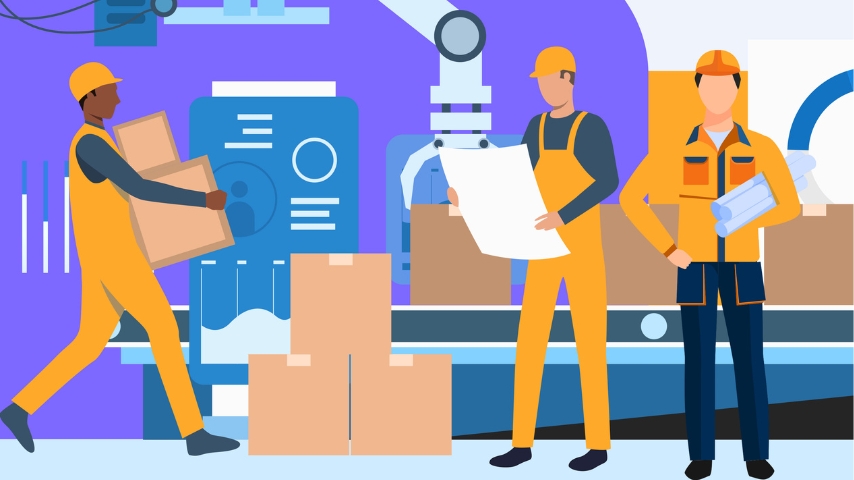
Mechanical engineers who build AI fluency, strengthen communication skills, and keep learning can stay competitive as the technology reshapes engineering work.
No one knows exactly how to define the impact artificial intelligence (AI) will have on the work of mechanical engineers today—or how long it will take before certain roles and responsibilities become obsolete. But what experts in the field can do is take an educated guess as to how young engineers can make themselves as indispensable as possible in the meantime.
“Any solution that requires a kind of nuanced compromise between codes, standards, budget, time, efficiency, performance, weight—all of those factors—is a really hard optimization problem that needs guidance in decision-making,” said Brendan Englot, professor of mechanical engineering at Stevens Institute of Technology in Hoboken, N.J. “AI can still help us by churning out designs, but doing that at a level of complexity in a new application is going to require human expertise and judgment for a long time ahead.”
That said, what’s already happening now, and will become even more prevalent in the coming months, is AI-aided code generation to help with modeling, simulation, or design, according to Englot. He believes MEs will still need to critically think about and evaluate the outputs AI provides, but that attention will shift to focus on prompting AI to generate code for desired outcomes.
Mat Merten, owner and principal engineer at SIL Safe, based in Knoxville, Tenn., put it this way: “Understanding how to create simple AI agents is just a necessary skill now, along with knowing how to do simple formulas in Excel.”
What’s likely never going away is the need for people skills, such as being able to write a good email, give a good presentation, and run a meeting, according to Merten.
However, an even more important skill—and the least talked about—is “the ability to teach yourself anything in as short a period of time as possible,” Merten added. To become AI-literate, he advised young engineers to “learn stuff, test stuff, read about it, and listen to podcasts about it.”
That type of knowledge-building will be increasingly imperative as MEs play a role in the “crisis” ahead, Englot said, referencing AI-related costs for data centers, energy and water consumption, and other environmental impacts coming down the pike over the next five years.
“MEs will have a huge role to play in helping us learn how to use AI sustainably,” he said.
Another advantage to building AI fluency as soon as possible is having a competitive edge, advised Merten. He has noticed that AI “is more advanced than a lot of the big engineering firms are at adopting it. The bigger the company, the slower they typically are,” given that business often is tied up with government and other sizeable entities. The more fluent a candidate is, the more attractive they become.
While jobs that involve working “within the envelope of existing knowledge are most at risk when it comes to AI, there continues to be good job security for research-focused jobs aimed at advancing the frontiers of human knowledge to address unsolved problems with novel solutions,” Englot said. AI hasn’t reduced interest in hiring mechanical engineers in these areas because “it’s a long way off from being able to reliably do physical tasks in the real world.”
Merten added: “You’re never going to have an AI stamp a construction drawing, for example.”
 It’s going to take another decade or two before AI has the capacity to help with construction projects requiring “levels of safety, reliability, physical engineering, and reckoning with the laws of physics,” Englot predicted.
In the meantime, to make sure AI-generated outputs are fully compliant, MEs are going to be needed to do what Englot called “a sanity check.”
He explained, “We’re going to need people who can collaborate with AI who have a very solid understanding of the fundamentals, so they can make sure AI is making all of the correct fundamental modeling assumptions.”
And above all, remaining valuable in the industry will require embracing AI rather than resisting it.
Otherwise, “it would be like choosing to solve a design or optimization problem by hand when you have a computer next to you,” Englot said. “AI is just the next, more powerful version of that computer. To ignore it would be choosing to be less efficient for no good reason.”
Robin L. Flanigan is an independent writer in Rochester, N.Y.
“Any solution that requires a kind of nuanced compromise between codes, standards, budget, time, efficiency, performance, weight—all of those factors—is a really hard optimization problem that needs guidance in decision-making,” said Brendan Englot, professor of mechanical engineering at Stevens Institute of Technology in Hoboken, N.J. “AI can still help us by churning out designs, but doing that at a level of complexity in a new application is going to require human expertise and judgment for a long time ahead.”
AI fluency is a core skill
That said, what’s already happening now, and will become even more prevalent in the coming months, is AI-aided code generation to help with modeling, simulation, or design, according to Englot. He believes MEs will still need to critically think about and evaluate the outputs AI provides, but that attention will shift to focus on prompting AI to generate code for desired outcomes.
Mat Merten, owner and principal engineer at SIL Safe, based in Knoxville, Tenn., put it this way: “Understanding how to create simple AI agents is just a necessary skill now, along with knowing how to do simple formulas in Excel.”
What’s likely never going away is the need for people skills, such as being able to write a good email, give a good presentation, and run a meeting, according to Merten.
However, an even more important skill—and the least talked about—is “the ability to teach yourself anything in as short a period of time as possible,” Merten added. To become AI-literate, he advised young engineers to “learn stuff, test stuff, read about it, and listen to podcasts about it.”
That type of knowledge-building will be increasingly imperative as MEs play a role in the “crisis” ahead, Englot said, referencing AI-related costs for data centers, energy and water consumption, and other environmental impacts coming down the pike over the next five years.
“MEs will have a huge role to play in helping us learn how to use AI sustainably,” he said.
Another advantage to building AI fluency as soon as possible is having a competitive edge, advised Merten. He has noticed that AI “is more advanced than a lot of the big engineering firms are at adopting it. The bigger the company, the slower they typically are,” given that business often is tied up with government and other sizeable entities. The more fluent a candidate is, the more attractive they become.
Human judgment sets engineers apart
While jobs that involve working “within the envelope of existing knowledge are most at risk when it comes to AI, there continues to be good job security for research-focused jobs aimed at advancing the frontiers of human knowledge to address unsolved problems with novel solutions,” Englot said. AI hasn’t reduced interest in hiring mechanical engineers in these areas because “it’s a long way off from being able to reliably do physical tasks in the real world.”
Merten added: “You’re never going to have an AI stamp a construction drawing, for example.”
Is AI a Help or Hurdle for Engineers Looking to Get Hired?
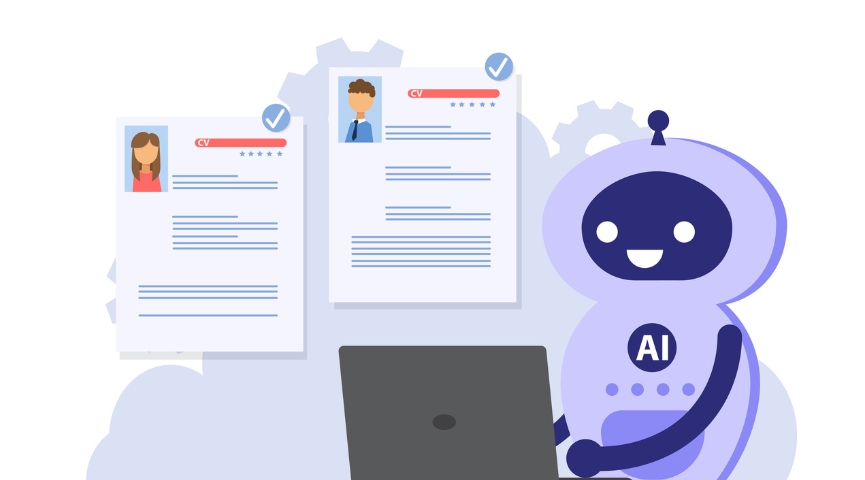
As AI tools reshape hiring, mechanical engineers need to understand how algorithms screen resumes, match skills to job descriptions, and influence who gets a closer look.
In the meantime, to make sure AI-generated outputs are fully compliant, MEs are going to be needed to do what Englot called “a sanity check.”
He explained, “We’re going to need people who can collaborate with AI who have a very solid understanding of the fundamentals, so they can make sure AI is making all of the correct fundamental modeling assumptions.”
And above all, remaining valuable in the industry will require embracing AI rather than resisting it.
Otherwise, “it would be like choosing to solve a design or optimization problem by hand when you have a computer next to you,” Englot said. “AI is just the next, more powerful version of that computer. To ignore it would be choosing to be less efficient for no good reason.”
Robin L. Flanigan is an independent writer in Rochester, N.Y.


Learning is a lifelong journey. Explore our growing collection of free learning resources and articles.