Engineering Makes Resilient Infrastructure Possible at Scale
Engineering Makes Resilient Infrastructure Possible at Scale
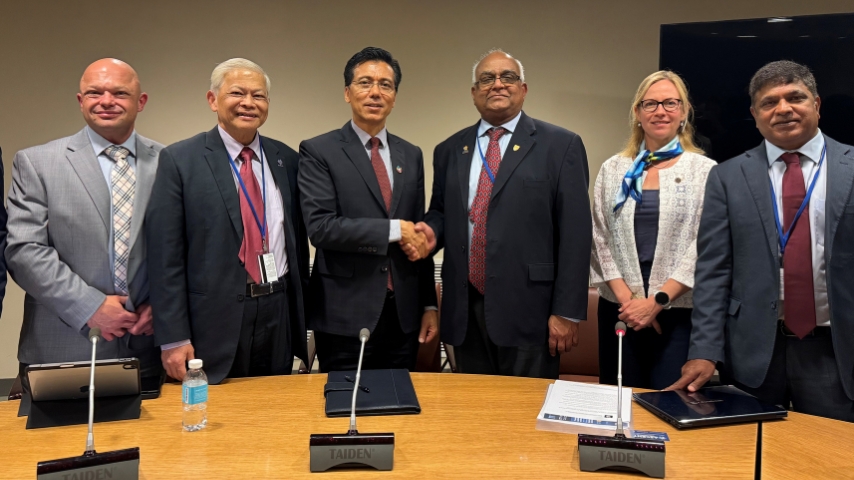
At a global forum on sustainable development, ASME highlighted the role of engineering, standards, and industry in building resilient infrastructure.
The 11th annual Multi-Stakeholder Forum on Science, Technology and Innovation for the Sustainable Development Goals (STI Forum) recently took place at the United Nations in New York. As in previous years, the event aligned closely with the High-Level Political Forum on Sustainable Development and focused on how science, technology, and innovation can help advance the Sustainable Development Goals.
At the side event of the forum, “Engineering a Sustainable and Resilient Built Environment and Infrastructure During and Through Technology Revolution“ the discussion of how infrastructure systems keep pace with rapid technological change was addressed. The topic is one that ASME’s Industry Advisory Board (IAB) has been actively engaged in, and the Society had an active role in the event organized by the World Federation of Engineering Organizations (WFEO).
Moderated by K. N. Gunalan, WFEO president-elect and co-chair of the United Nations Scientific and Technological Community Major Group, the session examined the resource demands of a technological revolution and the infrastructure needed to support growing populations. While the UN system has historically emphasized science and technology, Gunalan identified a critical gap: Engineering is still underrepresented in global policy discussions, even though it is what turns ideas into implementation. This framing shaped the discussion that covered execution, standards, and deployment at scale.
Cameron Martin, ASME IAB member and executive with Westinghouse Electric Company, brought an industry perspective to the overall conversation. He emphasized the importance of standards and codes as the foundation for safe, scalable infrastructure. “It doesn’t matter if we’re going to build [a nuclear power plant] in the United States, if we’re going to build one in Europe—no matter where in the world [Westinghouse] is going to build, it’s based on ASME pressure vessel codes,” he said.
A central theme of the session was the scale and speed of technological change outpacing the resilience and adaptability of existing infrastructure systems. The discussion focused on how engineering, science, and industry can work together to redesign infrastructure, so it remains resilient, inclusive, and sustainable amid rapid disruption.
Martin said standards shape how systems are engineered, manufactured, and maintained. He also warned that projects often run into problems when codes and standards are not applied or have not been developed. He pointed to three priorities for successful infrastructure deployment: investment in engineering talent, a strong commitment to safety across people, assets, and the environment, and a focus on quality supported by global codes and standards. In Martin’s view, strong engineering ecosystems attract investment and help drive broader economic development.
That emphasis aligns with the role of ASME’s IAB. Established in 1987, the IAB helps ensure that ASME programs remain relevant and effective for members working in industry while strengthening the Society’s ties to industry. The IAB includes approximately 30 member organizations, ranging from entrepreneurial firms to some of the largest engineering companies in the United States. Their perspectives help ASME shape its vision, support the profession, and expand its global influence in advancing the next generation of engineers.
For Martin, participation in global standards development is essential. “We really have to enable participation in global codes and standards because that’s really the lifeblood of safety and quality for our industries,” he said.
Cathy Cecere is membership content program manager.
At the side event of the forum, “Engineering a Sustainable and Resilient Built Environment and Infrastructure During and Through Technology Revolution“ the discussion of how infrastructure systems keep pace with rapid technological change was addressed. The topic is one that ASME’s Industry Advisory Board (IAB) has been actively engaged in, and the Society had an active role in the event organized by the World Federation of Engineering Organizations (WFEO).
Engineering enables scale
Moderated by K. N. Gunalan, WFEO president-elect and co-chair of the United Nations Scientific and Technological Community Major Group, the session examined the resource demands of a technological revolution and the infrastructure needed to support growing populations. While the UN system has historically emphasized science and technology, Gunalan identified a critical gap: Engineering is still underrepresented in global policy discussions, even though it is what turns ideas into implementation. This framing shaped the discussion that covered execution, standards, and deployment at scale. Cameron Martin, ASME IAB member and executive with Westinghouse Electric Company, brought an industry perspective to the overall conversation. He emphasized the importance of standards and codes as the foundation for safe, scalable infrastructure. “It doesn’t matter if we’re going to build [a nuclear power plant] in the United States, if we’re going to build one in Europe—no matter where in the world [Westinghouse] is going to build, it’s based on ASME pressure vessel codes,” he said.
Infrastructure struggles to keep pace
A central theme of the session was the scale and speed of technological change outpacing the resilience and adaptability of existing infrastructure systems. The discussion focused on how engineering, science, and industry can work together to redesign infrastructure, so it remains resilient, inclusive, and sustainable amid rapid disruption.Martin said standards shape how systems are engineered, manufactured, and maintained. He also warned that projects often run into problems when codes and standards are not applied or have not been developed. He pointed to three priorities for successful infrastructure deployment: investment in engineering talent, a strong commitment to safety across people, assets, and the environment, and a focus on quality supported by global codes and standards. In Martin’s view, strong engineering ecosystems attract investment and help drive broader economic development.
That emphasis aligns with the role of ASME’s IAB. Established in 1987, the IAB helps ensure that ASME programs remain relevant and effective for members working in industry while strengthening the Society’s ties to industry. The IAB includes approximately 30 member organizations, ranging from entrepreneurial firms to some of the largest engineering companies in the United States. Their perspectives help ASME shape its vision, support the profession, and expand its global influence in advancing the next generation of engineers.
For Martin, participation in global standards development is essential. “We really have to enable participation in global codes and standards because that’s really the lifeblood of safety and quality for our industries,” he said.
Cathy Cecere is membership content program manager.


Explore ASME's commitment to sustainability, addressing climate challenges through innovation, policy, & workforce development. Get informed and involved!