Engineering for Adaptability and Function First
Engineering for Adaptability and Function First
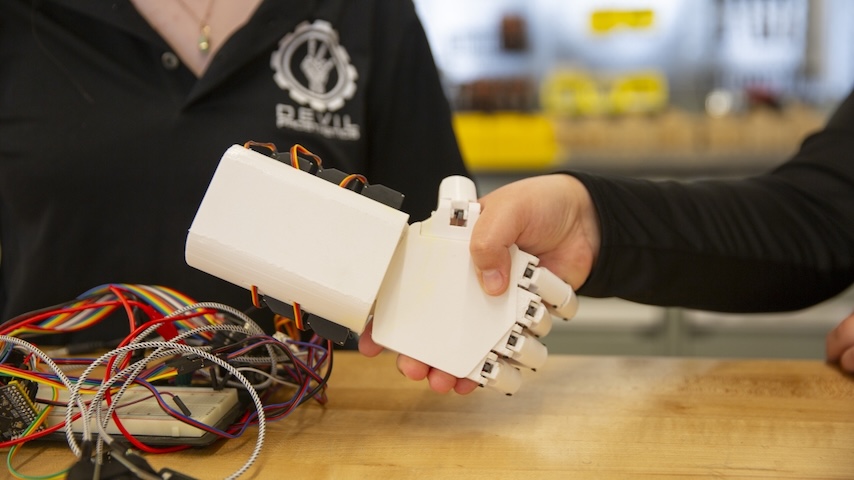
A research team at Arizona State University has engineered a better pediatric prosthetic for real-world use.
In pediatric prosthetics, engineering challenges are not defined solely by mechanics or materials—instead, they are defined by time. Children grow, muscle mass shifts, and limb geometries evolve rapidly, often rendering a newly fitted prosthetic obsolete within months. For a student engineering team at Arizona State University, that reality has become the central design constraint shaping every technical decision.
“We’re focusing specifically on that post-amputation window,” said student engineer and the team’s admin lead Laynie Ben. “In two to three months, you can see major changes from muscle atrophy to limb shape changes, and the prosthetic that fit initially just doesn’t work anymore.”
Traditionally, upper-limb prosthetics, particularly myoelectric systems, are often scaled-down versions of adult devices, carrying price tags between $20,000 and $50,000. But simply reducing the geometry does not address the core pediatric challenges.
So, rather than designing for permanence, the team is engineering for adaptability, rapid iteration, and intuitive use. Instead of replicating the full dexterity of a human hand, they defined a narrower, high-impact use case: enabling a child to stabilize and hold objects while performing tasks with their other limb.
“We call it the ‘cup holder’ model,” explained team lead Paige Danes. “It sounds simple, but just being able to hold something while doing another task is huge.”
This functional prioritization reflects a classic engineering principle called the 80/20 rule, which guided the team to target the 20 percent of features that deliver 80 percent of real-world utility.
More for You: Wearable Exoskeleton Uses AI to Assist Human Movement
Another one of the team’s most consequential design decisions involved eliminating the wrist joint entirely. Early prototypes included a servo-actuated wrist to enable rotation and articulation. However, testing revealed that this joint introduced a structural weak point while contributing little to the defined use case.
“The servo became the only structural element at the joint,” Ben explained. “That created a lot of risk, and it just couldn’t handle the loads we needed.”
In response, the team merged the forearm and palm into a single rigid structure. This change significantly improved load-bearing capacity and durability while reducing mechanical complexity.
“We were breaking components just trying to remove supports,” Danes said. “Switching materials made a huge difference for small parts.”
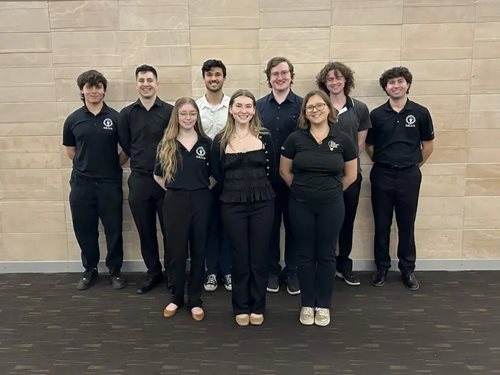 The Piece by Piece Prosthetics team.
By focusing on incremental improvements rather than complete system overhauls, the team reports a six-fold increase in productivity, allowing them to converge on viable designs more quickly.
The Piece by Piece Prosthetics team.
By focusing on incremental improvements rather than complete system overhauls, the team reports a six-fold increase in productivity, allowing them to converge on viable designs more quickly.
Another critical consideration for pediatric use was how to make sure the system could adapt to the user’s natural neuromuscular signals. To achieve this, the system utilizes four surface electromyography (sEMG) sensors to detect subtle muscle activations in the residual limb. These signals are mapped to three predefined gestures, such as open, closed, and a custom grip, through a trained model that learns each user’s unique muscle patterns.
“We don’t have to teach kids to move a specific muscle,” Danes explained. “We just have them think about the gesture, and the model learns how their body expresses that.”
Sensor placement remains an active area of research, as positioning directly affects signal fidelity and classification accuracy. “The number and placement of sensors correlates with how many gestures we can reliably detect,” Ben added.
The team is also exploring user-driven customization through a software interface. One concept involves allowing users to define custom grip configurations through an app. These configurations could be “locked in” for specific tasks, such as holding a baseball bat, enabling the prosthetic to function as a task-specific tool.
“Everyone’s grip is different,” Danes said. “If we can let users set that themselves, it opens up a lot of possibilities.”
Discover the Benefits of ASME Membership
As for the baseline functionality, the team’s current prototypes still separate the mechanical hand from the control electronics, but they are actively working to integrate these systems. A custom-designed printed circuit board (PCB) is under development to consolidate the microcontroller, signal processing, and power management into a compact form factor. The goal is to reduce wiring complexity and overall system size, not only to improve usability but also to enhance reliability and manufacturability.
Most crucially, the team is resisting the temptation to over-engineer the first release. By prioritizing functionality, durability, and accessibility, the team is addressing the core barriers that have long limited pediatric prosthetic adoption.
“We could keep improving forever,” Ben said. “But that doesn’t help kids. We need to define version 1.0, get it out there, and then iterate.”
While technical development continues, the team is simultaneously navigating the regulatory and commercialization landscape. As a Class II medical device, the prosthetic will require FDA registration, which is a process that carries both financial and procedural hurdles. To support development, the team has secured more than $30,000 in funding through pitch competitions and grants, enabling investment in prototyping tools, materials, and electronics.
As the team moves toward a market-ready prototype under their new venture, Piece by Piece Prosthetics, their work highlights a broader lesson for engineers: Sometimes, the most effective innovation is not adding complexity, but removing it strategically, deliberately, and with the end user in mind.
Cassandra Kelly is a technology writer in Columbus, Ohio.
“We’re focusing specifically on that post-amputation window,” said student engineer and the team’s admin lead Laynie Ben. “In two to three months, you can see major changes from muscle atrophy to limb shape changes, and the prosthetic that fit initially just doesn’t work anymore.”
Traditionally, upper-limb prosthetics, particularly myoelectric systems, are often scaled-down versions of adult devices, carrying price tags between $20,000 and $50,000. But simply reducing the geometry does not address the core pediatric challenges.
So, rather than designing for permanence, the team is engineering for adaptability, rapid iteration, and intuitive use. Instead of replicating the full dexterity of a human hand, they defined a narrower, high-impact use case: enabling a child to stabilize and hold objects while performing tasks with their other limb.
“We call it the ‘cup holder’ model,” explained team lead Paige Danes. “It sounds simple, but just being able to hold something while doing another task is huge.”
This functional prioritization reflects a classic engineering principle called the 80/20 rule, which guided the team to target the 20 percent of features that deliver 80 percent of real-world utility.
More for You: Wearable Exoskeleton Uses AI to Assist Human Movement
Another one of the team’s most consequential design decisions involved eliminating the wrist joint entirely. Early prototypes included a servo-actuated wrist to enable rotation and articulation. However, testing revealed that this joint introduced a structural weak point while contributing little to the defined use case.
“The servo became the only structural element at the joint,” Ben explained. “That created a lot of risk, and it just couldn’t handle the loads we needed.”
In response, the team merged the forearm and palm into a single rigid structure. This change significantly improved load-bearing capacity and durability while reducing mechanical complexity.
Affordable and adaptable
The team’s development process relies heavily on rapid prototyping, enabled by in-house additive manufacturing. A recently acquired high-resolution 3D printer allows the team to quickly iterate on small, intricate components. To address common issues with delicate geometries, they transitioned to water-soluble support materials, reducing the risk of damaging parts during post-processing.“We were breaking components just trying to remove supports,” Danes said. “Switching materials made a huge difference for small parts.”
The Piece by Piece Prosthetics team.
Another critical consideration for pediatric use was how to make sure the system could adapt to the user’s natural neuromuscular signals. To achieve this, the system utilizes four surface electromyography (sEMG) sensors to detect subtle muscle activations in the residual limb. These signals are mapped to three predefined gestures, such as open, closed, and a custom grip, through a trained model that learns each user’s unique muscle patterns.
“We don’t have to teach kids to move a specific muscle,” Danes explained. “We just have them think about the gesture, and the model learns how their body expresses that.”
Sensor placement remains an active area of research, as positioning directly affects signal fidelity and classification accuracy. “The number and placement of sensors correlates with how many gestures we can reliably detect,” Ben added.
The team is also exploring user-driven customization through a software interface. One concept involves allowing users to define custom grip configurations through an app. These configurations could be “locked in” for specific tasks, such as holding a baseball bat, enabling the prosthetic to function as a task-specific tool.
“Everyone’s grip is different,” Danes said. “If we can let users set that themselves, it opens up a lot of possibilities.”
Discover the Benefits of ASME Membership
As for the baseline functionality, the team’s current prototypes still separate the mechanical hand from the control electronics, but they are actively working to integrate these systems. A custom-designed printed circuit board (PCB) is under development to consolidate the microcontroller, signal processing, and power management into a compact form factor. The goal is to reduce wiring complexity and overall system size, not only to improve usability but also to enhance reliability and manufacturability.
Most crucially, the team is resisting the temptation to over-engineer the first release. By prioritizing functionality, durability, and accessibility, the team is addressing the core barriers that have long limited pediatric prosthetic adoption.
“We could keep improving forever,” Ben said. “But that doesn’t help kids. We need to define version 1.0, get it out there, and then iterate.”
While technical development continues, the team is simultaneously navigating the regulatory and commercialization landscape. As a Class II medical device, the prosthetic will require FDA registration, which is a process that carries both financial and procedural hurdles. To support development, the team has secured more than $30,000 in funding through pitch competitions and grants, enabling investment in prototyping tools, materials, and electronics.
As the team moves toward a market-ready prototype under their new venture, Piece by Piece Prosthetics, their work highlights a broader lesson for engineers: Sometimes, the most effective innovation is not adding complexity, but removing it strategically, deliberately, and with the end user in mind.
Cassandra Kelly is a technology writer in Columbus, Ohio.
A research team at Arizona State University has engineered a better pediatric prosthetic for real-world use.

Author and owner of Like-Minded Marketing
Related Content

Jul 14, 2026
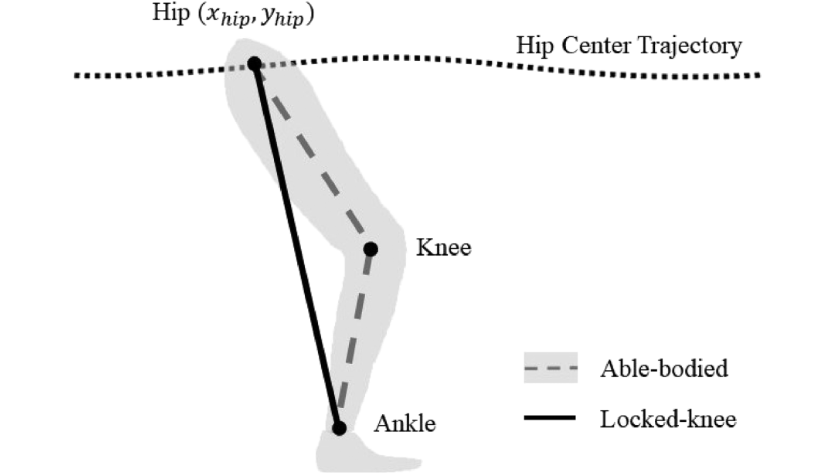
A Better Step for People with Above-Knee Amputations

MIT researchers designed an affordable prosthetic foot that helps people with above-knee amputations achieve a more natural stride.
Jul 13, 2026
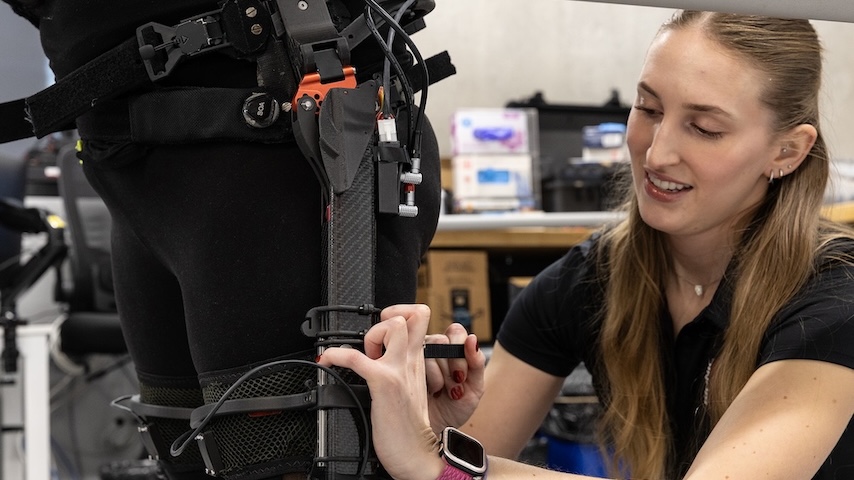
Exoskeleton Improves Mobility for Stroke Survivors

University of Utah researchers are piloting a 5.5-pound wearable robotic solution to help individuals with hemiparesis walk.
Jul 9, 2026
A Portable Alternative to Mammograms

A new wearable ultrasound system generates real-time 3D breast images while reducing cost, improving comfort, and expanding access to screening.
Jun 25, 2026
A Mighty Wind Project
You probably don’t know how much you fart. And turns out, nobody else does either. Researchers at the University of Maryland have created a tool to finally answer this vital question.