A Mighty Wind Project
A Mighty Wind Project
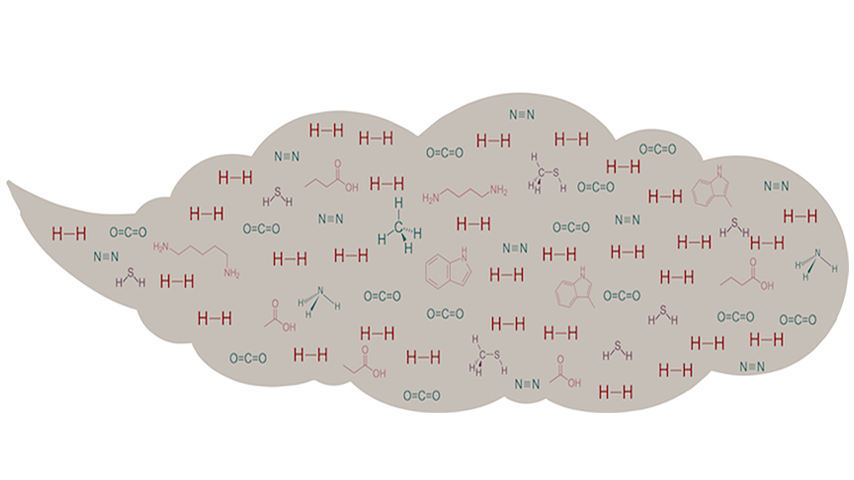
You probably don’t know how much you fart. And turns out, nobody else does either. Researchers at the University of Maryland have created a tool to finally answer this vital question.
“It is universally well known, That in digesting our common Food, there is created or produced in the Bowels of human Creatures, a great Quantity of Wind,” wrote Benjamin Franklin in “A Letter to a Royal Academy,” in 1781. He was, no doubt, correct. However, “a great Quantity,” is an inexact measure, and, from Franklin’s time to our own, no one has made a precise estimate of how much we fart.
It turns out that guesswork by individuals and scientists in the past decades has grossly underestimated the amount of gas produced in a day by “human Creatures.” That’s the conclusion reached by researchers at the University of Maryland (UM) after their initial study into the frequency of our gas passing. Now, they’ve started a much larger study, dubbed the Human Flatus Atlas, to give us a better answer to the question of how much we fart, and to get an inkling of what kinds of diets are more likely induce trouser trumpets, backfires, nose-closers, putt-putts, bottom burps, butt sneezes, quackers, rattlers, rippers, and their more silent brethren.
“You can actually get information about your gut via your flatus—your fart. I mean, we laugh about it, but biologically your farts, or flatus, comes from gas and the gas comes from bacteria fermentation,” explained Santiago Botasini, a research scientist at UM. “The idea is to get a baseline, which is nowadays nonexistent.”
To get that baseline, the researchers developed a sensor that clips on to the outside of a subject’s underwear and measures the emission of hydrogen—a major component of all flatulence—throughout the day and night.
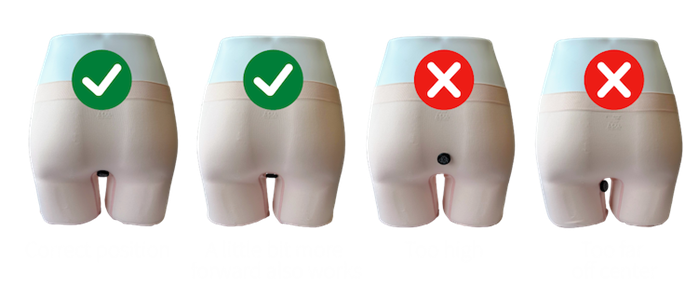 Correct positioning on the sensor ensures accurate measurements.
Biologists, chemists, dietitians, and lay people, as it were, have long thought that we have roughly 10 to 20 episodes a day. Hall and his team found the number to be both much higher and more varied. The average fart frequency of the three dozen subjects who wore the sensor for the pilot study turned out to be around 36. Some had only four events a day while others had as many as 59.
Correct positioning on the sensor ensures accurate measurements.
Biologists, chemists, dietitians, and lay people, as it were, have long thought that we have roughly 10 to 20 episodes a day. Hall and his team found the number to be both much higher and more varied. The average fart frequency of the three dozen subjects who wore the sensor for the pilot study turned out to be around 36. Some had only four events a day while others had as many as 59.
Why the variation? Diet has something to do with it as does the gut biome of the individual, but a more definite answer is not yet known. That’s why researchers at the university, working with Brantley Hall, a professor in the Department of Cell Biology and Molecular Genetics, have begun the Human Flatus Atlas. Anyone willing to have their gas output measured can head to the website, enter their information, and potentially receive a sensor they can snap onto their underwear to monitor their expulsions.
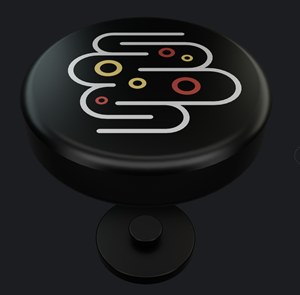 The flatus sensor device.
The researchers are studying how many flatuses might be considered typical and attempting to classify people into different categories depending on flatus frequency, intensity, and diet. These include “normal” people who have an average fart frequency, “Hydrogen Hyperproducers,” with upward of 50 gaseous occurrences on a given day, and “Zen Digesters,” who—despite their high fiber consumption—produce just a handful of emissions a day.
The flatus sensor device.
The researchers are studying how many flatuses might be considered typical and attempting to classify people into different categories depending on flatus frequency, intensity, and diet. These include “normal” people who have an average fart frequency, “Hydrogen Hyperproducers,” with upward of 50 gaseous occurrences on a given day, and “Zen Digesters,” who—despite their high fiber consumption—produce just a handful of emissions a day.
“I’m one of the Zen ones, if you want to know,” Botasini said. “We are not allowed to participate on the project, but we have used the device many times.”
The device itself has gone through many iterations, mostly for comfort. It is now small, with rounded corners instead of square ones, is totally wireless, and charges in 10 minutes. It uses a tiny battery to keep the size down and, to save energy, the microcontroller only wakes up to measure an event when the sensor tells it one is happening.
The researchers provide alcohol wipes to keep the sensor clean, but it is not waterproof, as demonstrated by several subjects who failed to remove the sensors before putting their underwear in the washing machine. “For us, this is a good thing, because that means that they completely forgot that they were using the device—so it’s not uncomfortable at all,” Botasini said.
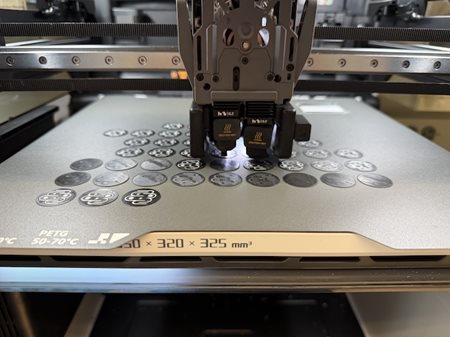 The researchers have made 300 devices so far.
However, the competition to be part of the study is fierce. The researchers have made 300-odd devices so far, aiming from the start to enroll 800 subjects. But within weeks of announcing the launch of the project they received around 8,000 applicants. “We’re a little overwhelmed,” Botasini added.
The researchers have made 300 devices so far.
However, the competition to be part of the study is fierce. The researchers have made 300-odd devices so far, aiming from the start to enroll 800 subjects. But within weeks of announcing the launch of the project they received around 8,000 applicants. “We’re a little overwhelmed,” Botasini added.
As important as it is to understand flatus frequency for the sake of human knowledge, the survey does have a practical application. The device could be used as a first screening tool to help people monitor their symptoms and motivate them to seek medical advice if they experience abnormal or well-above-average flatulence. It could also help users identify specific trigger foods and determine the ideal fiber dosage and type to promote a healthy diet that also prevents excessive gas production. In this way, the device could become a useful tool for personal lifestyle management.
“Some people have excessive flatus. We have someone who has more than 300 flatuses per day. That seems not normal for me, but maybe that person doesn’t feel bad,” Botasini said. “After the trial, we will contact the people who had the most and least flatus and analyze the microbiome to figure out what is causing this difference.”
Michael Abrams is a technology writer in Westfield, N.J.
It turns out that guesswork by individuals and scientists in the past decades has grossly underestimated the amount of gas produced in a day by “human Creatures.” That’s the conclusion reached by researchers at the University of Maryland (UM) after their initial study into the frequency of our gas passing. Now, they’ve started a much larger study, dubbed the Human Flatus Atlas, to give us a better answer to the question of how much we fart, and to get an inkling of what kinds of diets are more likely induce trouser trumpets, backfires, nose-closers, putt-putts, bottom burps, butt sneezes, quackers, rattlers, rippers, and their more silent brethren.
Measuring output
“You can actually get information about your gut via your flatus—your fart. I mean, we laugh about it, but biologically your farts, or flatus, comes from gas and the gas comes from bacteria fermentation,” explained Santiago Botasini, a research scientist at UM. “The idea is to get a baseline, which is nowadays nonexistent.”
To get that baseline, the researchers developed a sensor that clips on to the outside of a subject’s underwear and measures the emission of hydrogen—a major component of all flatulence—throughout the day and night.
Correct positioning on the sensor ensures accurate measurements.
Why the variation? Diet has something to do with it as does the gut biome of the individual, but a more definite answer is not yet known. That’s why researchers at the university, working with Brantley Hall, a professor in the Department of Cell Biology and Molecular Genetics, have begun the Human Flatus Atlas. Anyone willing to have their gas output measured can head to the website, enter their information, and potentially receive a sensor they can snap onto their underwear to monitor their expulsions.
The flatus sensor device.
“I’m one of the Zen ones, if you want to know,” Botasini said. “We are not allowed to participate on the project, but we have used the device many times.”
A discrete tool
The device itself has gone through many iterations, mostly for comfort. It is now small, with rounded corners instead of square ones, is totally wireless, and charges in 10 minutes. It uses a tiny battery to keep the size down and, to save energy, the microcontroller only wakes up to measure an event when the sensor tells it one is happening.
The researchers provide alcohol wipes to keep the sensor clean, but it is not waterproof, as demonstrated by several subjects who failed to remove the sensors before putting their underwear in the washing machine. “For us, this is a good thing, because that means that they completely forgot that they were using the device—so it’s not uncomfortable at all,” Botasini said.
The researchers have made 300 devices so far.
As important as it is to understand flatus frequency for the sake of human knowledge, the survey does have a practical application. The device could be used as a first screening tool to help people monitor their symptoms and motivate them to seek medical advice if they experience abnormal or well-above-average flatulence. It could also help users identify specific trigger foods and determine the ideal fiber dosage and type to promote a healthy diet that also prevents excessive gas production. In this way, the device could become a useful tool for personal lifestyle management.
“Some people have excessive flatus. We have someone who has more than 300 flatuses per day. That seems not normal for me, but maybe that person doesn’t feel bad,” Botasini said. “After the trial, we will contact the people who had the most and least flatus and analyze the microbiome to figure out what is causing this difference.”
Michael Abrams is a technology writer in Westfield, N.J.
You probably don’t know how much you fart. And turns out, nobody else does either. Researchers at the University of Maryland have created a tool to finally answer this vital question.

Freelance writer based in New Jersey
Related Content


Oct 1, 2026
Engineering the Sounds of Silence
Many of the things that engineers create make a lot of noise. Now there’s a crop of engineers trying to turn the volume down for all of us.
Sep 29, 2026
An Engineering Landmark in Tractor Innovation

The Hart-Parr Model 3 is the first tractor to be mass produced with an internal combustion engine, earning its designation as a Historical Mechanical Engineering Landmark.
Sep 3, 2026
5 Mechanical Innovations to Watch in 2026

From adaptive safety belts to biomechanical drug delivery, these recent mechanical engineering breakthroughs are setting the stage for the future.

Sep 1, 2026
The Next Robotics Frontier


The robotics industry often focuses on scale, automation, and valuations. But a quieter group of founders is instead asking what robotics have overlooked as they innovate with compassion in mind.