Pressure Relief Devices: Design, Sizing, Construction, Inspection and Maintenance (Virtual Classroom)
Course Type:
 Virtual Classroom
Course Number:
 VCPD583
Credits:
Language:
Gain a comprehensive overview of the design, construction, installation, operation, inspection and maintenance of pressure relieving devices.
{{activeProduct.Title}}
Digital products are restricted to one per purchase.
{{activeProduct.CurrencySymbol}}{{ formatPrice(activeProduct.ListPrice) }} was {{activeProduct.CurrencySymbol}}{{ formatPrice(originalPrice) }}
{{activeProduct.CurrencySymbol}}{{ formatPrice(activeProduct.ListPriceSale) }} was {{activeProduct.CurrencySymbol}}{{ formatPrice(activeProduct.ListPrice) }}
{{activeProduct.CurrencySymbol}}{{ formatPrice(activeProduct.ListPrice) }} was {{activeProduct.CurrencySymbol}}{{ formatPrice(originalPrice) }}
{{activeProduct.CurrencySymbol}}{{ formatPrice(activeProduct.ListPriceSale) }} was {{activeProduct.CurrencySymbol}}{{ formatPrice(originalPrice) }}
{{activeProduct.CurrencySymbol}}{{ formatPrice(activeProduct.MemberPrice) }} was {{activeProduct.CurrencySymbol}}{{ formatPrice(originalPrice) }}
{{activeProduct.CurrencySymbol}}{{ formatPrice(activeProduct.MemberPriceSale) }} was {{activeProduct.CurrencySymbol}}{{ formatPrice(originalPrice) }}
*Excluding Lite Members
Final invoices will include applicable sales and use tax.
Print or Share
Product Options
Schedule
The course runs each day from 9:30 AM to 6:00 PM Eastern, with breaks scheduled throughout.
You may also take this course in person!
| Quantity | Item |
|---|---|
| {{ package.Quantity }} | {{ package.Title }} |
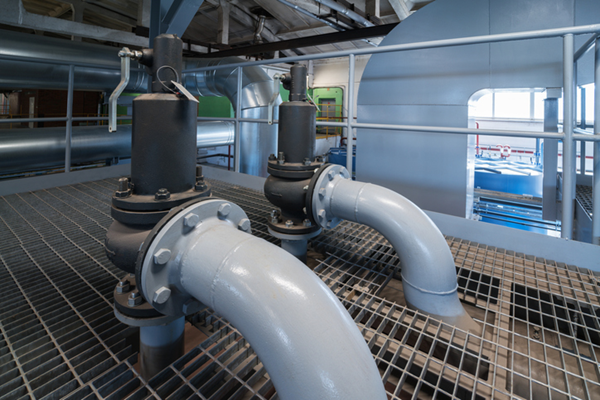
Pressure relief devices (PRDs) are critical safety components that protect boilers, pressure vessels, piping and tanks from overpressure and potential explosions or collapse. Proper design, installation, and maintenance ensure the safety and integrity of pressurized systems. Proper PRD design and application are essential for ensuring the safety and integrity of pressurized equipment.
This course offers a comprehensive review of the current practices for designing, constructing, installing, operating, inspecting, and maintaining PRDs. Participants learn code requirements and best industry practices to prevent equipment from exceeding its maximum allowed pressures.
The curriculum covers code requirements for overpressure protection, including key standards from the ASME Boiler and Pressure Vessel Codes (B&PVC) and ASME Pressure Piping Codes including:
- ASME Section I – Power Boilers
- ASME Section III – Nuclear Systems
- ASME Section IV – Heating Boilers
- ASME Section VIII – Pressure Vessels
- ASME Section XII – Transport Tanks
- ASME Section XIII – Overpressure Protection
- ASME B31.1 – Power Piping
- ASME B31.3 – Process Piping
- ASME B31.8 – Natural Gas Piping
- ASME B31.12 – Hydrogen Piping
In addition, the following American Petroleum Institute (API) standards are also discussed:
- API RP 520-Parts I & II Sizing, Selection, and Installation of Pressure Relief Devices
- API RP 576-Inspection of Pressure Relief Devices
By participating in this course, you will learn how to successfully:
- PRD Fundamentals and Codes – Analyze PRD types, components, and operating principles to determine correct application of ASME, API, B31 series, and National Board code requirements across boilers, pressure vessels, piping, and specialized systems.
- Overpressure Protection and Design – Evaluate PRD sizing and design solutions by comparing multiple protection strategies, identifying limitations, and confirming compliance with capacity, contingency, and scenario-based criteria.
- Installation and System Integration – Apply code requirements for PRD installation, piping, reaction forces, and stability to ensure safe and effective system integration.
- Inspection, Maintenance, and Handling – Analyze pre-service and on-stream inspections, perform corrective actions, and follow proper storage and handling practices to maintain PRD readiness.
- Repair and Testing – Appraise repair and servicing procedures, the National Board VR program, and testing requirements to ensure continued compliance and device reliability.
Who Should Attend?
This course is designed for engineers of all levels from early career engineers to experienced engineers. It is an essential resource for mechanical engineers, and design engineers; process engineers, and chemical engineers; reliability engineers, and maintenance engineers; inspectors, and testing engineers; as well as plant supervisors, and managers.
Course Materials (included in purchase of course):
- Digital course notes via ASME’s Learning Platform
Supplementary Materials (not included in the purchase of the course):
- Please bring a calculator to class each day.
This ASME Virtual Classroom course is held live with an instructor on our online learning platform. Certificate of completion will be issued to registrants who successfully attend and complete the course.
Can't make one of the scheduled sessions? This course is also available On Demand.
Topics Covered
- History of pressure relief devices, definitions, and common terminology
- Requirements of codes and standards, such as ASME, API, and NBIC
- Application of ASME B&PVC, Section XIII as a reference Code and how it relates with other Code Sections
- Types of pressure relief devices such as pressure relief valves, safety relief valves, safety valves, rupture disks and pin devices
- Materials for pressure relief valves, rupture disks
- ASME design fundamentals for components, testing, and marking
- Manufacturing as per code requirements, test laboratories, and capacity certification
- Safety valves for power boilers, and heating boilers
- Pressure relief devices for pressure vessels
- Pressure relief valves for power piping, and process piping and gas transmission piping
- Sizing and selection of PRDs for single phase flow based on ASME and API Code
- Sizing and selection workshop; calculations of orifice areas, and selection of pressure relief devices
- Review special applications such as nuclear systems, transport tanks, compressed gas systems and cryogenic systems
- Pressure relief devices for refinery vessels, and atmospheric tanks
- Handling and storage of pressure relief devices
- Installation of PRD’s including inlet piping, discharge piping, and vent piping
- Causes of pressure relief valve instability
- Maintenance procedures, types of maintenance, testing, and trouble shooting
- Inspection, authorized inspectors, types of inspection, records, and reports (NBIC and API)
- Repairs and alterations, records and data maintenance, and National Board “VR” certification program
- Shop testing, test media, test stands, test reports, and testing facilities
- Course Review and close out

Daniel Tompkins
Daniel E. Tompkins has over 40 years’ experience in Boiler and Pressure Vessel design, construction, commissioning, operation, maintenance, and inspection.
More Information

Virtual Classroom
Live course with an instructor and peers held in an online learning environment with digital enhancements and online materials.Please review our L&D Refund and Cancellation Policy before you buy.
If you have any additional questions please review our FAQs, or Contact Us.
Please review ASME's policies applicable to Learning & Development courses:
Sorry, we only have available spots for this course. Would you like to add those to your cart?