When Training Matters Experienced Engineers Teach
When Training Matters Experienced Engineers Teach
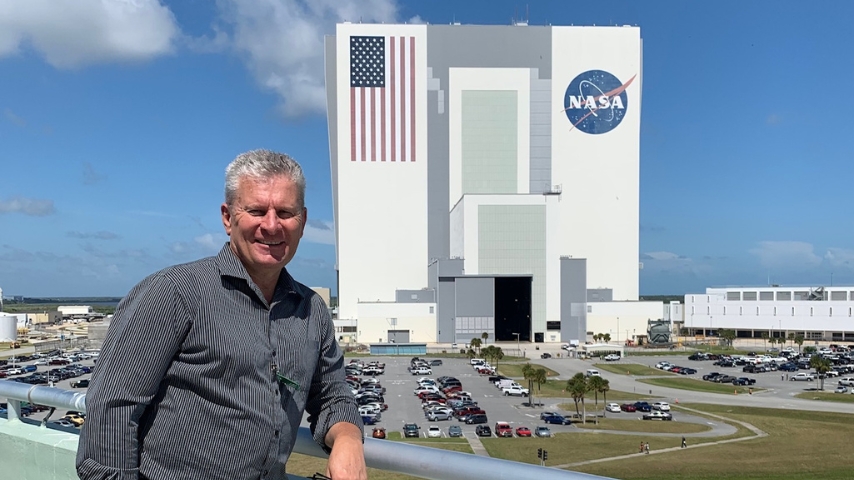
After decades in boiler and pressure vessel engineering, Dan Tompkins explains why training matters and why lifelong learning is essential.
After decades spent working in boiler and pressure vessel design, construction, operations, and inspection, Dan Tompkins isn’t ready to take a cruise or hit the links. “I’ve spent 50 years becoming this person. Why would I waste it?” he explained.
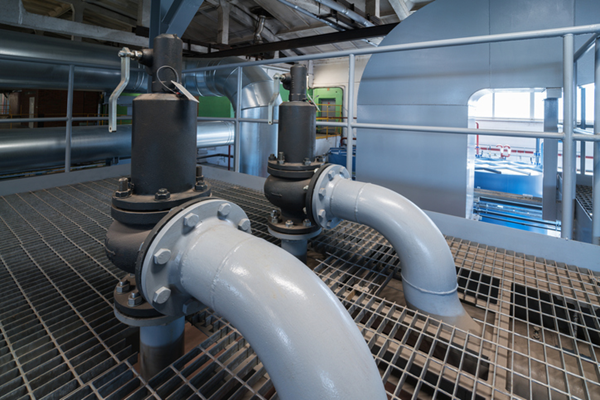
Instead, he now teaches courses for ASME and volunteers on the ASME Boiler and Pressure Vessel committees. He teaches two classes online and in-person: Pressure Relief Devices: Design, Sizing, Construction, Inspection and Maintenance and the BPVC, API and NBIC Boiler Operation, Maintenance, Inspection, Repairs, and Alterations Combo Course. For him, training other engineers helps him stay relevant and offers a way to pass on hard-earned experience.
For Tompkins, teaching has become a meaningful part of what he calls his “semi-retired” life. Rather than just walking away from a field he spent nearly 50 years mastering, he sees instruction as a way to put that experience to work for others. “The biggest thing for me is I don’t want to become irrelevant,” he said. “The value aspect of who I have become over 50 years is that I’m now giving value back to the industry that made me who I am.”
Tompkins often returns to a familiar Will Rogers quote: “Good judgment comes from experience, and a lot of that comes from bad judgment.” The line neatly captures how he sees the relationship between experience, judgment, and professional growth. “Experience comes from bad decisions, which then create good judgment,” he explained. “How do you get good judgment? Well, it’s because you probably made some mistakes.”
Tompkins also enjoys providing a good educational experience for participants. The classroom gives him a chance to translate years of experience into something practical and useful to students. Beyond simply delivering information, teaching helps students prepare for situations they may not yet have encountered on the job.
Better-trained professionals make safer decisions, communicate more effectively, and help preserve the institutional knowledge that keeps high-stakes industries running, Tompkins said. He teaches both virtually and in person and sees value in each format, but when he talks about the strengths of face-to-face instruction, he starts with the energy in the room.
One of the most memorable courses he taught took place in Nigeria, where 24 early-career mechanical engineers brought constant questions and a strong desire to learn. “They knew a little bit, but they wanted a lot more,” Tompkins said. That kind of curiosity, he said, can make a major difference in technical courses, where learning depends not just on absorbing information but on testing understanding and connecting principles to real-world practice.
His courses have also reached engineers in other high-stakes settings, including NASA at Kennedy Space Center. “All of a sudden now I’m dealing with rocket scientists that are sending rockets to Mars,” he said. The subject matter remains in demand: Tompkins teaches the course 10 to 12 times a year in a mix of virtual and in-person formats and describes it as foundational to the industry.
Tompkins is a strong believer in lifelong learning. “There are things that they may need or may learn today that they might not need until five or 10 years down the road,” he said of his students. That kind of training gives professionals a foundation they can return to later, along with a clearer sense of where to find reliable information when they need it.
Tompkins noted that a course does not need to map directly to an immediate job task to be worthwhile.
Sometimes the benefit is exploratory. Professionals may take a class to see whether another area of engineering interests them, to broaden their understanding, or to prepare for opportunities they cannot yet predict. In that sense, training becomes a way to stay open to future directions rather than waiting until a skill becomes urgent.
Tompkins expects training to evolve alongside changes in technology, materials, controls, and design practices, but he does not believe the fundamentals will disappear. “Yeah, we’re not going to change the physics. We just need to use it a little bit differently,” he explained. Even as tools become more sophisticated, advances in additive manufacturing, materials, and AI-driven systems will help shape that future.
 “The inputs are going to be very similar to what you would be accustomed to from a human, right? And that then becomes that human touch that I’m just not sure how you can get away from that,” Tompkins explained. In a field where poor inputs can lead to poor outcomes, he believes professionals will still need the experience to question results, recognize limitations, and make final assessments.
Tompkins also sees organizations such as ASME as essential to that future. Codes and standards will remain critical, and courses shaped by volunteers, industry expertise, and decades of code development offer a trusted framework for navigating change.
“ASME publishes and updates codes and standards using input from volunteers and industry experts while paying attention to what’s actually happening in practice and how these systems can be made better and safer,” Tompkins said. “That’s an aspect I emphasize at the beginning of my courses, how these standards have operated and evolved for more than 100 years. As long as such progress continues to function as it has, which includes adapting to new technology, codes and standards training will continue to evolve and be in high demand.”
Cathy Cecere is membership content program manager.
Instead, he now teaches courses for ASME and volunteers on the ASME Boiler and Pressure Vessel committees. He teaches two classes online and in-person: Pressure Relief Devices: Design, Sizing, Construction, Inspection and Maintenance and the BPVC, API and NBIC Boiler Operation, Maintenance, Inspection, Repairs, and Alterations Combo Course. For him, training other engineers helps him stay relevant and offers a way to pass on hard-earned experience.
A career’s worth of knowledge
For Tompkins, teaching has become a meaningful part of what he calls his “semi-retired” life. Rather than just walking away from a field he spent nearly 50 years mastering, he sees instruction as a way to put that experience to work for others. “The biggest thing for me is I don’t want to become irrelevant,” he said. “The value aspect of who I have become over 50 years is that I’m now giving value back to the industry that made me who I am.”
Tompkins often returns to a familiar Will Rogers quote: “Good judgment comes from experience, and a lot of that comes from bad judgment.” The line neatly captures how he sees the relationship between experience, judgment, and professional growth. “Experience comes from bad decisions, which then create good judgment,” he explained. “How do you get good judgment? Well, it’s because you probably made some mistakes.”
Tompkins also enjoys providing a good educational experience for participants. The classroom gives him a chance to translate years of experience into something practical and useful to students. Beyond simply delivering information, teaching helps students prepare for situations they may not yet have encountered on the job.
Training matters
Better-trained professionals make safer decisions, communicate more effectively, and help preserve the institutional knowledge that keeps high-stakes industries running, Tompkins said. He teaches both virtually and in person and sees value in each format, but when he talks about the strengths of face-to-face instruction, he starts with the energy in the room.
One of the most memorable courses he taught took place in Nigeria, where 24 early-career mechanical engineers brought constant questions and a strong desire to learn. “They knew a little bit, but they wanted a lot more,” Tompkins said. That kind of curiosity, he said, can make a major difference in technical courses, where learning depends not just on absorbing information but on testing understanding and connecting principles to real-world practice.
His courses have also reached engineers in other high-stakes settings, including NASA at Kennedy Space Center. “All of a sudden now I’m dealing with rocket scientists that are sending rockets to Mars,” he said. The subject matter remains in demand: Tompkins teaches the course 10 to 12 times a year in a mix of virtual and in-person formats and describes it as foundational to the industry.
Lifelong learning
Tompkins is a strong believer in lifelong learning. “There are things that they may need or may learn today that they might not need until five or 10 years down the road,” he said of his students. That kind of training gives professionals a foundation they can return to later, along with a clearer sense of where to find reliable information when they need it.
Tompkins noted that a course does not need to map directly to an immediate job task to be worthwhile.
Sometimes the benefit is exploratory. Professionals may take a class to see whether another area of engineering interests them, to broaden their understanding, or to prepare for opportunities they cannot yet predict. In that sense, training becomes a way to stay open to future directions rather than waiting until a skill becomes urgent.
The future of training
Tompkins expects training to evolve alongside changes in technology, materials, controls, and design practices, but he does not believe the fundamentals will disappear. “Yeah, we’re not going to change the physics. We just need to use it a little bit differently,” he explained. Even as tools become more sophisticated, advances in additive manufacturing, materials, and AI-driven systems will help shape that future.
What You Need To Know About Pressure Relief Devices
In this 3-day virtual class, instructor Daniel Tompkins helps you better understand PRD-related codes and how to apply them at every stage of development, system integration, operation, and servicing.
Tompkins also sees organizations such as ASME as essential to that future. Codes and standards will remain critical, and courses shaped by volunteers, industry expertise, and decades of code development offer a trusted framework for navigating change.
“ASME publishes and updates codes and standards using input from volunteers and industry experts while paying attention to what’s actually happening in practice and how these systems can be made better and safer,” Tompkins said. “That’s an aspect I emphasize at the beginning of my courses, how these standards have operated and evolved for more than 100 years. As long as such progress continues to function as it has, which includes adapting to new technology, codes and standards training will continue to evolve and be in high demand.”
Cathy Cecere is membership content program manager.
After decades in boiler and pressure vessel engineering, Dan Tompkins explains why training matters and why lifelong learning is essential.

Membership content program manager for ASME
Related Content


Apr 15, 2026
Blog: ASME ST-LLC’s Role in Shaping Tomorrow

A look at two projects at ASME STLLC, whose mission is to provide new standards-related products and services to advance the application of emerging and newly commercialized science and technology.

Jun 17, 2024
Podcast: Rethinking the Boiler with AtmosZero CEO Addison Stark
Building a new technology to electrify and decarbonize the boiler room at a time when large-scale investments are going into climate hardware means we have a real chance to rebuild the world around us, according to Addison Stark.
Jan 11, 2024
Engineering Jobs that are Both Ordinary and Extraordinary

Nov 1, 2023
Condenser Coating Provides Efficiency Boost