Workforce Blog: Strategic Philanthropy Closes the Talent Gap
Workforce Blog: Strategic Philanthropy Closes the Talent Gap
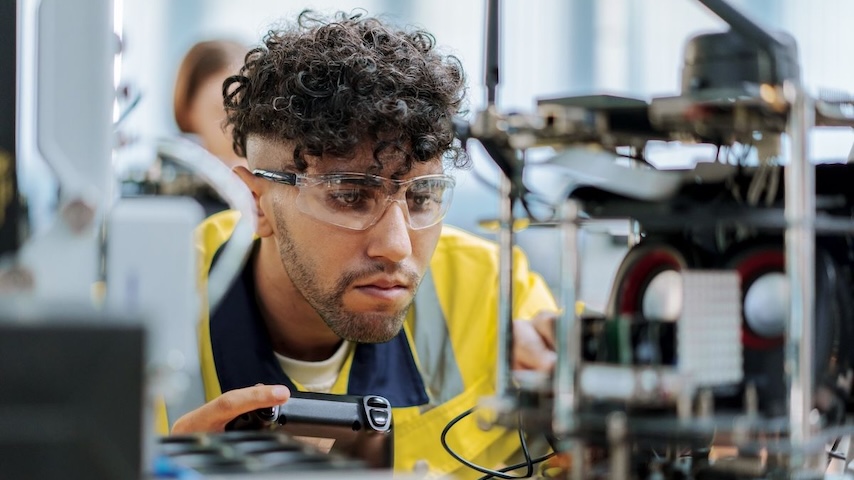
Corporate partners invest in workforce development and the greater good.
It is no secret that companies depending on engineering talent to stay competitive face ever-increasing challenges to recruit and retain best-in-class staff. Industry talent needs are continuing to outpace the available pool, with close to 2 million engineering and manufacturing jobs projected to be unfilled between now and 2033. The most forward-looking employers understand that they can’t fix this problem on their own. Proactive investment with well-aligned philanthropic partners can create the necessary bridges to fill the gaps that can support a robust and diverse talent pipeline.
Communities of problem solvers are everywhere, but some groups are discouraged or overlooked because of obstacles outside their control. The good news is that the talent exists and, with the removal of specific barriers at various entry points, joint efforts can create accessible pathways. If all high-potential young people could see themselves as engineers, receive the necessary education they need, and have a support network that helps them launch their technical careers, the workforce gap becomes a myth.
That’s why visionary employers take responsibility for ensuring a well prepared, highly motivated, and diverse workforce by proactively investing in ASME’s philanthropic initiatives. Organized into three key stages of development, the ASME Foundation’s programs provide educational opportunity, valuable first professional experience, and support for sustainable innovations that can ultimately benefit everyone.
Recognizing that the high cost of an engineering education poses a significant barrier to many qualified but under-resourced students, five years ago they partnered with the ASME Foundation to launch the Ansys Scholarship, providing up to five mechanical engineering students annually a grant of $5,000 to offset the cost of tuition. To date, the company has awarded nearly a quarter-million dollars in engineering scholarships, and in some cases was the difference between completing a degree or dropping out.
More for You: Inclusive Leadership Drives Tomorrow’s Workforce
RS Group is a worldwide distributor of industrial and electrical product and service solutions that help customers design, build, maintain, repair, and operate industrial equipment and operations.
 Photo: Getty
RS Americas, the British company’s U.S. subsidiary, was the lead supporter of a recent ASME EFx event at Dallas College, where teams of engineering students competed to solve real-world design challenges. This longstanding ASME Foundation program provides future mechanical engineers with opportunities for design experience and the chance to network with professional engineers, who also serve as judges and mentors.
Photo: Getty
RS Americas, the British company’s U.S. subsidiary, was the lead supporter of a recent ASME EFx event at Dallas College, where teams of engineering students competed to solve real-world design challenges. This longstanding ASME Foundation program provides future mechanical engineers with opportunities for design experience and the chance to network with professional engineers, who also serve as judges and mentors.
“Any time I get to actually be with students and see the work that we’re doing come to life, that’s the fulfilling part of what I get to do,” said LaRissa O’Neal, director of Talent and Org Capabilities, RS Americas. “Theory and concept and the ideation of what is possible is one thing—but until you’re actually there, doing it, you never really appreciate the reality, the possibility.”
RS Group recognizes that creating opportunities for young people to gain real-life experience is not only a service to the community, it’s ultimately good for business.
Quanser is a world-leading provider of engineering education solutions and has an outsized influence on preparing both next generation engineers and current working professionals. The company serves the global technical community by designing and developing cutting-edge solutions that form an interdisciplinary ecosystem for engineering education and research. Quanser has shared its expertise by way of thought leadership at various ASME platforms.
A presenter at a recent ASME Mechanical Engineering Leadership Webinar, Quanser helped educators sharpen their grant-application strategies, helping them unlock funding wins in a competitive grantmaking landscape.
Discover the Benefits of ASME Membership
At the ASME Foundation’s Mechanical Engineering Education Conference (MEEd), Quanser supports this body of work through both sponsorship as well as an active content contributor for Mechanical Engineering and engineering technology educators and leaders in academia, industry, and government. And attendees of ASME’s annual International Mechanical Engineering Congress and Expo (IMECE) were able to interact and learn more about what Quanser can do to enhance their education and research endeavors, providing the company access to new communities, helping to broaden their network.
“Engineering plays a critical role in shaping the modern world, and the quality of the engineers we develop today will define the solutions of tomorrow,” said Paul Karam, Quanser’s chief robotics officer. “Through our partnership with the ASME Foundation, we share a commitment to strengthening engineering education and preparing capable, forward-thinking professionals who can meet global challenges.”
While these examples demonstrate how industry can collaborate with the ASME Foundation to create positive societal impacts, we are always seeking new, creative ways to partner with like-minded companies, rising to our shared challenge of closing the engineering and technical workforce gap. At a moment when economic and political uncertainty have traditional avenues of workforce development on unstable ground, companies that step up will be known for their role in filling the gap, highlighting that their business is not just a commercial enterprise, but a true leader in its community.
Rebecca Lakhani is ASME’s Director of Corporate and Foundation Partnerships.
For more information on the ASME Foundation’s talent and workforce development programs and to learn how your company can get involved, visit asmefoundation.org.
Communities of problem solvers are everywhere, but some groups are discouraged or overlooked because of obstacles outside their control. The good news is that the talent exists and, with the removal of specific barriers at various entry points, joint efforts can create accessible pathways. If all high-potential young people could see themselves as engineers, receive the necessary education they need, and have a support network that helps them launch their technical careers, the workforce gap becomes a myth.
That’s why visionary employers take responsibility for ensuring a well prepared, highly motivated, and diverse workforce by proactively investing in ASME’s philanthropic initiatives. Organized into three key stages of development, the ASME Foundation’s programs provide educational opportunity, valuable first professional experience, and support for sustainable innovations that can ultimately benefit everyone.
Case Study: Ansys, part of Synopsys
Ansys, part of Synopsys, is a global leader in developing and marketing CAE/Multiphysics engineering simulation software for product design, testing, and operation. Its sophisticated tools are used by thousands of engineers worldwide.Recognizing that the high cost of an engineering education poses a significant barrier to many qualified but under-resourced students, five years ago they partnered with the ASME Foundation to launch the Ansys Scholarship, providing up to five mechanical engineering students annually a grant of $5,000 to offset the cost of tuition. To date, the company has awarded nearly a quarter-million dollars in engineering scholarships, and in some cases was the difference between completing a degree or dropping out.
More for You: Inclusive Leadership Drives Tomorrow’s Workforce
Case Study: RS Group
While scholarships provide direct financial support to individual students, some ASME Foundation partner companies help underwrite specific programs that provide valuable hands-on experience to aspiring engineers. By extending extra-curricular educational opportunities, employers help ensure that graduates are truly career ready when it’s time to join the workforce.RS Group is a worldwide distributor of industrial and electrical product and service solutions that help customers design, build, maintain, repair, and operate industrial equipment and operations.
Photo: Getty
“Any time I get to actually be with students and see the work that we’re doing come to life, that’s the fulfilling part of what I get to do,” said LaRissa O’Neal, director of Talent and Org Capabilities, RS Americas. “Theory and concept and the ideation of what is possible is one thing—but until you’re actually there, doing it, you never really appreciate the reality, the possibility.”
RS Group recognizes that creating opportunities for young people to gain real-life experience is not only a service to the community, it’s ultimately good for business.
Case Study: Quanser
Partnering with the ASME Foundation benefits corporate partners in manifold ways. It serves a shared long-term interest in developing their future workforce while allowing companies of all kinds to meet their purpose-filled objectives of giving back to the profession, the community, and the world.Quanser is a world-leading provider of engineering education solutions and has an outsized influence on preparing both next generation engineers and current working professionals. The company serves the global technical community by designing and developing cutting-edge solutions that form an interdisciplinary ecosystem for engineering education and research. Quanser has shared its expertise by way of thought leadership at various ASME platforms.
A presenter at a recent ASME Mechanical Engineering Leadership Webinar, Quanser helped educators sharpen their grant-application strategies, helping them unlock funding wins in a competitive grantmaking landscape.
Discover the Benefits of ASME Membership
At the ASME Foundation’s Mechanical Engineering Education Conference (MEEd), Quanser supports this body of work through both sponsorship as well as an active content contributor for Mechanical Engineering and engineering technology educators and leaders in academia, industry, and government. And attendees of ASME’s annual International Mechanical Engineering Congress and Expo (IMECE) were able to interact and learn more about what Quanser can do to enhance their education and research endeavors, providing the company access to new communities, helping to broaden their network.
“Engineering plays a critical role in shaping the modern world, and the quality of the engineers we develop today will define the solutions of tomorrow,” said Paul Karam, Quanser’s chief robotics officer. “Through our partnership with the ASME Foundation, we share a commitment to strengthening engineering education and preparing capable, forward-thinking professionals who can meet global challenges.”
While these examples demonstrate how industry can collaborate with the ASME Foundation to create positive societal impacts, we are always seeking new, creative ways to partner with like-minded companies, rising to our shared challenge of closing the engineering and technical workforce gap. At a moment when economic and political uncertainty have traditional avenues of workforce development on unstable ground, companies that step up will be known for their role in filling the gap, highlighting that their business is not just a commercial enterprise, but a true leader in its community.
Rebecca Lakhani is ASME’s Director of Corporate and Foundation Partnerships.
For more information on the ASME Foundation’s talent and workforce development programs and to learn how your company can get involved, visit asmefoundation.org.

Learning is a lifelong journey. Explore our growing collection of free learning resources and articles.