Voice AI App Helps Rural Silk Artisans
Voice AI App Helps Rural Silk Artisans
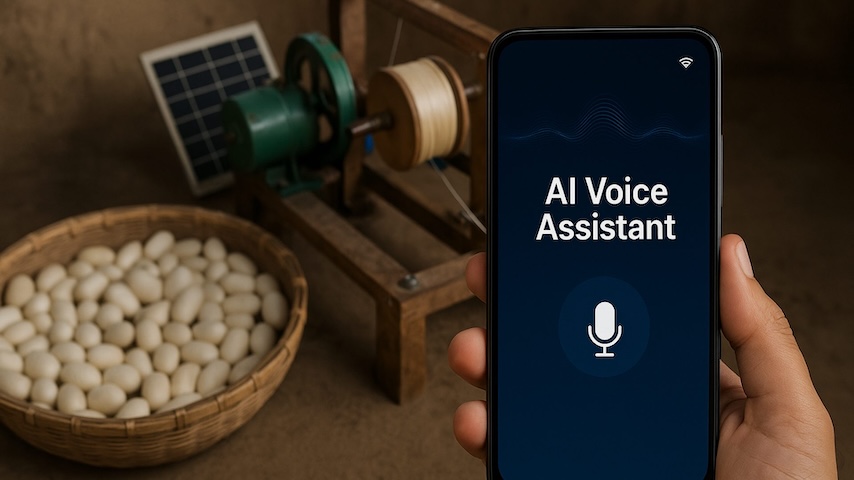
How an Indian social enterprise worked with an Engineering for Change Fellow to make a marketplace app accessible to rural women artisans.
Across rural India, silk is woven into tradition and daily life. But for much of that time, the process has taken a physical toll on the women who are responsible for much of the labor.
“Our work started about 10 years back when we saw rural women rolling silk yarn on their thigh,” explained Kunal Vaid, co-founder and CEO of Resham Sutra. “It’s a very painful process and also socially looked down upon.”
Resham Sutra set out to change that. The social enterprise works “to improve lives and livelihoods of rural women artisans,” Vaid said, doing so by designing a machine to replace thigh reeling. The result was Unnati: a solar-powered silk reeling machine.
“The product was very well accepted by the market,” Vaid said. Unnati went on to win several honors, including ASME’s ISHOW award, and was featured at the United Nations Forum on Science, Technology, and Innovation for Sustainable Development Goals. Resham Sutra has since built a wider range of solar-powered textile machines, including looms and spinning wheels. To date, the enterprise has reached more than 12,000 women across more than a dozen Indian states.
In addition to the need for improved tools, silk producers needed better ways to sell their work.
“As we realized that something more is needed to actually solve the problem completely, we introduced Gram Sootra, a digital marketplace for silk producers,” Vaid said.
But that presented a new challenge, as a marketplace app works only if the people it serves can use it. Many of Resham Sutra’s artisans had never typed on a phone and couldn’t read or write. The only way they could communicate was by talking.
Learn More: AI Voice Assistant for a Textile Marketplace App in Rural India
That’s the problem that Resham Sutra brought to Engineering for Change (E4C). Founded in 2009 by ASME and other leading engineering organizations, E4C coordinates Impact Projects that pair mission-driven organizations with E4C Fellows. These early-career technical professionals work part-time on a partner’s project over a five-month season with E4C providing training, mentorship, and project management.
This project's goal was to make Gram Sootra more accessible. It shifted the app’s interaction from “read and type” to “talk and listen,” so that artisans could list and manage their products by voice.
Leading the effort were E4C Fellow Punjaya, a full-stack software engineer, and E4C Managing Fellow Emmanuel Annor.
“Punjaya built special-purpose SLMs [small language models] in regional languages, like Khasi, that is spoken by the women in Meghalaya,” Vaid said.
Keeping the models small and focused was critical, as many artisans use low-cost Android phones with limited or expensive mobile data. The lightweight, offline voice module is about 40 MB and was built with Whisper.cpp speech recognition and Android’s built-in text-to-speech function, then integrated directly into the Gram Sootra app.
“That helped to make the app much more accessible, faster, and use much less data than it would otherwise,” Vaid said.
In the future, the plan is to add even more Indian languages, such as Hindi and Marathi, and extending voice features to browsing and purchasing right in the app.
“The E4C team was always at hand to make the process smooth for everyone,” he said. “They helped us solve problems in logistics, in making sure that all the processes are followed, and documentation is done properly.”
For Resham Sutra, the project’s influence reaches beyond a single feature. It has changed how the company thinks about building technology for the people it serves.
“This project has become a benchmark for us to bring inclusivity to our applications,” Vaid said.
Applications for the next round of E4C Impact Projects are now open through November 23, 2026. Organizations working on sustainable development can propose an Impact Project to gain access to technical support and the chance to collaborate with up-and-coming engineers from around the world.
“Our work started about 10 years back when we saw rural women rolling silk yarn on their thigh,” explained Kunal Vaid, co-founder and CEO of Resham Sutra. “It’s a very painful process and also socially looked down upon.”
Resham Sutra set out to change that. The social enterprise works “to improve lives and livelihoods of rural women artisans,” Vaid said, doing so by designing a machine to replace thigh reeling. The result was Unnati: a solar-powered silk reeling machine.
“The product was very well accepted by the market,” Vaid said. Unnati went on to win several honors, including ASME’s ISHOW award, and was featured at the United Nations Forum on Science, Technology, and Innovation for Sustainable Development Goals. Resham Sutra has since built a wider range of solar-powered textile machines, including looms and spinning wheels. To date, the enterprise has reached more than 12,000 women across more than a dozen Indian states.
Beyond the machine
In addition to the need for improved tools, silk producers needed better ways to sell their work.
“As we realized that something more is needed to actually solve the problem completely, we introduced Gram Sootra, a digital marketplace for silk producers,” Vaid said.
But that presented a new challenge, as a marketplace app works only if the people it serves can use it. Many of Resham Sutra’s artisans had never typed on a phone and couldn’t read or write. The only way they could communicate was by talking.
Learn More: AI Voice Assistant for a Textile Marketplace App in Rural India
That’s the problem that Resham Sutra brought to Engineering for Change (E4C). Founded in 2009 by ASME and other leading engineering organizations, E4C coordinates Impact Projects that pair mission-driven organizations with E4C Fellows. These early-career technical professionals work part-time on a partner’s project over a five-month season with E4C providing training, mentorship, and project management.
This project's goal was to make Gram Sootra more accessible. It shifted the app’s interaction from “read and type” to “talk and listen,” so that artisans could list and manage their products by voice.
Built for local languages
Leading the effort were E4C Fellow Punjaya, a full-stack software engineer, and E4C Managing Fellow Emmanuel Annor.
“Punjaya built special-purpose SLMs [small language models] in regional languages, like Khasi, that is spoken by the women in Meghalaya,” Vaid said.
Keeping the models small and focused was critical, as many artisans use low-cost Android phones with limited or expensive mobile data. The lightweight, offline voice module is about 40 MB and was built with Whisper.cpp speech recognition and Android’s built-in text-to-speech function, then integrated directly into the Gram Sootra app.
“That helped to make the app much more accessible, faster, and use much less data than it would otherwise,” Vaid said.
In the future, the plan is to add even more Indian languages, such as Hindi and Marathi, and extending voice features to browsing and purchasing right in the app.
“The E4C team was always at hand to make the process smooth for everyone,” he said. “They helped us solve problems in logistics, in making sure that all the processes are followed, and documentation is done properly.”
For Resham Sutra, the project’s influence reaches beyond a single feature. It has changed how the company thinks about building technology for the people it serves.
“This project has become a benchmark for us to bring inclusivity to our applications,” Vaid said.
Applications for the next round of E4C Impact Projects are now open through November 23, 2026. Organizations working on sustainable development can propose an Impact Project to gain access to technical support and the chance to collaborate with up-and-coming engineers from around the world.
How an Indian social enterprise worked with an Engineering for Change Fellow to make a marketplace app accessible to rural women artisans.
Related Content

Nov 3, 2026
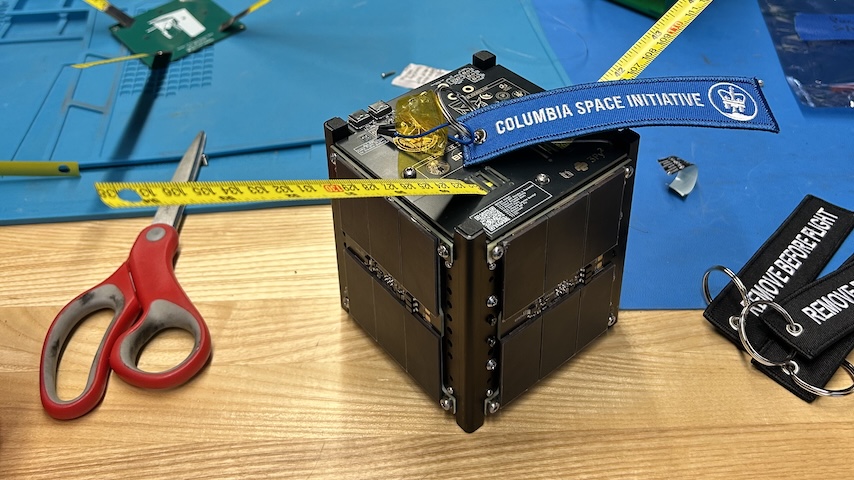
A Box-Sized Engineering Internship

Columbia and Cal Poly Pomona students built and launched CubeSats, gaining the design, testing and teamwork skills that space careers demand.

Nov 2, 2026
Engineering Wonders of the 21st Century

NASA JPL, Columbia and Georgia Tech experts name the 21st century's mechanical engineering wonders, from the Ingenuity Mars helicopter to 3D printing and AI.

Oct 22, 2026
Developing Talent Where Impact Happens


How the E4C Fellowship helps early-career engineers build skills in sustainable development and energy access, featuring fellows from ASU’s LEAPS lab.

Oct 1, 2026
Engineering the Sounds of Silence

Many of the things that engineers create make a lot of noise. Now there’s a crop of engineers trying to turn the volume down for all of us.