Engineering Wonders of the 21st Century
Engineering Wonders of the 21st Century

From nanomaterials to autonomous space flight, these are the inventions defining the modern era so far.
The 20th century was an era of extraordinary engineering breakthroughs that reshaped both history and everyday life. The Wright brothers’ first Flyer allowed us to soar through the clouds. The Hoover Dam’s massive turbines showed the potential of harnessing water to generate electricity at unprecedented scale. Moving assembly lines, making everything from shampoo to automobiles, made manufactured consumer goods more accessible to millions of people. These were more than technological achievements. These mechanical engineering advances fundamentally changed the way we live today.
We are only one-quarter through the 21st century—but the pace of mechanical engineering innovation shows no signs of slowing. New nanoscale systems offer engineers new properties to design with, leveraging physics in new ways. Robots are taking on increasingly complex tasks on land, sea, and the outer reaches of space. Advanced manufacturing techniques are democratizing what engineers can prototype, test, and then build at scale. And artificial intelligence (AI) and advanced simulation models are helping engineers explore even broader design spaces.
So, what would experts classify as mechanical engineering wonders of the 21st century so far? Read on to see which advances have wowed and enabled new possibilities for how the next generation of mechanical engineers will learn, explore, design, problem solve, and build.
While the 20th century may have launched the race to space, the 21st century is transforming it from a competition between superpowers into an era of incredible innovation. Jennifer Dooley, assistant division manager and chief engineer for science, implementation and operations at NASA’s Jet Propulsion Laboratory (JPL), said her top contender for the one of the greatest engineering wonders so far is the Ingenuity helicopter, nicknamed Ginny, which is the first aircraft to achieve powered, controlled flight on another planet.
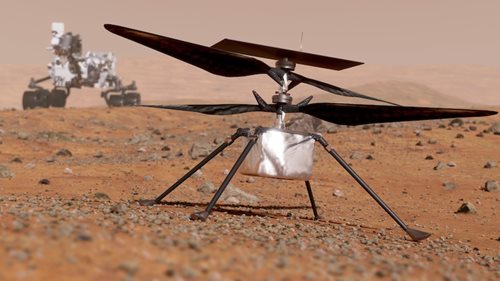 In 2020, NASA launched a 1.2-meter-diameter rotorcraft called Ingenuity on Mars. The helicopter made 72 flights on Mars. It was the first attempt at flight on another planet. Photo: Getty/NASA
“The engineers had to come up with a design for something that had to, first, fly autonomously, but do so on Mars where the atmosphere is a lot thinner, the gravity is a little different, and you have unexpected weather patterns,” she said. “These systems had to be a little bit non-deterministic because you’re not exactly sure what environmental conditions you’re going to encounter when you fly it.”
The resulting design for 1.8 kilogram Ginny, with its ultralight, counter-rotating blades, was shaped by the requirements to fly in an atmosphere that offers very little for the flying vehicle to push against. Dooley said JPL engineers cheered during its successful maiden flight on Mars on April 21, 2021, excited that what had started as a “thought experiment” transformed into a stunning new advance for the space program.
“We had a lot of data from different landers that had been on Mars but it was incomplete,” she said “Trying to design a test program around something that is so different, working to understand what the helicopter’s behavior is going to be on Mars even with those gaps, and then creating a design robust enough to handle this completely new environment was a challenge. But it’s one the team managed with a lot of curiosity and good engineering.”
Hod Lipson, James and Sally Scapa Professor of Innovation at Columbia University’s Department of Mechanical Engineering, said he and his team printed their first robot using new three-dimensional printing in 2000. The New York Times reported the advance with the headline: “Scientists Report They Have Made Robot That Makes Its Own Robots.”
“This was a fused deposition modeling (FDM) printer that we used for a DARPA project,” he said. “It cost $100,000 and it was nowhere near as good as the kind of printer you can just order online today. But it allowed us to build robots in simulation and then print them. The idea that a machine could help us go from concept to reality so easily was mind boggling.”
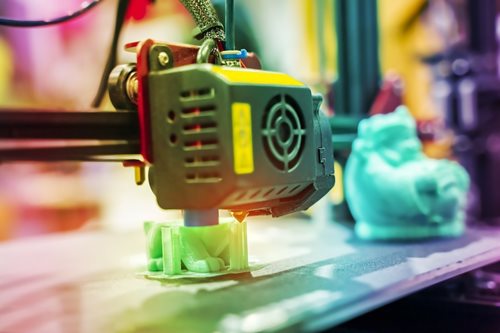 Photo: Getty Images
In the decades since, 3D printing has transformed from a costly, industry-only prototyping method to a more accessible everyday method used in industry, scientific laboratories, and homes across the globe. Lipson’s lab has gone from initially producing “eight-inch-long contraptions of plastic bars and ball joints” to more complex hardware and multi-material objects with his open source, do-it-yourself Fab@Home project.
Carolyn Seepersad, Eugene C. Gwaltney, Jr. School Chair at the Georgia Institute of Technology’s George W. Woodruff School of Mechanical Engineering, as well as editor-in-chief of the ASME Journal of Mechanical Design, said the 3D printer is an engineering feat in and of itself. But the fact that it has “democratized” design and prototyping may be even more important.
Discover the Benefits of ASME Membership
“It’s also spawned a whole series of research in lightweight structures—things that weren’t important until we were able to print them,” she said. “But, in the past, additive manufacturing and 3D printing were really something that you could do in a lab. Now you can do it almost anywhere. It’s changing the way we design. It’s changing the way we prototype. And it’s changing the way we teach. Because students can get prototypes in their hands so easily, they can explore now shape and size and geometry in ways that they couldn't do before.”
Historically, mechanical engineering has focused on designing big things, said Yuebing Zheng, professor of mechanical engineering and materials science and engineering at The University of Texas at Austin. But new advances that now allow engineers to control matter at the micro- and nanoscale through optical lasers have opened a new frontier of mechanical engineering, he explained.
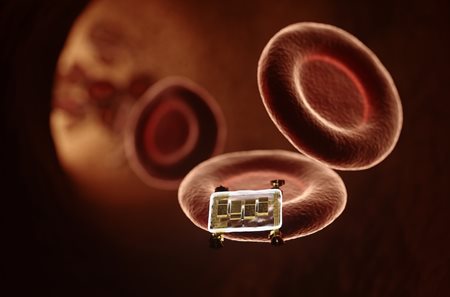 Abstract model of a nanorobot on a red blood cell in the circulatory system. Photo: Getty Images
Today’s microrobots, for example, can be directed by carefully controlled lasers to propel them through fluid, which makes them an intriguing choice for future biomedical applications.
“These robots are so tiny, it is possible for them to get into our body to deliver important payloads. We could use them for drug delivery, helping move them in body to where they are needed to deliver cancer treatment or something like that,” he said. “There are lots of other applications where we can use them to work at a small scale to solve different problems.”
It would be all too easy to say that artificial intelligence (AI) is a computer science advance—but Billy Cohn, chief medical officer of BiVACOR Inc. and the executive director of Medical Device Labs at the Texas Medical Center, said the use of AI is transforming mechanical device design in many ways.
“We use it on our artificial heart design to predict the effects of electromagnetic levitation, the way the motor works, and the hydrodynamic manifestations of shear and how it might affect red blood cells and where they’ll flow in different conditions,” he said. “That would have just been a mountain of graph paper and pencil shavings not all that long ago.”
As biomedical engineers try to introduce more biomechanical therapies to medicine, they can finally do the right kind of simulations to understand not just the mechanical, but the biological requirements of any new systems, he added.
 Photo: Getty Images
“We can use these tools to dive deep and just crush the numbers. We ask the right questions and Mother Nature is just going to open up her kimono to show us everything we’re interested in,” he said. “That’s happening right now. But as these algorithms get better and better—and they will—they are going to allow us to innovate so much faster.”
Lipson added that today’s simulation capabilities should also be considered engineering wonder as they are fostering great advances across the field of mechanical engineering.
“Back in the day, if you wanted to simulate something, it required multiple Ph.D.s to set up. It was so hard and time-consuming to do. It was a real nightmare,” he said. “Now you just have to download a physics simulator, and you can create some incredibly complex models that give you incredible insights into how things will work.”
The ability to go from concept to testing to “something good” in record time, Lipson said, is a substrate upon which you can innovate.
“The ability to do these simulations has unleashed mechanical engineering in ways we never thought possible,” he said. “My students now show up with amazing simulations as they are working through a design. They tell me they asked AI to build it for them. And the level of creativity and innovation possible when you can simulate things and really understand the physics is just incredible.”
Some might argue that a list of mechanical engineering wonders should contain only the big things. Certainly, any list from the past 25 years should include things like the James Webb space telescope, the Hadron collider, reusable rocket boosters, the Da Vinci robotic surgical system, or magnetic-levitation trains. They are all incredible. But, as noted by Cohn, it’s often the little things that help propel the greatest advances in engineering design.
“Without the lithium battery—and all the continuous progress on battery design and safety over the past decades—we don’t have iPhones, electric cars, or a whole bunch of common biomedical devices,” he said. “These incredible things were made possible because somebody out there got that chemistry right.”
Lipson concurred—and added another little item to the list of marvels: the servo motor.
“Pre-2000 motors were like washing machines. They were slow, big, and took time to ramp up,” he said. “But these little servo motors allow you to produce a lot of torque in a very compact form factor. It’s revolutionized robotics to the point where now basically kids who haven't made the robot in their life can cobble a couple of motors together and make it do a back flip.”
Then there’s the advances seen in digital cameras. Dooley remembers working in JPL’s Microdevices Lab while she was an undergraduate student in the 1990s. At that time, engineer Eric Fossum invented the Complementary Metal-Oxide-Semiconductor (CMOS) active-pixel sensor, sometimes called the “camera-on-a-chip.” By the 2000s, that invention paved the way for digital cameras, visual sensors, and the ubiquitous cameras now present in every smartphone.
Don’t Miss October’s Cover Story: Engineering the Sounds of Silence
“A lot of what we do at JPL is to try and figure out how to make things smaller and use less power so we can send more complex payloads farther into space knowing they have a longer lifespan,” she said. “The CMOS sensor is very high speed, ends up being lower power, and it’s responsible for the cameras in everyone’s webcam, cell phone, and more.”
Lipson said CMOS has made camera sensors cheap and accessible for engineers—and underlie the abilities of today’s autonomous vehicles as well as other robotic systems that rely on visual information.
“Driverless cars require about 10 cameras. CMOS are now so cheap, and they provide so much data, that they allowed so many mechanical devices, cars, and robots to see and survive in the real world,” he said. “Being able to give eyes to these devices was literally the Cambrian explosion in robotics—it just changed everything.”
Given the breadth and depth of mechanical innovation over just the past 25 years, it’s impossible to imagine what may come over the next part of the century. Yet it’s clear that the next engineering wonders will not appear out of nowhere. Rather, they will be built on the shoulders of the incredible engineering feats that have come before.
 Photo: Getty Images
The next great invention is likely already playing out in a complex thought experiment at a big lab, being tested in a complex physics simulation, being designed in a generative computer-aided design program, or perhaps even 3D printed in an at-home maker space. As is often said, innovation is an iterative process, just waiting for the right combination of inspiration and perspiration.
“Eventually, everything, every advance and every discipline, can come together to move us forward,” Zheng said. “Engineers are good at finding what works to solve the problems they need to.”
Kayt Sukel is a technology writer and author in Kansas City.
We are only one-quarter through the 21st century—but the pace of mechanical engineering innovation shows no signs of slowing. New nanoscale systems offer engineers new properties to design with, leveraging physics in new ways. Robots are taking on increasingly complex tasks on land, sea, and the outer reaches of space. Advanced manufacturing techniques are democratizing what engineers can prototype, test, and then build at scale. And artificial intelligence (AI) and advanced simulation models are helping engineers explore even broader design spaces.
So, what would experts classify as mechanical engineering wonders of the 21st century so far? Read on to see which advances have wowed and enabled new possibilities for how the next generation of mechanical engineers will learn, explore, design, problem solve, and build.
The Ingenuity
While the 20th century may have launched the race to space, the 21st century is transforming it from a competition between superpowers into an era of incredible innovation. Jennifer Dooley, assistant division manager and chief engineer for science, implementation and operations at NASA’s Jet Propulsion Laboratory (JPL), said her top contender for the one of the greatest engineering wonders so far is the Ingenuity helicopter, nicknamed Ginny, which is the first aircraft to achieve powered, controlled flight on another planet.
In 2020, NASA launched a 1.2-meter-diameter rotorcraft called Ingenuity on Mars. The helicopter made 72 flights on Mars. It was the first attempt at flight on another planet. Photo: Getty/NASA
The resulting design for 1.8 kilogram Ginny, with its ultralight, counter-rotating blades, was shaped by the requirements to fly in an atmosphere that offers very little for the flying vehicle to push against. Dooley said JPL engineers cheered during its successful maiden flight on Mars on April 21, 2021, excited that what had started as a “thought experiment” transformed into a stunning new advance for the space program.
“We had a lot of data from different landers that had been on Mars but it was incomplete,” she said “Trying to design a test program around something that is so different, working to understand what the helicopter’s behavior is going to be on Mars even with those gaps, and then creating a design robust enough to handle this completely new environment was a challenge. But it’s one the team managed with a lot of curiosity and good engineering.”
3D printing
Hod Lipson, James and Sally Scapa Professor of Innovation at Columbia University’s Department of Mechanical Engineering, said he and his team printed their first robot using new three-dimensional printing in 2000. The New York Times reported the advance with the headline: “Scientists Report They Have Made Robot That Makes Its Own Robots.”
“This was a fused deposition modeling (FDM) printer that we used for a DARPA project,” he said. “It cost $100,000 and it was nowhere near as good as the kind of printer you can just order online today. But it allowed us to build robots in simulation and then print them. The idea that a machine could help us go from concept to reality so easily was mind boggling.”
Photo: Getty Images
Carolyn Seepersad, Eugene C. Gwaltney, Jr. School Chair at the Georgia Institute of Technology’s George W. Woodruff School of Mechanical Engineering, as well as editor-in-chief of the ASME Journal of Mechanical Design, said the 3D printer is an engineering feat in and of itself. But the fact that it has “democratized” design and prototyping may be even more important.
Discover the Benefits of ASME Membership
“It’s also spawned a whole series of research in lightweight structures—things that weren’t important until we were able to print them,” she said. “But, in the past, additive manufacturing and 3D printing were really something that you could do in a lab. Now you can do it almost anywhere. It’s changing the way we design. It’s changing the way we prototype. And it’s changing the way we teach. Because students can get prototypes in their hands so easily, they can explore now shape and size and geometry in ways that they couldn't do before.”
Building on a different scale
Historically, mechanical engineering has focused on designing big things, said Yuebing Zheng, professor of mechanical engineering and materials science and engineering at The University of Texas at Austin. But new advances that now allow engineers to control matter at the micro- and nanoscale through optical lasers have opened a new frontier of mechanical engineering, he explained.
Abstract model of a nanorobot on a red blood cell in the circulatory system. Photo: Getty Images
“These robots are so tiny, it is possible for them to get into our body to deliver important payloads. We could use them for drug delivery, helping move them in body to where they are needed to deliver cancer treatment or something like that,” he said. “There are lots of other applications where we can use them to work at a small scale to solve different problems.”
AI and simulation
It would be all too easy to say that artificial intelligence (AI) is a computer science advance—but Billy Cohn, chief medical officer of BiVACOR Inc. and the executive director of Medical Device Labs at the Texas Medical Center, said the use of AI is transforming mechanical device design in many ways.
“We use it on our artificial heart design to predict the effects of electromagnetic levitation, the way the motor works, and the hydrodynamic manifestations of shear and how it might affect red blood cells and where they’ll flow in different conditions,” he said. “That would have just been a mountain of graph paper and pencil shavings not all that long ago.”
As biomedical engineers try to introduce more biomechanical therapies to medicine, they can finally do the right kind of simulations to understand not just the mechanical, but the biological requirements of any new systems, he added.
Photo: Getty Images
Lipson added that today’s simulation capabilities should also be considered engineering wonder as they are fostering great advances across the field of mechanical engineering.
“Back in the day, if you wanted to simulate something, it required multiple Ph.D.s to set up. It was so hard and time-consuming to do. It was a real nightmare,” he said. “Now you just have to download a physics simulator, and you can create some incredibly complex models that give you incredible insights into how things will work.”
The ability to go from concept to testing to “something good” in record time, Lipson said, is a substrate upon which you can innovate.
“The ability to do these simulations has unleashed mechanical engineering in ways we never thought possible,” he said. “My students now show up with amazing simulations as they are working through a design. They tell me they asked AI to build it for them. And the level of creativity and innovation possible when you can simulate things and really understand the physics is just incredible.”
Little things mean a lot
Some might argue that a list of mechanical engineering wonders should contain only the big things. Certainly, any list from the past 25 years should include things like the James Webb space telescope, the Hadron collider, reusable rocket boosters, the Da Vinci robotic surgical system, or magnetic-levitation trains. They are all incredible. But, as noted by Cohn, it’s often the little things that help propel the greatest advances in engineering design.
“Without the lithium battery—and all the continuous progress on battery design and safety over the past decades—we don’t have iPhones, electric cars, or a whole bunch of common biomedical devices,” he said. “These incredible things were made possible because somebody out there got that chemistry right.”
Lipson concurred—and added another little item to the list of marvels: the servo motor.
“Pre-2000 motors were like washing machines. They were slow, big, and took time to ramp up,” he said. “But these little servo motors allow you to produce a lot of torque in a very compact form factor. It’s revolutionized robotics to the point where now basically kids who haven't made the robot in their life can cobble a couple of motors together and make it do a back flip.”
Then there’s the advances seen in digital cameras. Dooley remembers working in JPL’s Microdevices Lab while she was an undergraduate student in the 1990s. At that time, engineer Eric Fossum invented the Complementary Metal-Oxide-Semiconductor (CMOS) active-pixel sensor, sometimes called the “camera-on-a-chip.” By the 2000s, that invention paved the way for digital cameras, visual sensors, and the ubiquitous cameras now present in every smartphone.
Don’t Miss October’s Cover Story: Engineering the Sounds of Silence
“A lot of what we do at JPL is to try and figure out how to make things smaller and use less power so we can send more complex payloads farther into space knowing they have a longer lifespan,” she said. “The CMOS sensor is very high speed, ends up being lower power, and it’s responsible for the cameras in everyone’s webcam, cell phone, and more.”
Lipson said CMOS has made camera sensors cheap and accessible for engineers—and underlie the abilities of today’s autonomous vehicles as well as other robotic systems that rely on visual information.
“Driverless cars require about 10 cameras. CMOS are now so cheap, and they provide so much data, that they allowed so many mechanical devices, cars, and robots to see and survive in the real world,” he said. “Being able to give eyes to these devices was literally the Cambrian explosion in robotics—it just changed everything.”
What comes next
Given the breadth and depth of mechanical innovation over just the past 25 years, it’s impossible to imagine what may come over the next part of the century. Yet it’s clear that the next engineering wonders will not appear out of nowhere. Rather, they will be built on the shoulders of the incredible engineering feats that have come before.
Photo: Getty Images
“Eventually, everything, every advance and every discipline, can come together to move us forward,” Zheng said. “Engineers are good at finding what works to solve the problems they need to.”
Kayt Sukel is a technology writer and author in Kansas City.
From nanomaterials to autonomous space flight, these are the inventions defining the modern era so far.

Freelance writer, author, and ghostwriter
Related Content


Oct 22, 2026
Developing Talent Where Impact Happens


How the E4C Fellowship helps early-career engineers build skills in sustainable development and energy access, featuring fellows from ASU’s LEAPS lab.

Oct 1, 2026
Engineering the Sounds of Silence

Many of the things that engineers create make a lot of noise. Now there’s a crop of engineers trying to turn the volume down for all of us.
Sep 29, 2026
An Engineering Landmark in Tractor Innovation

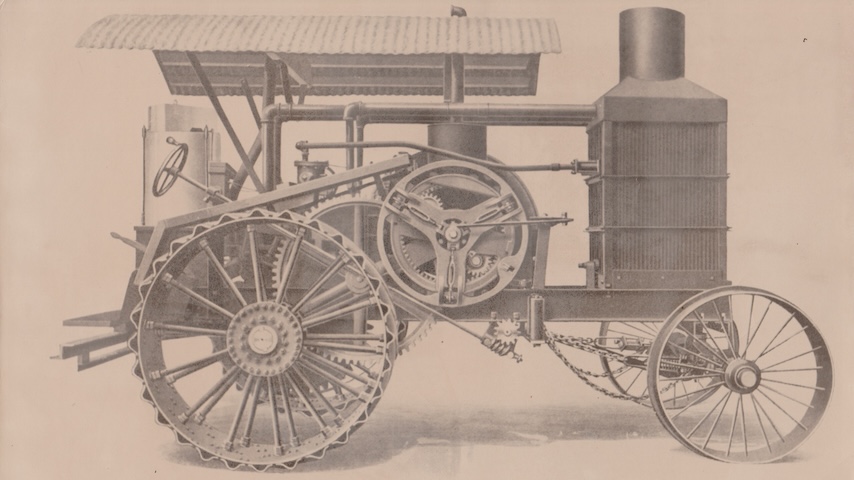
The Hart-Parr Model 3 is the first tractor to be mass produced with an internal combustion engine, earning its designation as a Historical Mechanical Engineering Landmark.
Sep 15, 2026
Octopus-Inspired Robot Gets a Better Grip


A new soft robotic arm shows how distributed sensing and control could help robots move and grasp more like living organisms.