Q&A: Opening Doors to Make a Difference
Q&A: Opening Doors to Make a Difference
A conversation with the ASME's 145th president on discovering engineering, smart manufacturing, and the future of the profession.
As ASME’s newly elected president, Janis Terpenny wants to sharpen the Society’s value proposition for the next generation of engineers.
Terpenny began her term as ASME’s 145th president in June, after nearly 30 years serving as an active volunteer. Also an ASME Fellow, Terpenny previously chaired ASME’s Intelligent Manufacturing Technology Group and served on the Fellows Review Committee. She also founded, then chaired or co-chaired for a decade, the Broadening Participation Committee (BPart) for the ASME Design Engineering Division.
She currently serves as program director at the National Science Foundation, primarily focused on intelligent manufacturing and systems. She’s a rotator on loan from George Mason University where she is a professor of systems engineering and operations research and mechanical engineering. Terpenny was previously program director for the Division of Undergraduate Education at the NSF, dean of engineering at the University of Tennessee and department head of industrial and manufacturing engineering at both Penn State and Iowa State.
Her professional career began with General Electric, then several years later, Terpenny returned to academia for her Ph.D., became a professor at the University of Massachusetts and then at Virginia Tech. Leveraging her experiences across industry, university, and government employment, she co-founded and directed the Center for e-Design and served as a technology thrust lead for one of our nation’s first Manufacturing USA institutes.
Terpenny recently sat down with Mechanical Engineering to share how she discovered engineering, found a professional home in the Society, what engineering education still gets wrong, and her priorities for the year ahead.
The following has been edited and condensed from a longer conversation that you can listen to here.
ME: Let’s start from the very beginning of your career. You studied math in undergrad, then went on to engineering for your master’s and doctorate. What was it that made you choose engineering?
Terpenny: Let me give you a little background and context. I grew up in Richmond, Va., in a very working-class family. My father was the manager of a meat department and a butcher at a local grocery store, and my mother was a secretary. They were both plenty smart, but they did not have college educations. I’m the middle of three kids, and I’m actually a first-generation college graduate.
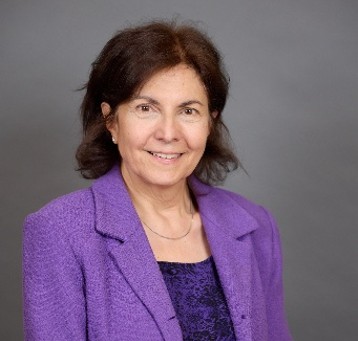 ASME President Janis Terpenny
When I was in high school, I never heard the word engineering, nor did guidance counselors mention it to us. What I knew was that I really enjoyed math, and ultimately I wanted to make a difference in the world. When I went to college in Richmond, there was no engineering program—and again, I hadn’t heard about one either—so I entered a degree program in applied mathematics. What I thought was that this word “applied” would lead me to being able to do things that were going to have impact and be valuable.
ASME President Janis Terpenny
When I was in high school, I never heard the word engineering, nor did guidance counselors mention it to us. What I knew was that I really enjoyed math, and ultimately I wanted to make a difference in the world. When I went to college in Richmond, there was no engineering program—and again, I hadn’t heard about one either—so I entered a degree program in applied mathematics. What I thought was that this word “applied” would lead me to being able to do things that were going to have impact and be valuable.
I do believe strongly that it was a wonderful foundation. But when I graduated, I wasn’t really sure I knew what I would be able to do with it, to tell you the truth. That led me to exploring on my own, and that’s how I discovered engineering.
The great thing was that I then understood that I could use mathematics along with other sciences to understand the natural world as well as the human-made world, and that I could use my foundation to help support new products, innovation, systems, and how to make things better. So I had to discover engineering, if you will.
ME: Did you discover ASME early on as well?
Terpenny: No. After my master’s degree, which is where I entered engineering, I worked in industry. Interestingly, it was nine years after earning my master’s that I came back for my doctorate, and it was at that time that I discovered ASME. ASME has really been core to my career journey ever since starting my Ph.D. program.
ME: What drew you to getting involved, and how has your relationship with the Society evolved alongside your career?
Terpenny: When I was pursuing my Ph.D., my research was focused on supporting the very early stages of engineering design, and what I found was really a professional home in ASME—especially in those early years, through the Design Engineering Division. I could go to conferences and learn from others as well as contribute. During those years I ended up growing my professional network, both with those who were more senior than I was and those who were at my stage of career, and we became collaborators.
I would publish in ASME journals and present at conferences, and eventually I was the one helping to organize sessions. That professional home led to other opportunities, where we would submit proposals to the National Science Foundation or to industry to fund the work we were expert in.
A Year Ago: ME’s Conversation with Lester Su
I was also a little different in that I had industry experience before I came back for my Ph.D.—I always kid around and say I was tainted for life by that insight—and I often found myself being the translator between the two worlds, industry and academia. Not long after I graduated with my Ph.D., I co-founded the Center for E-Design, supported by the National Science Foundation but also by memberships from industry.
It’s funny how one thing leads to another: one of the past presidents serving on the Fellows Review Committee said, “Janis, you should consider serving on ASME’s Board of Governors.” I will use a manufacturing term and say my career has been more of doors opening—more of a pull system than a push system. It’s not that I had all the answers to begin with, for sure, but certainly ASME has been a very important part of the journey and my professional network.
ME: Through all the programs you’ve led at the university level, what are engineering programs getting right in preparing students for industry—and where are the shortfalls?
Terpenny: Engineering education has evolved a lot over the years—and not a lot over the years, too, actually. It even begins with my own undergraduate degree in applied math, where I kept thinking I wanted to contribute to a better world, but I didn’t know how. I still think that far too often there are too many curriculums with what I call a checkbox approach: you take these particular courses over a four-year period, and by the end of it you become an XYZ, whether it’s a mechanical engineer or some other kind of engineer.
 Photo: Getty Images
Over the last 10-plus years we do more project-based learning and active learning, which are wonderful things, of course. But all too often the curriculum is very disjointed, where each course does its own thing and there’s not really a continuum throughout. It’s not until you get to your senior year that, amazingly, you’re supposed to remember everything from every course and bring it to bear upon a real problem. What I believe is that there’s some progress, but not near enough, in having partnerships with industry and community to bring real problems to bear as students are learning their fundamentals—why do they need to know these things, and how can they apply them?
Photo: Getty Images
Over the last 10-plus years we do more project-based learning and active learning, which are wonderful things, of course. But all too often the curriculum is very disjointed, where each course does its own thing and there’s not really a continuum throughout. It’s not until you get to your senior year that, amazingly, you’re supposed to remember everything from every course and bring it to bear upon a real problem. What I believe is that there’s some progress, but not near enough, in having partnerships with industry and community to bring real problems to bear as students are learning their fundamentals—why do they need to know these things, and how can they apply them?
Students are far more motivated on any project if they think it’ll make a difference. For example, using assistive technology—not just wheelchairs and crutches—how could an individual have a very full life? How could they perform work tasks easier, do recreational things easier, play instruments, you name it? In the United States, we’re often a community of conveniences—we want to make tasks easier. But as it turns out, if you approach it from universal design, you are not only creating a convenience for one group of people, you might actually be enabling the difference between whether someone can do something or not, and have a full life.
The other funny thing I find is that when you ask a graduating senior about their most memorable experience, they’ll often talk about an internship or a co-op. While that’s wonderful, I think to myself: how sad they had to leave the university to have their most impactful experience. Why are we not integrating those things better?
And of course, things are changing now. It’s funny to listen to people be fearful of artificial intelligence when really it’s just another tool. I don’t know that it’s really going to harm students’ ability to learn and understand any more than any other interventions there have been in the past. There are ways of utilizing tools and methods, certainly, but in the end, they need to actually understand what it is that they’re doing. We need to spend less time lecturing and more time in class doing and understanding.
ME: How do you see advanced manufacturing, digital design tools, and AI converging—and what do mechanical engineers need to be doing right now to stay ahead of that shift?
Terpenny: This is actually at the heart of much of what I do—I’m in my fourth year of working at the National Science Foundation, in advanced manufacturing, digital tools, and AI for smart manufacturing. Technology is really evolving at a rapid pace. There’s much work now in digital twins, which seem to be the central hub—virtual replicas of physical assets or possibly even entire plants. It’s creating an environment like a sandbox where we can bring things together and monitor performance. Generative AI is really embedded into CAD systems and engineering software now, which allows engineers to ask natural language questions that trigger multi-step workflows. There’s just so much out there now—data-driven decision-making, access to data and decision-making in the cloud.
 Photo: Getty Images
For engineers, particularly mechanical engineers, it’s going to be important to upskill in digital design tools, adopt AI-augmented workflows, and engage in digital twin ecosystems. As technology changes, we need to stay up to date and relevant, and be able to affect change and make contributions.
Photo: Getty Images
For engineers, particularly mechanical engineers, it’s going to be important to upskill in digital design tools, adopt AI-augmented workflows, and engage in digital twin ecosystems. As technology changes, we need to stay up to date and relevant, and be able to affect change and make contributions.
Historically, manufacturing environments were not on the web—they were standalone. We didn’t have to worry about cyber attacks. Anytime we put something on the web looking for collaboration and shared knowledge and resources, we have to worry about cybersecurity and intellectual property. But at the same time, we also have the opportunity to make things smarter, faster, and less expensive.
ME: You founded and co-chaired the Broadening Participation Committee for ASME’s Design Engineering Division. What progress have you seen, and what unfinished work remains?
Terpenny: Amazingly, that group still exists. The original intent was—well, in mechanical engineering, the representation of women is a pretty small percentage. This is nationwide, not unique to ASME: less than 20 percent. What we know from research is how important professional networks can be, and feeling safe and a sense of belonging. It first started at conferences, like a pre-conference workshop where we did professional development activities that were really open to everyone, but we certainly encouraged women and other underrepresented groups to have this sense of belonging and benefit from it.
I would say the work is really never finished, because professional networks, this sense of belonging, and listening to the voice of those who don’t feel that they belong is really important. I personally anticipate that it’ll go on forever—and you see this not just in engineering but throughout society. Identifying and being paired with mentors is important.
ME: Older generations would join societies like ASME right out of university because that’s what you were supposed to do. That mindset seems to be shifting. What’s the hook for younger engineers who haven’t considered membership?
Terpenny: Things change over time—that’s a given. We know there are differences between generations, and what’s really important is that we focus on the value proposition for every member, because ASME does have quite the breadth. Understanding that value proposition even for those who are very young in their careers—even before they’ve graduated—is truly important. As I mentioned before: listen, include, and enable.
What’s the value proposition for someone who hasn’t graduated yet? More than likely, they’re interested in job opportunities and professional growth and possibly micro-credentialing—things that will help them land and keep their jobs and grow as professionals.
Discover the Benefits of ASME Membership
I personally know that industry spends an incredible amount on acquiring talent, and I really do believe that if we had more opportunities for industry and students to connect at conferences and other events—where it’s a win-win for both sides—we would see much more engagement. In fact, I think corporate memberships, where companies pay for a number of memberships through their organization, would be very helpful.
I don’t think we do enough educating students in their undergraduate years: did you know that if you were a member, there’s a long list of possible scholarships you may qualify for? Sometimes students believe they belong to ASME, but they don’t really—it’s more like a localized club. So it’s really explaining that there is a difference, and what the benefits would be if they fully engaged.
ME: As ASME’s newly elected president, do you have specific goals for your term? Is there a mark you want to make over the next 12 months?
Terpenny: What has really motivated me throughout my career is wanting to make a difference in the world, and I see serving as ASME’s president as yet another opportunity to bring people together, to be excited about what we can do together, and to affect change for ASME in its role of contributing to great things for our nation and our world. This is actually my third year on the Board of Governors, so I’m well aware that we’ve been talking about some of these things for a while.
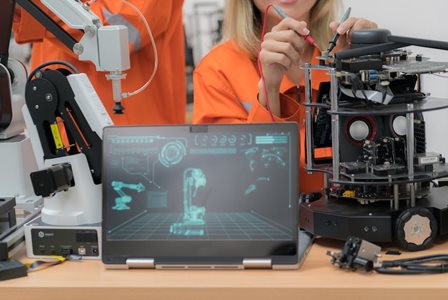 Photo: Getty Images
I would love to see us move forward on strengthening the value proposition for members, whether they’re in industry, academia, or government, and at whatever stage they happen to be in their journey—exploring different membership models, offering more hands-on workshops and leadership training tailored to emerging areas in engineering, micro-credentialing, and providing access to talent for employers and, vice versa, possibilities for students. I think we should and could do that at a number of the conferences that already exist.
Photo: Getty Images
I would love to see us move forward on strengthening the value proposition for members, whether they’re in industry, academia, or government, and at whatever stage they happen to be in their journey—exploring different membership models, offering more hands-on workshops and leadership training tailored to emerging areas in engineering, micro-credentialing, and providing access to talent for employers and, vice versa, possibilities for students. I think we should and could do that at a number of the conferences that already exist.
I’d love to foster innovation and collaboration—that shouldn’t be too surprising, given my emphasis on engineering design, design education, and smart, intelligent manufacturing. Why couldn’t ASME be the convener of more cross-disciplinary project opportunities and, in fact, turn them into national competitions that provide recognition and bring people together? Some of the themes could be around sustainability or social impact—making the world a better place, which young engineers are ever more motivated by.
I love the fact that we’re expanding our engagement internationally in big ways. IMECE India is just one example—last year it was a huge success, and plans for this coming year are promising as well. I’d like to see us do similar things with other nations. And then the digitalization efforts that ASME has ongoing—not finished yet, but really pushing into working in the future rather than the older methods we’ve had for so many years.
Maybe the list is a little long, but hey—there are so many ASME volunteers who, when brought together, pose ideas and rally around them. I’m excited about the coming year and what we can do together.
ME: Any last thoughts about your presidency or your outlook for engineering as we move into next year?
Terpenny: I’m honored and humbled, honestly, to be serving as the president of ASME, which I have certainly enjoyed being a part of for so many years, and I’m just really excited about what we can do together. I hope and believe that my varied background spanning industry, academia, and government will relay a sense to the larger community that I’m delighted to understand the different perspectives and work together.
Louise Poirier is managing editor.
Terpenny began her term as ASME’s 145th president in June, after nearly 30 years serving as an active volunteer. Also an ASME Fellow, Terpenny previously chaired ASME’s Intelligent Manufacturing Technology Group and served on the Fellows Review Committee. She also founded, then chaired or co-chaired for a decade, the Broadening Participation Committee (BPart) for the ASME Design Engineering Division.
She currently serves as program director at the National Science Foundation, primarily focused on intelligent manufacturing and systems. She’s a rotator on loan from George Mason University where she is a professor of systems engineering and operations research and mechanical engineering. Terpenny was previously program director for the Division of Undergraduate Education at the NSF, dean of engineering at the University of Tennessee and department head of industrial and manufacturing engineering at both Penn State and Iowa State.
Her professional career began with General Electric, then several years later, Terpenny returned to academia for her Ph.D., became a professor at the University of Massachusetts and then at Virginia Tech. Leveraging her experiences across industry, university, and government employment, she co-founded and directed the Center for e-Design and served as a technology thrust lead for one of our nation’s first Manufacturing USA institutes.
Terpenny recently sat down with Mechanical Engineering to share how she discovered engineering, found a professional home in the Society, what engineering education still gets wrong, and her priorities for the year ahead.
The following has been edited and condensed from a longer conversation that you can listen to here.
ME: Let’s start from the very beginning of your career. You studied math in undergrad, then went on to engineering for your master’s and doctorate. What was it that made you choose engineering?
Terpenny: Let me give you a little background and context. I grew up in Richmond, Va., in a very working-class family. My father was the manager of a meat department and a butcher at a local grocery store, and my mother was a secretary. They were both plenty smart, but they did not have college educations. I’m the middle of three kids, and I’m actually a first-generation college graduate.
ASME President Janis Terpenny
I do believe strongly that it was a wonderful foundation. But when I graduated, I wasn’t really sure I knew what I would be able to do with it, to tell you the truth. That led me to exploring on my own, and that’s how I discovered engineering.
The great thing was that I then understood that I could use mathematics along with other sciences to understand the natural world as well as the human-made world, and that I could use my foundation to help support new products, innovation, systems, and how to make things better. So I had to discover engineering, if you will.
ME: Did you discover ASME early on as well?
Terpenny: No. After my master’s degree, which is where I entered engineering, I worked in industry. Interestingly, it was nine years after earning my master’s that I came back for my doctorate, and it was at that time that I discovered ASME. ASME has really been core to my career journey ever since starting my Ph.D. program.
ME: What drew you to getting involved, and how has your relationship with the Society evolved alongside your career?
Terpenny: When I was pursuing my Ph.D., my research was focused on supporting the very early stages of engineering design, and what I found was really a professional home in ASME—especially in those early years, through the Design Engineering Division. I could go to conferences and learn from others as well as contribute. During those years I ended up growing my professional network, both with those who were more senior than I was and those who were at my stage of career, and we became collaborators.
I would publish in ASME journals and present at conferences, and eventually I was the one helping to organize sessions. That professional home led to other opportunities, where we would submit proposals to the National Science Foundation or to industry to fund the work we were expert in.
A Year Ago: ME’s Conversation with Lester Su
I was also a little different in that I had industry experience before I came back for my Ph.D.—I always kid around and say I was tainted for life by that insight—and I often found myself being the translator between the two worlds, industry and academia. Not long after I graduated with my Ph.D., I co-founded the Center for E-Design, supported by the National Science Foundation but also by memberships from industry.
It’s funny how one thing leads to another: one of the past presidents serving on the Fellows Review Committee said, “Janis, you should consider serving on ASME’s Board of Governors.” I will use a manufacturing term and say my career has been more of doors opening—more of a pull system than a push system. It’s not that I had all the answers to begin with, for sure, but certainly ASME has been a very important part of the journey and my professional network.
ME: Through all the programs you’ve led at the university level, what are engineering programs getting right in preparing students for industry—and where are the shortfalls?
Terpenny: Engineering education has evolved a lot over the years—and not a lot over the years, too, actually. It even begins with my own undergraduate degree in applied math, where I kept thinking I wanted to contribute to a better world, but I didn’t know how. I still think that far too often there are too many curriculums with what I call a checkbox approach: you take these particular courses over a four-year period, and by the end of it you become an XYZ, whether it’s a mechanical engineer or some other kind of engineer.
Photo: Getty Images
Students are far more motivated on any project if they think it’ll make a difference. For example, using assistive technology—not just wheelchairs and crutches—how could an individual have a very full life? How could they perform work tasks easier, do recreational things easier, play instruments, you name it? In the United States, we’re often a community of conveniences—we want to make tasks easier. But as it turns out, if you approach it from universal design, you are not only creating a convenience for one group of people, you might actually be enabling the difference between whether someone can do something or not, and have a full life.
The other funny thing I find is that when you ask a graduating senior about their most memorable experience, they’ll often talk about an internship or a co-op. While that’s wonderful, I think to myself: how sad they had to leave the university to have their most impactful experience. Why are we not integrating those things better?
And of course, things are changing now. It’s funny to listen to people be fearful of artificial intelligence when really it’s just another tool. I don’t know that it’s really going to harm students’ ability to learn and understand any more than any other interventions there have been in the past. There are ways of utilizing tools and methods, certainly, but in the end, they need to actually understand what it is that they’re doing. We need to spend less time lecturing and more time in class doing and understanding.
ME: How do you see advanced manufacturing, digital design tools, and AI converging—and what do mechanical engineers need to be doing right now to stay ahead of that shift?
Terpenny: This is actually at the heart of much of what I do—I’m in my fourth year of working at the National Science Foundation, in advanced manufacturing, digital tools, and AI for smart manufacturing. Technology is really evolving at a rapid pace. There’s much work now in digital twins, which seem to be the central hub—virtual replicas of physical assets or possibly even entire plants. It’s creating an environment like a sandbox where we can bring things together and monitor performance. Generative AI is really embedded into CAD systems and engineering software now, which allows engineers to ask natural language questions that trigger multi-step workflows. There’s just so much out there now—data-driven decision-making, access to data and decision-making in the cloud.
Photo: Getty Images
Historically, manufacturing environments were not on the web—they were standalone. We didn’t have to worry about cyber attacks. Anytime we put something on the web looking for collaboration and shared knowledge and resources, we have to worry about cybersecurity and intellectual property. But at the same time, we also have the opportunity to make things smarter, faster, and less expensive.
ME: You founded and co-chaired the Broadening Participation Committee for ASME’s Design Engineering Division. What progress have you seen, and what unfinished work remains?
Terpenny: Amazingly, that group still exists. The original intent was—well, in mechanical engineering, the representation of women is a pretty small percentage. This is nationwide, not unique to ASME: less than 20 percent. What we know from research is how important professional networks can be, and feeling safe and a sense of belonging. It first started at conferences, like a pre-conference workshop where we did professional development activities that were really open to everyone, but we certainly encouraged women and other underrepresented groups to have this sense of belonging and benefit from it.
I would say the work is really never finished, because professional networks, this sense of belonging, and listening to the voice of those who don’t feel that they belong is really important. I personally anticipate that it’ll go on forever—and you see this not just in engineering but throughout society. Identifying and being paired with mentors is important.
ME: Older generations would join societies like ASME right out of university because that’s what you were supposed to do. That mindset seems to be shifting. What’s the hook for younger engineers who haven’t considered membership?
Terpenny: Things change over time—that’s a given. We know there are differences between generations, and what’s really important is that we focus on the value proposition for every member, because ASME does have quite the breadth. Understanding that value proposition even for those who are very young in their careers—even before they’ve graduated—is truly important. As I mentioned before: listen, include, and enable.
What’s the value proposition for someone who hasn’t graduated yet? More than likely, they’re interested in job opportunities and professional growth and possibly micro-credentialing—things that will help them land and keep their jobs and grow as professionals.
Discover the Benefits of ASME Membership
I personally know that industry spends an incredible amount on acquiring talent, and I really do believe that if we had more opportunities for industry and students to connect at conferences and other events—where it’s a win-win for both sides—we would see much more engagement. In fact, I think corporate memberships, where companies pay for a number of memberships through their organization, would be very helpful.
I don’t think we do enough educating students in their undergraduate years: did you know that if you were a member, there’s a long list of possible scholarships you may qualify for? Sometimes students believe they belong to ASME, but they don’t really—it’s more like a localized club. So it’s really explaining that there is a difference, and what the benefits would be if they fully engaged.
ME: As ASME’s newly elected president, do you have specific goals for your term? Is there a mark you want to make over the next 12 months?
Terpenny: What has really motivated me throughout my career is wanting to make a difference in the world, and I see serving as ASME’s president as yet another opportunity to bring people together, to be excited about what we can do together, and to affect change for ASME in its role of contributing to great things for our nation and our world. This is actually my third year on the Board of Governors, so I’m well aware that we’ve been talking about some of these things for a while.
Photo: Getty Images
I’d love to foster innovation and collaboration—that shouldn’t be too surprising, given my emphasis on engineering design, design education, and smart, intelligent manufacturing. Why couldn’t ASME be the convener of more cross-disciplinary project opportunities and, in fact, turn them into national competitions that provide recognition and bring people together? Some of the themes could be around sustainability or social impact—making the world a better place, which young engineers are ever more motivated by.
I love the fact that we’re expanding our engagement internationally in big ways. IMECE India is just one example—last year it was a huge success, and plans for this coming year are promising as well. I’d like to see us do similar things with other nations. And then the digitalization efforts that ASME has ongoing—not finished yet, but really pushing into working in the future rather than the older methods we’ve had for so many years.
Maybe the list is a little long, but hey—there are so many ASME volunteers who, when brought together, pose ideas and rally around them. I’m excited about the coming year and what we can do together.
ME: Any last thoughts about your presidency or your outlook for engineering as we move into next year?
Terpenny: I’m honored and humbled, honestly, to be serving as the president of ASME, which I have certainly enjoyed being a part of for so many years, and I’m just really excited about what we can do together. I hope and believe that my varied background spanning industry, academia, and government will relay a sense to the larger community that I’m delighted to understand the different perspectives and work together.
Louise Poirier is managing editor.
A conversation with the ASME's 145th president on discovering engineering, smart manufacturing, and the future of the profession.

Managing editor, Mechanical Engineering magazine
Related Content

Sep 18, 2026
Quiz: ASME Professional and Student Sections


Test your knowledge of ASME professional and student sections, including their benefits, activities, resources, and recognition programs.

Sep 17, 2026
A Robot Rides the Wind


Sep 16, 2026
Mechanical Engineers Find Purpose in Public Service

Mechanical engineers in public service shape policy, strengthen infrastructure, improve public safety, and solve complex challenges at every government level.
Sep 15, 2026
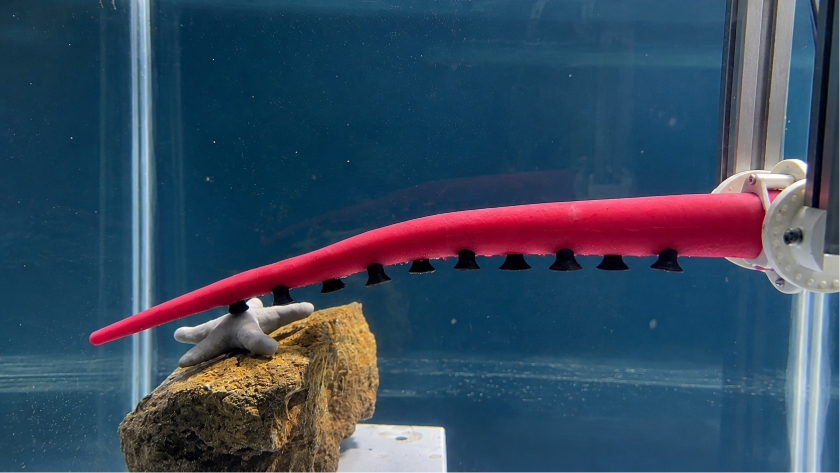
Octopus-Inspired Robot Gets a Better Grip

A new soft robotic arm shows how distributed sensing and control could help robots move and grasp more like living organisms.