Magnetic Jamming Shows Promise for Biomedical Microrobotics
Magnetic Jamming Shows Promise for Biomedical Microrobotics
.png?width=854&height=480&ext=.png)
Researchers have created a wireless method to rapidly stiffen and relax micro‑scale structures using magnetic fields, eliminating the need for wires, pumps, or direct contact.
Coffee grounds, soft and flowing in an open bag, solidify into a brick when vacuum sealed. This simple transition, known as granular jamming, has long been the principle behind achieving mechanical versatility in soft robotics. However, historically, achieving this rigidity demanded a loud, cumbersome, tethered vacuum pump, a significant limitation for small-scale applications like surgical robots.
“Jamming is this phenomenon where a group of small objects, when squished tightly together, acts like a rigid solid,” explained Buse Aktaş, engineer and group leader at the Max Planck Institute for Intelligent Systems in Stuttgart, Germany. “Then if the bonds between them soften, it acts like a liquid.”
To address this constraint, researchers at ETH Zürich and at the Max Planck Institute for Intelligent Systems pioneered magnetic jamming, which swapped cumbersome air pressure for an external magnetic field. The innovative approach gave small scale modular robots the power to rapidly switch between a soft, adaptive state and a rigid, functional state using specialized, soft-ferromagnetic composite materials.
This successfully unlocked wirelessly controlled, programmable stiffness—opening new possibilities for untethered robotic systems, from industrial handling and manipulation to minimally invasive surgery.
The technology centered on specially designed composite subunits: magnetic material embedded within a non-magnetic matrix. When researchers applied an external magnetic field, the subunits instantly jammed, aligning, magnetizing, and pulling together to lock into a rigid, solid-like structure.
Low remanence (the measure of residual magnetism) ensured a quick return to the unjammed, fluid-like state the instant the external field shut off. Low coercivity (the required amount of reverse magnetic field for demagnetization) enabled efficient and rapid switching.
Low coercivity also correlated with a narrow hysteresis loop, which meant the material experienced minimal energy loss (heat) during each magnetizing/demagnetizing cycle, thus increasing the system’s overall efficiency.
“Each grain combines magnetic and non-magnetic materials to achieve specific functions. When we wanted to jam and stiffen along particular directions, we designed the magnetic composites accordingly,” explained Aktaş.
This clever structural trick allows the jamming force to concentrate along the pre-programmed axis, causing the structure to resist deformation in that specific direction. This capability could enable complex robotic tasks, allowing, for instance, a gripper to gain enough rigidity to lift a weight vertically while retaining the necessary flexibility to conform around a curved object horizontally, unlocking a new level of sophisticated control in soft robotics.
For the magnetic field control, the external system involved an array of electromagnetic coils. By precisely controlling the electric current to these coils, the system generated a sophisticated three-dimensional magnetic field around the subunit. The magnetic field performed all necessary functions: adjusting the field magnitude caused the tool to stiffen (jam) or relax; changing the field direction steered the tool’s orientation; and creating a field gradient pulled or pushed the entire robot for locomotion and navigation.
This type of setup offered a flexible instrument platform with which surgeons could safely navigate a soft device to a target and then instantly convert it into a rigid, stable tool for precision tasks. The coils would be positioned as close as possible to the patient to ensure maximum field strength, and the surgeon could monitor the tool’s actions via real-time medical imaging, thus enabling complex, untethered manipulation during minimally invasive procedures.
“In a surgical application scenario, an electromagnetic coil system could roll into the operating room, which could work seamlessly with a fluoroscope. Medical staff could track where you are and what you’re doing with the X-ray, then adjust the magnetic field accordingly,” Aktaş explained.
The gripper, a miniature device, demonstrated complex “pick-and-place” capabilities without any physical connections. Researchers controlled its functions solely by manipulating the magnetic field: changes to the field’s magnitude controlled grasping and releasing, including the grip force; changing its direction allowed the gripper to reorient; and applying field gradients moved the entire device through space. This showed the feasibility of performing delicate tasks wirelessly inside machinery or during minimally invasive procedures.
The shape-shifting dilation beam illustrated the concept of a smart, stiffness-on-demand medical instrument designed for safe internal navigation. In its unjammed state, the beam could be gently inserted into soft biological environments, minimizing damage risk. Once in position, researchers applied the external magnetic field, and the beam rapidly stiffened and straightened. This rigidity allowed the beam to securely anchor itself and perform crucial functions, such as deforming or dilating surrounding tissue.
The shift from vacuum-driven to magnetic jamming demonstrates a new mechanism for wireless stiffness control. The innovation of soft-ferromagnetic composite subunits allowed engineers to design a robot that stiffened in desired directions while remaining flexible in others, granting unprecedented control. Magnetic jamming delivered a wireless platform that could enable soft robotic systems to take on more adaptable and versatile roles inside the human body and beyond.
Nicole Imeson is an engineer and writer in Calgary, Alberta.
“Jamming is this phenomenon where a group of small objects, when squished tightly together, acts like a rigid solid,” explained Buse Aktaş, engineer and group leader at the Max Planck Institute for Intelligent Systems in Stuttgart, Germany. “Then if the bonds between them soften, it acts like a liquid.”
To address this constraint, researchers at ETH Zürich and at the Max Planck Institute for Intelligent Systems pioneered magnetic jamming, which swapped cumbersome air pressure for an external magnetic field. The innovative approach gave small scale modular robots the power to rapidly switch between a soft, adaptive state and a rigid, functional state using specialized, soft-ferromagnetic composite materials.
This successfully unlocked wirelessly controlled, programmable stiffness—opening new possibilities for untethered robotic systems, from industrial handling and manipulation to minimally invasive surgery.
Soft ferromagnetic material
The technology centered on specially designed composite subunits: magnetic material embedded within a non-magnetic matrix. When researchers applied an external magnetic field, the subunits instantly jammed, aligning, magnetizing, and pulling together to lock into a rigid, solid-like structure. Low remanence (the measure of residual magnetism) ensured a quick return to the unjammed, fluid-like state the instant the external field shut off. Low coercivity (the required amount of reverse magnetic field for demagnetization) enabled efficient and rapid switching.
Low coercivity also correlated with a narrow hysteresis loop, which meant the material experienced minimal energy loss (heat) during each magnetizing/demagnetizing cycle, thus increasing the system’s overall efficiency.
Programmable directionality
Programmable stiffness meant engineers could design the structure to become rigid in specific directions while remaining compliant in others. They achieved direction stiffness by arranging the soft ferromagnetic material within the subunit in specific patterns, effectively decoupling the magnetic behavior from the subunit’s overall physical shape. By doing this, researchers pre-program the easy axis (preferred direction of magnetism) in the desired direction.“Each grain combines magnetic and non-magnetic materials to achieve specific functions. When we wanted to jam and stiffen along particular directions, we designed the magnetic composites accordingly,” explained Aktaş.
This clever structural trick allows the jamming force to concentrate along the pre-programmed axis, causing the structure to resist deformation in that specific direction. This capability could enable complex robotic tasks, allowing, for instance, a gripper to gain enough rigidity to lift a weight vertically while retaining the necessary flexibility to conform around a curved object horizontally, unlocking a new level of sophisticated control in soft robotics.
For the magnetic field control, the external system involved an array of electromagnetic coils. By precisely controlling the electric current to these coils, the system generated a sophisticated three-dimensional magnetic field around the subunit. The magnetic field performed all necessary functions: adjusting the field magnitude caused the tool to stiffen (jam) or relax; changing the field direction steered the tool’s orientation; and creating a field gradient pulled or pushed the entire robot for locomotion and navigation.
This type of setup offered a flexible instrument platform with which surgeons could safely navigate a soft device to a target and then instantly convert it into a rigid, stable tool for precision tasks. The coils would be positioned as close as possible to the patient to ensure maximum field strength, and the surgeon could monitor the tool’s actions via real-time medical imaging, thus enabling complex, untethered manipulation during minimally invasive procedures.
“In a surgical application scenario, an electromagnetic coil system could roll into the operating room, which could work seamlessly with a fluoroscope. Medical staff could track where you are and what you’re doing with the X-ray, then adjust the magnetic field accordingly,” Aktaş explained.
Major potential in micro-robotics
The two primary applications the research team built and tested powerfully showcased the potential of magnetic jamming: the untethered robotic gripper and the shape-shifting dilation beam. Both highlighted the technology’s potential for micro-robotics and medicine through wireless, multi-functional control.The gripper, a miniature device, demonstrated complex “pick-and-place” capabilities without any physical connections. Researchers controlled its functions solely by manipulating the magnetic field: changes to the field’s magnitude controlled grasping and releasing, including the grip force; changing its direction allowed the gripper to reorient; and applying field gradients moved the entire device through space. This showed the feasibility of performing delicate tasks wirelessly inside machinery or during minimally invasive procedures.
The shape-shifting dilation beam illustrated the concept of a smart, stiffness-on-demand medical instrument designed for safe internal navigation. In its unjammed state, the beam could be gently inserted into soft biological environments, minimizing damage risk. Once in position, researchers applied the external magnetic field, and the beam rapidly stiffened and straightened. This rigidity allowed the beam to securely anchor itself and perform crucial functions, such as deforming or dilating surrounding tissue.
The shift from vacuum-driven to magnetic jamming demonstrates a new mechanism for wireless stiffness control. The innovation of soft-ferromagnetic composite subunits allowed engineers to design a robot that stiffened in desired directions while remaining flexible in others, granting unprecedented control. Magnetic jamming delivered a wireless platform that could enable soft robotic systems to take on more adaptable and versatile roles inside the human body and beyond.
Nicole Imeson is an engineer and writer in Calgary, Alberta.
Researchers have created a wireless method to rapidly stiffen and relax micro‑scale structures using magnetic fields, eliminating the need for wires, pumps, or direct contact.

Principal at Vertica Engineering and freelance writer
Related Content

Sep 15, 2026
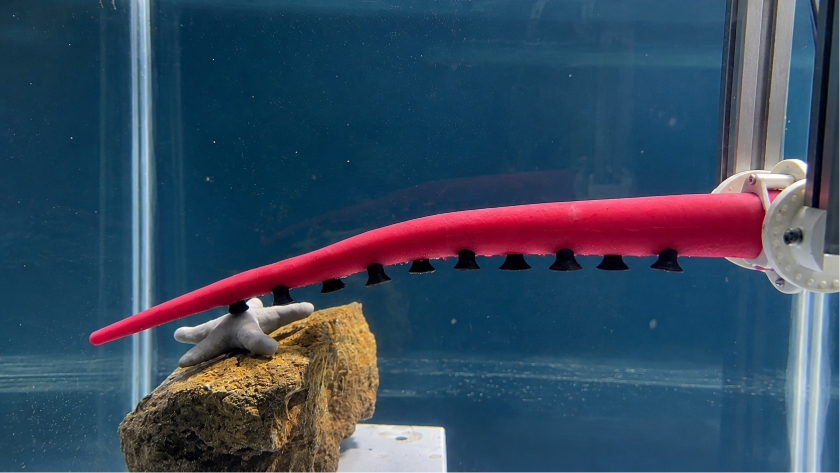
Octopus-Inspired Robot Gets a Better Grip


A new soft robotic arm shows how distributed sensing and control could help robots move and grasp more like living organisms.
Sep 1, 2026
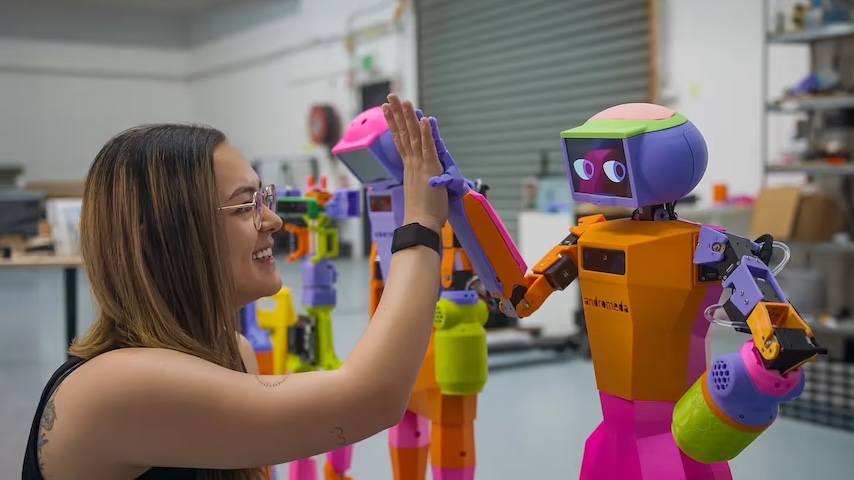
The Next Robotics Frontier

The robotics industry often focuses on scale, automation, and valuations. But a quieter group of founders is instead asking what robotics have overlooked as they innovate with compassion in mind.
Aug 27, 2026
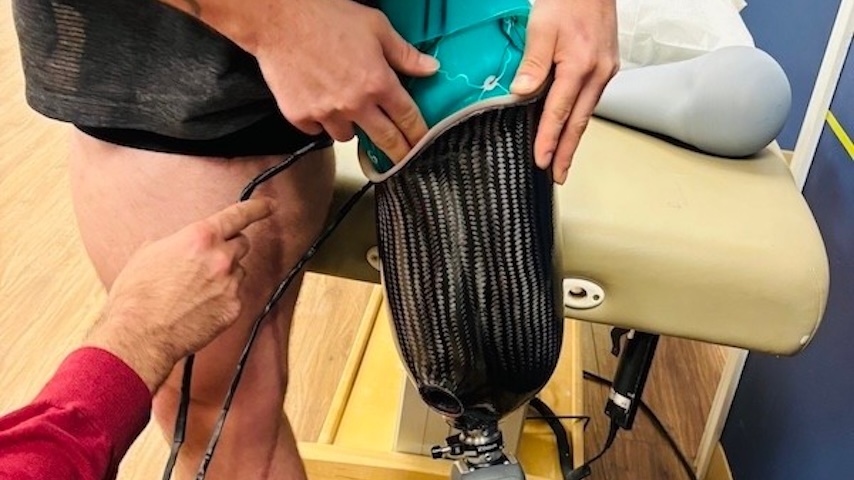
Reimagining Prosthetic Design

Smart tech and 3D printing transform socket design, making prosthetics lighter, more comfortable, and shaped by the patient's own movement.

Aug 20, 2026
Artificial Muscles That Move to Sound

Microbubbles of varying sizes embedded in polymers have different acoustic responses, which can help move artificial muscles made from this material.