Developing Talent Where Impact Happens
Developing Talent Where Impact Happens

The E4C Fellowship was created to skill and put early-career engineers to work on sustainable development. Now it has also become a way for partners to discover talent around the world.
Brighton Ombuki knew what an unreliable power grid felt like long before he learned to model one.
Growing up and training as an engineer in Kenya, he saw voltage drops and outages up close, so he understood the impacts to families and businesses living with them. “When you have experienced power quality issues firsthand, you do not just look at a model as abstract equations; you understand the human and economic cost behind the numbers,” Ombuki said.
When Ombuki joined the Engineering for Change (E4C) Fellowship in 2022, he was working on a master’s degree, doing engineering consulting, and completing industrial training in power systems. He wanted to see how his technical work connected to global energy access. The Fellowship matched him with the Laboratory for Energy And Power Solutions (LEAPS) at Arizona State University (ASU), where he modeled microgrids and distribution networks to improve how rural mini-grids are planned and deployed.
Instead of embarking on another journey once the five-month program was complete, this opportunity evolved into a full-time role at LEAPS, where Ombuki is now a power systems planning consultant working on large-scale grid planning.
Ombuki’s story isn’t unusual at LEAPS. Over the last several years, the lab has worked with five E4C Fellows through various Impact Projects, then gone on to hire them as employees, graduate students, or both. A sixth Fellow, who did her project with another partner, found her way to the lab on her own.
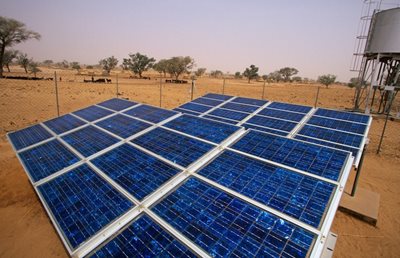 Photo: Getty Images
For E4C, a nonprofit founded by ASME in 2009 as a community that prepares the international technical workforce to improve life for people and the planet, that outcome shows what the Fellowship can do beyond Impact Projects alone. Since 2015, the program has awarded more than 300 Fellowships to early-career engineers and technical professionals from more than 50 countries, with women making up about half of that cohort. And as of 2026, E4C’s partners have completed more than 200 Impact Projects.
E4C’s Impact Projects are short-term, mission-driven collaborations that pair global early-career engineers and technical professionals with organizations working on sustainable development and social impact. Fellows spend five months working remotely, part-time, on Impact Projects with universities, nonprofits, companies, or government agencies. They also complete more than 30 hours of professional development.
Those hires weren’t part of the original design. “The Fellowship was designed to build skills critical in engineering for sustainable development and to give Fellows a means to practice those skills while learning from each other,” said Leah Putman, newly appointed president of E4C. “It was designed with the knowledge that practical experience helps early career engineers land jobs, but not necessarily that those jobs would be with the organizations they worked with through their Fellowship.”
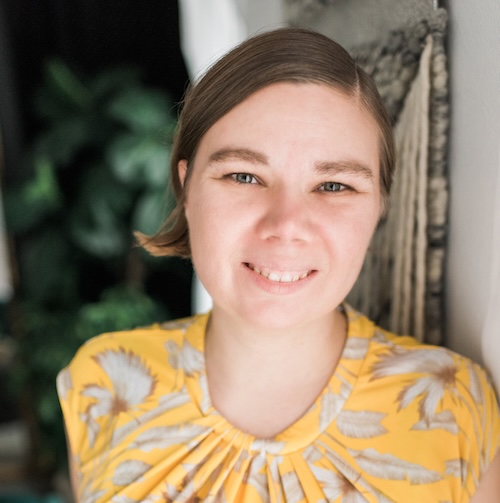
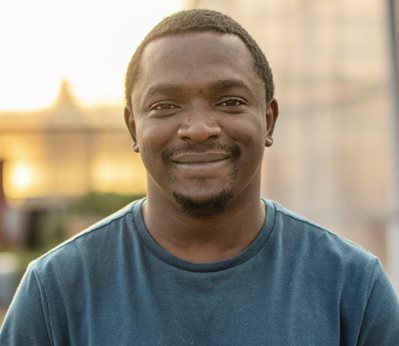 Brighton Ombuki
The program itself has changed over time. Early Fellows researched technologies for E4C’s Solutions Library, applying technical assessment frameworks and connecting local needs to technical specifications. To broaden that hands-on learning, E4C began adding partner projects, which became the Fellowship’s main practicum element. Fellows still train through E4C’s Learning program, and “networking has always been a key part,” Putman said.
The program draws a deep talent pool as well. In 2022, the year Ombuki was selected, a record 1,846 people applied.
E4C handles Fellow selection, contracts, training, and stipends. Partners get technical help on work they might not otherwise be able to staff, and the chance to work closely with talented early-career engineers.
“We align Fellows and project partners based on needs, interests and skills,” Putman explained. “Through feedback and refinement over the years, we’ve gotten pretty good at it and have a global community full of early career engineers looking for projects.”
Nathan Johnson, a professor at ASU and director of LEAPS, has worked with E4C since its early days—he actually led one of its first webinars on clean cooking. Today, his lab works in about 20 countries and his 20-person research team tackles energy innovations from concept to construction with a focus on distributed energy resources, smart networks, microgrid controls, and off-grid solutions. It has helped unlock about $332 million in public and private financing for clean, reliable power, from rural mini grids in the Pacific to electrification on the Hopi Nation in Arizona, where about a third of homes lack electricity.
The Fellowship solves a problem the industry rarely discusses. “Society has a hard time identifying and curating international talent,” Johnson said. “Finding great people is hard, particularly if you’re in Africa.” From the Fellow perspective, there’s a similar challenge in “trying to apply to an American university. You might not even have the right paperwork,” he continued. “Pushing your way in on your own is a lot harder. But if you also have someone pulling and guiding you, it’s a lot easier.”
Johnson continues investing in the program because it helps LEAPS find strong local engineers to work on its projects. The Fellowship also gives those engineers a way to keep going, often by joining the lab while they complete a graduate degree in the United States.
Of course, not every Fellow plans to stay with LEAPS or start a Ph.D. “But once we get to know each other and learn through it, the Fellowship gives us the opportunity to understand the fit,” he said.
Other programs sponsor early-career engineers, Johnson said, but few lead to lasting working relationships. Among the benefits E4C highlights for partners is access to up-and-coming engineers from around the world, whom they get to know through real project work.
The move from Fellow to employee came gradually for Ombuki. As his Impact Project progressed, the work evolved from answering specific modeling questions to building repeatable workflows and long-term planning tools. He’s most proud of developing a set of standardized technical guidelines that turned complex modeling procedures into practical tools other engineers and project developers could use.
 Photo: Getty Images
“There was not one single light bulb moment,” he said. “But as we saw the impact of the guidelines we were creating, it became clear that there was a natural continuation of this work into a full-time role at LEAPS.”
He credits the platform and leadership for facilitating his journey. “Talent is everywhere, but visibility and opportunities are not,” Ombuki said. “[Johnson] played a huge role in my career by opening doors to the best of his ability, championing my work, and trusting my capabilities at a critical moment.”
Nancy Nyawira Wangari took a less direct route. She first applied to the E4C Fellowship in 2024 during her final year studying electrical power systems engineering at African Leadership University. After internships and time on construction sites, she became curious about “how solutions are introduced into society, who shapes them, and what makes them work in practice.”
Making an Impact: BluLever Education’s Prototype for a Comprehensive Student Information System
Her Impact Project wasn’t with LEAPS. She worked with ASME on strengthening social entrepreneurship ecosystems in East Africa, interviewing stakeholders and turning research into recommendations. Wangari returned in 2025 as a managing Fellow, supporting other Fellows while working in energy project development.
Putman remembers her as “inquisitive, proactive, and clearly very interested in her work. Outside the Fellowship, it’s not common to find new engineers who are comfortable both asking questions and making suggestions related to their work.”
What carried Wangari to LEAPS was the Fellowship network. Through E4C, she met an alum who was then a Ph.D. student at the lab. When she applied to ASU, another E4C Fellow who was already there helped her through the process, and her Fellowship managers wrote recommendation letters. She ended up receiving a full-tuition scholarship.
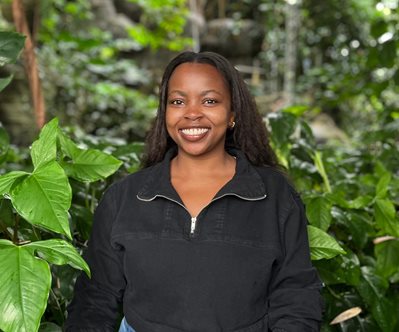 Nancy Nyawira Wangari
Today, Wangari is earning her master’s degree at ASU and working at LEAPS as an energy analyst on projects advancing universal energy access. One of them, backed by the Rockefeller Foundation, will place small modular data centers in remote parts of Africa. These data centers act as “anchor customers” that pay more for power, which lowers costs for nearby families and makes mini-utilities more attractive to investors.
“Even though my research project wasn’t with [LEAPS] initially, everything has come full circle in a way I couldn't have planned,” she said.
In fact, Johnson didn’t know about Wangari’s E4C background when she joined. He called it happenstance, but it shows how the Fellowship’s network has started to make connections all on its own.
“We are fortunate to see many motivated professionals pass through the Fellowship, so I’m never surprised to hear they’ve gone on to get promotions, graduate school positions or jobs that allow them to combine their technical skills with social and environmental impact,” Putman said. Still, she was pleasantly surprised that so many Fellows, including Wangari and Ombuki, have found a path to ASU and to mentorship from Johnson, whom she called “a longtime collaborator and forceful engineer in energy access.”
Working with local talent pays off three ways: It helps the individual, it improves the project, and together those gains build momentum in the communities where the project and the person live, Johnson explained.
He pointed to Elizabeth Obiero, an earlier LEAPS Fellow based in Nairobi. On a U.S. government-funded project in Kenya, LEAPS used about $400,000 in technical assistance to help speed up $20 million in clean energy investment, and Obiero served as the local link to the three portfolio companies involved. She combined local knowledge with electrical engineering expertise, which let her work through both the technical and financial details. LEAPS kept her on for more than a year as a Kenya-based employee.
A Sustainable Future: M2X Energy Inc.’s System Converts Waste Methane into Low-Carbon Fuels
Wangari sees the same thing from the other side. Being Kenyan helped her make sense of what entrepreneurs told her in interviews and connect it to the wider context.
“You also become more aware of the gap between how a system is supposed to work on paper and how people actually experience it,” she explained. “But coming from a place doesn’t mean you automatically understand everyone’s experience. You still have to listen and do the research.”
Both Ombuki and Wangari now find themselves on the other side of the door that once opened for them. Ombuki credits a series of mentors who gave him a platform and he hopes more people in the industry will do the same for other early-career engineers. “I feel privileged to pay that forward,” he added.
Wangari, who once leaned on E4C alumni to navigate her own applications, explained that good mentorship “is not about doing the work for someone. It's about helping them see a path they might not have known how to navigate on their own.”
Other alumni are guiding the next generation as well. Two former Fellows returned as E4C project partners through Anzana and Wokober, Putman said. This year, 2025 Fellow Megan Stancliff joined the Burleson Global Design Group at the University of Colorado Boulder, led by Grace Burleson, whom Putman calls a “forever Fellow.” Other alumni have gone on to work for Autodesk and the Autodesk Foundation, a longtime funder of the Fellowship.
The connections run through E4C itself as well. All but two members of its team are Fellowship alumni, and Putman first worked with the organization as an Impact Project partner in 2018.
“Apply, even if you’re still figuring out where you want your career to go,” Wangari said when asked what advice she would offer future applicants. “You don't have to come in knowing everything.”
Ombuki agreed: “Apply without hesitation and treat it as a launchpad.”
Applications for the 2027 E4C Fellowship open soon. Early-career engineers and technical professionals from around the world are invited to apply for five months of hands-on project work, professional development, and connections that can last well beyond the program. To be notified when applications are open, fill out this interest form.
Organizations working on sustainable development can also propose an Impact Project, gaining technical support on their work and the chance to collaborate with up-and-coming engineers from around the world. Applications for the next round of E4C Impact Projects are now open through November 15, 2026.
Growing up and training as an engineer in Kenya, he saw voltage drops and outages up close, so he understood the impacts to families and businesses living with them. “When you have experienced power quality issues firsthand, you do not just look at a model as abstract equations; you understand the human and economic cost behind the numbers,” Ombuki said.
When Ombuki joined the Engineering for Change (E4C) Fellowship in 2022, he was working on a master’s degree, doing engineering consulting, and completing industrial training in power systems. He wanted to see how his technical work connected to global energy access. The Fellowship matched him with the Laboratory for Energy And Power Solutions (LEAPS) at Arizona State University (ASU), where he modeled microgrids and distribution networks to improve how rural mini-grids are planned and deployed.
Instead of embarking on another journey once the five-month program was complete, this opportunity evolved into a full-time role at LEAPS, where Ombuki is now a power systems planning consultant working on large-scale grid planning.
More than a project
Ombuki’s story isn’t unusual at LEAPS. Over the last several years, the lab has worked with five E4C Fellows through various Impact Projects, then gone on to hire them as employees, graduate students, or both. A sixth Fellow, who did her project with another partner, found her way to the lab on her own.
Photo: Getty Images
E4C’s Impact Projects are short-term, mission-driven collaborations that pair global early-career engineers and technical professionals with organizations working on sustainable development and social impact. Fellows spend five months working remotely, part-time, on Impact Projects with universities, nonprofits, companies, or government agencies. They also complete more than 30 hours of professional development.
Those hires weren’t part of the original design. “The Fellowship was designed to build skills critical in engineering for sustainable development and to give Fellows a means to practice those skills while learning from each other,” said Leah Putman, newly appointed president of E4C. “It was designed with the knowledge that practical experience helps early career engineers land jobs, but not necessarily that those jobs would be with the organizations they worked with through their Fellowship.”
Brighton Ombuki
The program draws a deep talent pool as well. In 2022, the year Ombuki was selected, a record 1,846 people applied.
E4C handles Fellow selection, contracts, training, and stipends. Partners get technical help on work they might not otherwise be able to staff, and the chance to work closely with talented early-career engineers.
“We align Fellows and project partners based on needs, interests and skills,” Putman explained. “Through feedback and refinement over the years, we’ve gotten pretty good at it and have a global community full of early career engineers looking for projects.”
Finding great people is hard
Nathan Johnson, a professor at ASU and director of LEAPS, has worked with E4C since its early days—he actually led one of its first webinars on clean cooking. Today, his lab works in about 20 countries and his 20-person research team tackles energy innovations from concept to construction with a focus on distributed energy resources, smart networks, microgrid controls, and off-grid solutions. It has helped unlock about $332 million in public and private financing for clean, reliable power, from rural mini grids in the Pacific to electrification on the Hopi Nation in Arizona, where about a third of homes lack electricity.
The Fellowship solves a problem the industry rarely discusses. “Society has a hard time identifying and curating international talent,” Johnson said. “Finding great people is hard, particularly if you’re in Africa.” From the Fellow perspective, there’s a similar challenge in “trying to apply to an American university. You might not even have the right paperwork,” he continued. “Pushing your way in on your own is a lot harder. But if you also have someone pulling and guiding you, it’s a lot easier.”
Johnson continues investing in the program because it helps LEAPS find strong local engineers to work on its projects. The Fellowship also gives those engineers a way to keep going, often by joining the lab while they complete a graduate degree in the United States.
Of course, not every Fellow plans to stay with LEAPS or start a Ph.D. “But once we get to know each other and learn through it, the Fellowship gives us the opportunity to understand the fit,” he said.
Other programs sponsor early-career engineers, Johnson said, but few lead to lasting working relationships. Among the benefits E4C highlights for partners is access to up-and-coming engineers from around the world, whom they get to know through real project work.
Two paths to the same lab
The move from Fellow to employee came gradually for Ombuki. As his Impact Project progressed, the work evolved from answering specific modeling questions to building repeatable workflows and long-term planning tools. He’s most proud of developing a set of standardized technical guidelines that turned complex modeling procedures into practical tools other engineers and project developers could use.
Photo: Getty Images
He credits the platform and leadership for facilitating his journey. “Talent is everywhere, but visibility and opportunities are not,” Ombuki said. “[Johnson] played a huge role in my career by opening doors to the best of his ability, championing my work, and trusting my capabilities at a critical moment.”
Nancy Nyawira Wangari took a less direct route. She first applied to the E4C Fellowship in 2024 during her final year studying electrical power systems engineering at African Leadership University. After internships and time on construction sites, she became curious about “how solutions are introduced into society, who shapes them, and what makes them work in practice.”
Making an Impact: BluLever Education’s Prototype for a Comprehensive Student Information System
Her Impact Project wasn’t with LEAPS. She worked with ASME on strengthening social entrepreneurship ecosystems in East Africa, interviewing stakeholders and turning research into recommendations. Wangari returned in 2025 as a managing Fellow, supporting other Fellows while working in energy project development.
Putman remembers her as “inquisitive, proactive, and clearly very interested in her work. Outside the Fellowship, it’s not common to find new engineers who are comfortable both asking questions and making suggestions related to their work.”
What carried Wangari to LEAPS was the Fellowship network. Through E4C, she met an alum who was then a Ph.D. student at the lab. When she applied to ASU, another E4C Fellow who was already there helped her through the process, and her Fellowship managers wrote recommendation letters. She ended up receiving a full-tuition scholarship.
Nancy Nyawira Wangari
“Even though my research project wasn’t with [LEAPS] initially, everything has come full circle in a way I couldn't have planned,” she said.
In fact, Johnson didn’t know about Wangari’s E4C background when she joined. He called it happenstance, but it shows how the Fellowship’s network has started to make connections all on its own.
“We are fortunate to see many motivated professionals pass through the Fellowship, so I’m never surprised to hear they’ve gone on to get promotions, graduate school positions or jobs that allow them to combine their technical skills with social and environmental impact,” Putman said. Still, she was pleasantly surprised that so many Fellows, including Wangari and Ombuki, have found a path to ASU and to mentorship from Johnson, whom she called “a longtime collaborator and forceful engineer in energy access.”
Why local knowledge matters
Working with local talent pays off three ways: It helps the individual, it improves the project, and together those gains build momentum in the communities where the project and the person live, Johnson explained.
He pointed to Elizabeth Obiero, an earlier LEAPS Fellow based in Nairobi. On a U.S. government-funded project in Kenya, LEAPS used about $400,000 in technical assistance to help speed up $20 million in clean energy investment, and Obiero served as the local link to the three portfolio companies involved. She combined local knowledge with electrical engineering expertise, which let her work through both the technical and financial details. LEAPS kept her on for more than a year as a Kenya-based employee.
A Sustainable Future: M2X Energy Inc.’s System Converts Waste Methane into Low-Carbon Fuels
Wangari sees the same thing from the other side. Being Kenyan helped her make sense of what entrepreneurs told her in interviews and connect it to the wider context.
“You also become more aware of the gap between how a system is supposed to work on paper and how people actually experience it,” she explained. “But coming from a place doesn’t mean you automatically understand everyone’s experience. You still have to listen and do the research.”
Paying it forward
Both Ombuki and Wangari now find themselves on the other side of the door that once opened for them. Ombuki credits a series of mentors who gave him a platform and he hopes more people in the industry will do the same for other early-career engineers. “I feel privileged to pay that forward,” he added.
Wangari, who once leaned on E4C alumni to navigate her own applications, explained that good mentorship “is not about doing the work for someone. It's about helping them see a path they might not have known how to navigate on their own.”
Other alumni are guiding the next generation as well. Two former Fellows returned as E4C project partners through Anzana and Wokober, Putman said. This year, 2025 Fellow Megan Stancliff joined the Burleson Global Design Group at the University of Colorado Boulder, led by Grace Burleson, whom Putman calls a “forever Fellow.” Other alumni have gone on to work for Autodesk and the Autodesk Foundation, a longtime funder of the Fellowship.
The connections run through E4C itself as well. All but two members of its team are Fellowship alumni, and Putman first worked with the organization as an Impact Project partner in 2018.
“Apply, even if you’re still figuring out where you want your career to go,” Wangari said when asked what advice she would offer future applicants. “You don't have to come in knowing everything.”
Ombuki agreed: “Apply without hesitation and treat it as a launchpad.”
Applications for the 2027 E4C Fellowship open soon. Early-career engineers and technical professionals from around the world are invited to apply for five months of hands-on project work, professional development, and connections that can last well beyond the program. To be notified when applications are open, fill out this interest form.
Organizations working on sustainable development can also propose an Impact Project, gaining technical support on their work and the chance to collaborate with up-and-coming engineers from around the world. Applications for the next round of E4C Impact Projects are now open through November 15, 2026.
The E4C Fellowship was created to skill and put early-career engineers to work on sustainable development. Now it has also become a way for partners to discover talent around the world.

Managing editor, Mechanical Engineering magazine
Related Content


Oct 1, 2026
Engineering the Sounds of Silence

Many of the things that engineers create make a lot of noise. Now there’s a crop of engineers trying to turn the volume down for all of us.
Sep 29, 2026
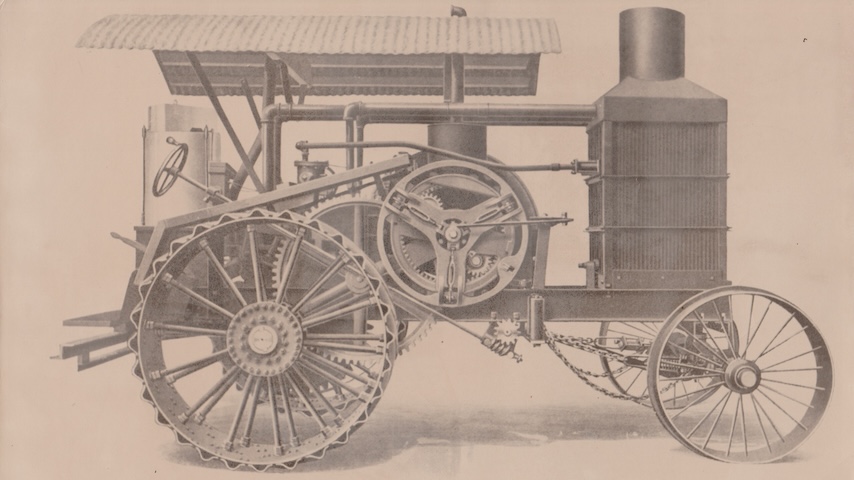
An Engineering Landmark in Tractor Innovation
The Hart-Parr Model 3 is the first tractor to be mass produced with an internal combustion engine, earning its designation as a Historical Mechanical Engineering Landmark.

Sep 3, 2026
5 Mechanical Innovations to Watch in 2026

From adaptive safety belts to biomechanical drug delivery, these recent mechanical engineering breakthroughs are setting the stage for the future.
Sep 1, 2026
The Next Robotics Frontier


The robotics industry often focuses on scale, automation, and valuations. But a quieter group of founders is instead asking what robotics have overlooked as they innovate with compassion in mind.