Flexible LEDs Take Optogenetics Off the Leash
Flexible LEDs Take Optogenetics Off the Leash
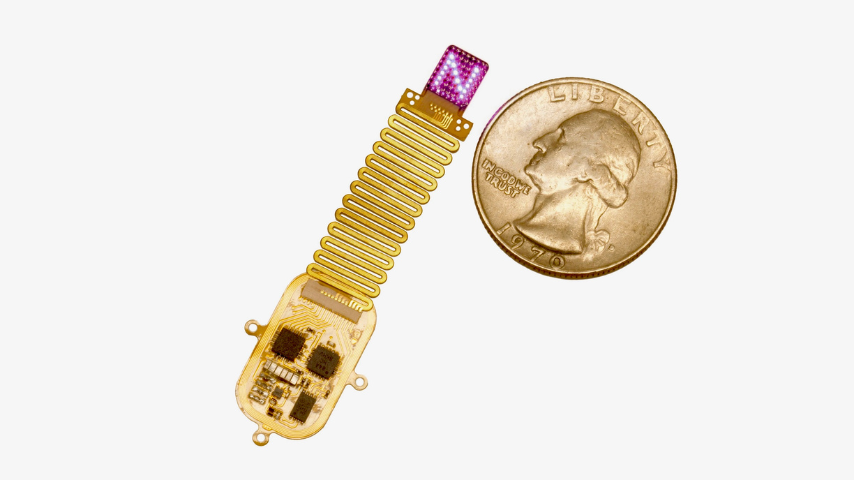
Researchers at Northwestern University have developed a wireless optogenetic device that can activate neural circuits to help understand the brain better.
For more than 20 years, neuroscientists and neurobiologists have relied on optogenetics, a combination of genetic engineering and light, to control neurons with light modulate brain activity in animal models to understand how specific patterns of neural activity influence cognition and behavior.
While this powerful technique has provided new insights into how the brain translates cellular activity into behavior, optogenetics has been, historically, quite invasive. Older set-ups required bulky fiber optic cables, inserted directly into the brain, and a tether to connect them to external power and light sources.
“Relative to magnetic or electrical techniques, optogenetics is powerful because it relies on genetic modifications that are cell type specific,” said John A. Rogers, Ph.D., Louis Simpson and Kimberly Querrey Professor of Materials Science and Engineering at Northwestern University. “That allows you to really target specific networks by stimulating or inhibiting their firing activity and then make observations about how that neuromodulation changes an animal’s behavior.”
You Might Also Like: Wearable Exoskeleton Uses AI to Assist Human Movement
Rogers explained that the optical fibers themselves have rigid mechanical properties, and because they penetrate into soft neural tissue, this can cause damage.
“But there are more problematic aspects with the physical tether,” he said. “They constrain the animal so they can no longer behave naturally. You also can’t study how animals interact with one another because those physical tethers can get tangled up with one another.”
To address these issues, Rogers and colleagues, in collaboration with Yevgenia Kozorovitskiy, Ph.D., a Northwestern neurobiologist, developed a wireless optogenetic device that is soft, flexible, and can sit on top of the skull to deliver the light necessary to activate different neural circuits.
“Most large display companies have active development efforts around the use of very tiny light-emitting diodes (LEDs) as an alternative to liquid crystals or organic LEDs in laptop screens, smart watches, and smartphones,” said Rogers. “They can achieve higher brightness, much faster switching speed, better efficiency, and a better contrast ratio. We’ve been working on alternative approaches to flexible display, thinking about how to create micron scale light-emitting diodes from a material science and nanofabrication standpoint.”
Rogers and team soon realized that they could leverage these same flexible displays to improve optogenetic systems, producing flexible, cellular-scale LEDs to activate neural circuits. They integrated a conformable array of micro-LEDs, each as small as a strand of human hair, with a wireless power control module. The device sits on the skull of the animal, under the scalp, sending patterns of light to modulate neural activity. No bulky cable or tether required.
“We have an entire array of LEDs that can be independently controlled in a spatiotemporal fashion,” said Rogers. “So instead of just lighting up one targeted region of the brain, we can light up different regions in a programmable sequence to bring up different display patterns to modulate activity.”
Rogers said trying to develop a soft, conforming display that can follow the curvature of the skull while also embedding high-performance, rigid device components was an engineering challenge that required careful thought and planning. As was managing the device’s thermal behavior.
“When you think about most LEDs, even flashlights or headlights, the diodes are mounted on a big block of metal to allow for thermal transport and avoid excessive heating,” he said. “And that’s something we really have to worry about in the context of these systems because the animal can only accommodate relatively small temperature increases. So, the interconnect traces, the fine wiring, required to deliver current had to be simultaneously designed to pull heat away to avoid damage to the brain tissue.”
Discover the Benefits of ASME Membership
The resulting device has been successfully tested in animals. The research team found they can not only modulate circuits over the skull but also study animals interacting with one another, something that was impossible with tethered optogenetic devices.
But even with this new advance, Rogers plans to continue improving this minimally invasive device, scaling it up with more LEDs for a finer level of spatial control to reach different regions across the brain. Eventually, he said, there are potential applications for brain-machine interfaces to better support prosthetic limbs, hearing and vision implants, or even enhanced recovery after brain injury. But, to get to that point, he said, these devices will require greater sensitivity and control.
“I feel like there are opportunities for flat optics. As people in the photonics community think about how to create lensing elements and wavelength selective filters in a very thin geometry, you could more effectively guide where photons are going after they emerge from the LEDs than with conventional glass lenses,” he said. “You could imagine making these displays higher and higher in resolution and putting the LEDs closer together without crosstalk, so you can provide more subtle optogenetic programmability—and these future embodiments could open up all kinds of new experimental paradigms that could allow for a deeper understanding of how the brain operates as well as novel applications.”
Kayt Sukel is a technology writer and author in Houston.
While this powerful technique has provided new insights into how the brain translates cellular activity into behavior, optogenetics has been, historically, quite invasive. Older set-ups required bulky fiber optic cables, inserted directly into the brain, and a tether to connect them to external power and light sources.
“Relative to magnetic or electrical techniques, optogenetics is powerful because it relies on genetic modifications that are cell type specific,” said John A. Rogers, Ph.D., Louis Simpson and Kimberly Querrey Professor of Materials Science and Engineering at Northwestern University. “That allows you to really target specific networks by stimulating or inhibiting their firing activity and then make observations about how that neuromodulation changes an animal’s behavior.”
You Might Also Like: Wearable Exoskeleton Uses AI to Assist Human Movement
Rogers explained that the optical fibers themselves have rigid mechanical properties, and because they penetrate into soft neural tissue, this can cause damage.
“But there are more problematic aspects with the physical tether,” he said. “They constrain the animal so they can no longer behave naturally. You also can’t study how animals interact with one another because those physical tethers can get tangled up with one another.”
To address these issues, Rogers and colleagues, in collaboration with Yevgenia Kozorovitskiy, Ph.D., a Northwestern neurobiologist, developed a wireless optogenetic device that is soft, flexible, and can sit on top of the skull to deliver the light necessary to activate different neural circuits.
“Most large display companies have active development efforts around the use of very tiny light-emitting diodes (LEDs) as an alternative to liquid crystals or organic LEDs in laptop screens, smart watches, and smartphones,” said Rogers. “They can achieve higher brightness, much faster switching speed, better efficiency, and a better contrast ratio. We’ve been working on alternative approaches to flexible display, thinking about how to create micron scale light-emitting diodes from a material science and nanofabrication standpoint.”
Rogers and team soon realized that they could leverage these same flexible displays to improve optogenetic systems, producing flexible, cellular-scale LEDs to activate neural circuits. They integrated a conformable array of micro-LEDs, each as small as a strand of human hair, with a wireless power control module. The device sits on the skull of the animal, under the scalp, sending patterns of light to modulate neural activity. No bulky cable or tether required.
“We have an entire array of LEDs that can be independently controlled in a spatiotemporal fashion,” said Rogers. “So instead of just lighting up one targeted region of the brain, we can light up different regions in a programmable sequence to bring up different display patterns to modulate activity.”
Rogers said trying to develop a soft, conforming display that can follow the curvature of the skull while also embedding high-performance, rigid device components was an engineering challenge that required careful thought and planning. As was managing the device’s thermal behavior.
“When you think about most LEDs, even flashlights or headlights, the diodes are mounted on a big block of metal to allow for thermal transport and avoid excessive heating,” he said. “And that’s something we really have to worry about in the context of these systems because the animal can only accommodate relatively small temperature increases. So, the interconnect traces, the fine wiring, required to deliver current had to be simultaneously designed to pull heat away to avoid damage to the brain tissue.”
Discover the Benefits of ASME Membership
The resulting device has been successfully tested in animals. The research team found they can not only modulate circuits over the skull but also study animals interacting with one another, something that was impossible with tethered optogenetic devices.
But even with this new advance, Rogers plans to continue improving this minimally invasive device, scaling it up with more LEDs for a finer level of spatial control to reach different regions across the brain. Eventually, he said, there are potential applications for brain-machine interfaces to better support prosthetic limbs, hearing and vision implants, or even enhanced recovery after brain injury. But, to get to that point, he said, these devices will require greater sensitivity and control.
“I feel like there are opportunities for flat optics. As people in the photonics community think about how to create lensing elements and wavelength selective filters in a very thin geometry, you could more effectively guide where photons are going after they emerge from the LEDs than with conventional glass lenses,” he said. “You could imagine making these displays higher and higher in resolution and putting the LEDs closer together without crosstalk, so you can provide more subtle optogenetic programmability—and these future embodiments could open up all kinds of new experimental paradigms that could allow for a deeper understanding of how the brain operates as well as novel applications.”
Kayt Sukel is a technology writer and author in Houston.
Researchers at Northwestern University have developed a wireless optogenetic device that can activate neural circuits to help understand the brain better.

Freelance writer, author, and ghostwriter
Related Content

Sep 1, 2026
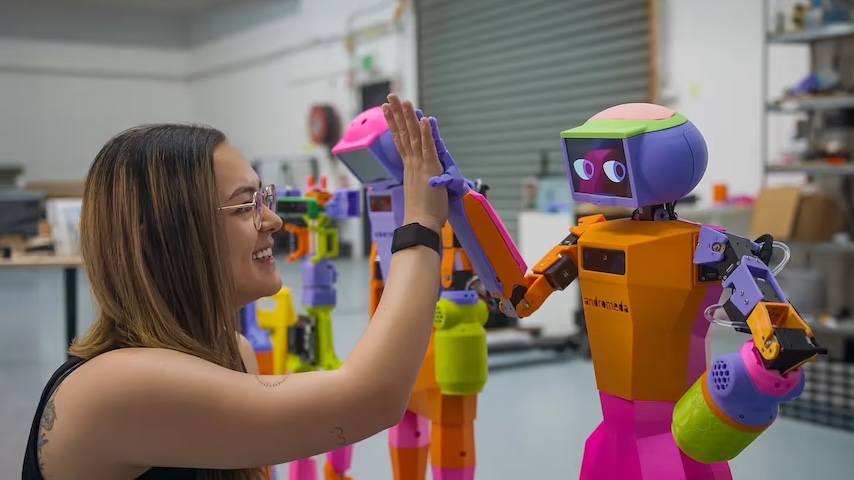
The Next Robotics Frontier


The robotics industry often focuses on scale, automation, and valuations. But a quieter group of founders is instead asking what robotics have overlooked as they innovate with compassion in mind.
Aug 27, 2026
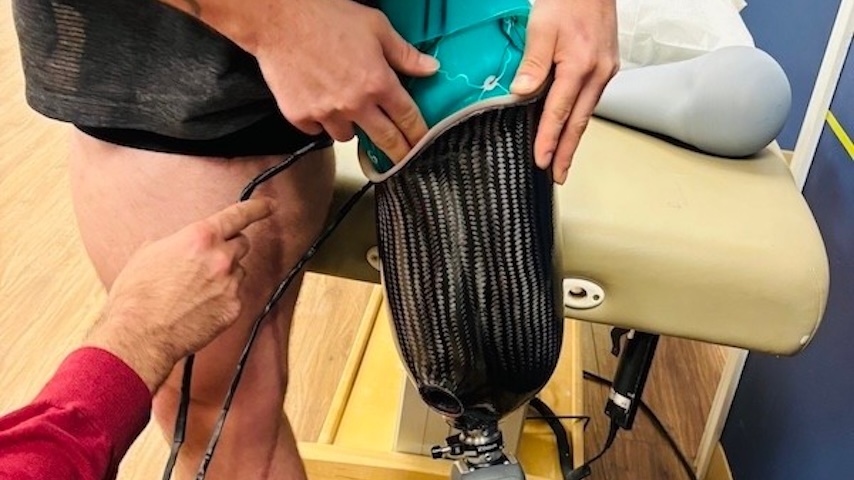
Reimagining Prosthetic Design

Smart tech and 3D printing transform socket design, making prosthetics lighter, more comfortable, and shaped by the patient's own movement.
Aug 20, 2026
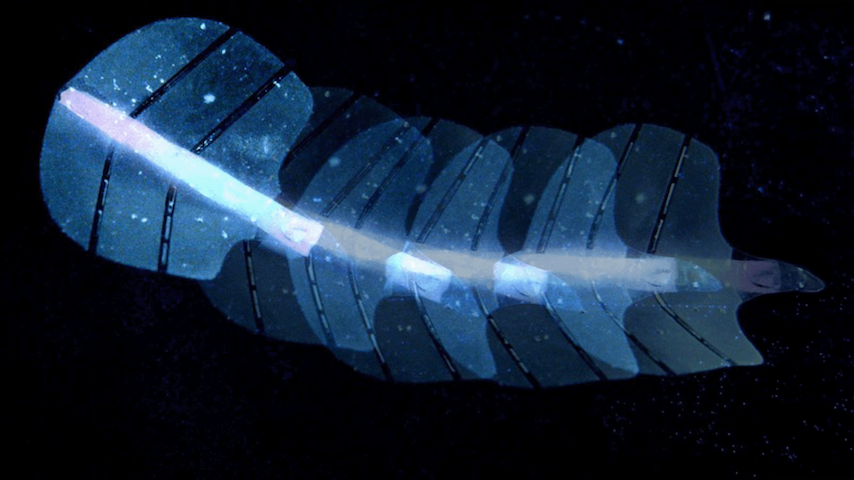
Artificial Muscles That Move to Sound

Microbubbles of varying sizes embedded in polymers have different acoustic responses, which can help move artificial muscles made from this material.
Jul 14, 2026
A Better Step for People with Above-Knee Amputations

MIT researchers designed an affordable prosthetic foot that helps people with above-knee amputations achieve a more natural stride.