A Box-Sized Engineering Internship
A Box-Sized Engineering Internship
Building small satellites gives student engineers the kinds of hard skills and collaborative experience they’ll need for a career in space.
Liam Smith was alone in his room when the culmination of years of teamwork played out on his computer screen. He was watching a live feed of the exterior of the International Space Station where, at exactly 3:50 a.m. Central Time, a cube roughly the size of a quart of blueberries built by him and his fellow students at Columbia University tumbled out into space. Smith watched the live stream with others on a conference call, but as for his teammates who live nearby, “not enough of us were willing to wake up at 4:50 in the morning to get together,” he said.
The perfectly square package Smith was watching for is called LionCub. It’s one of hundreds of CubeSats that have been sent into orbit after being assembled by students around the United States. As the portmanteau suggests, CubeSats are cube-shaped satellites, and their tasks once circulating the Earth run a wide range. Some serve as proof that students can build a device durable enough to withstand launch and then cruise through orbit at nearly 18,000 miles an hour, while others carry instruments on board that collect scientific data. The equipment has proved to be one of the best ways for future computer scientists and engineers interested in space to get first-hand experience for their potential careers.
In 1999, professors at California Polytechnical State University at San Luis Obispo and Stanford University developed the idea of a satellite that could be launched by students. The modules would be small enough that they could hitch a ride into space on be added to already-planned launches by NASA or other agencies.
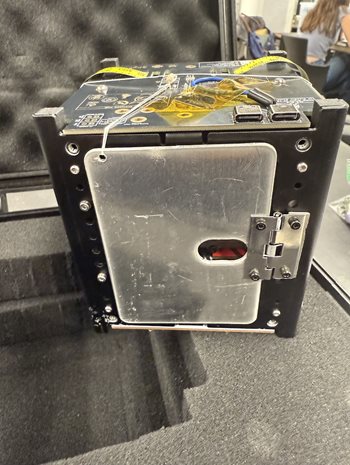 Photo: Columbia Space Initiative
Then in 2004, the same team created the CubeSat standard, where one unit is a 10-centimeter cube weighing up to two kilograms. This made CubeSat assembly more accessible, explained Noé Lugaz, a physicist at the University of New Hampshire, who led an educational CubeSat launch program at his school that was part of a broader NASA mission. Anyone who wanted to dabble in construction knew what the design limits would be. Companies also started offering off-the-shelf CubeSat pieces that would meet the standards. “You can go—not to Best Buy—but almost,” Lugaz said. Teams could dial the difficulty of assembly up or down, depending on their goals.
Today, CubeSats occupy a Goldilocks middle ground for space-related engineering education, Lugaz said. A scientific balloon launch doesn’t prompt as much problem-solving—no one has to anticipate how space radiation might derail the project, for example. Embedding students in larger, NASA-backed space missions is only suitable for graduate students. In between are CubeSats.
“Everything students do on a CubeSat project is equivalent to what they’d be doing in industry or NASA,” Lugaz said. The mission Lugaz worked on had funding that let him and other mentors pay students for their time. Some schools also make CubeSat assembly part of a mechanical or electrical engineering class, where teams contribute over different semesters.
The Columbia LionCub came out of a third CubeSat organizing approach: A student club. The Columbia Space Initiative was in the middle of putting together a CubeSat project when, around 2022, team members met students from California State Polytechnic University, Pomona, who were looking for more people to join an initiative the west coast school had in the works.
 The LionCub deployment. Photo: Columbia Space Initiative
Students there were developing an open-source CubeSat guide. “It's kind of like the Lego set of CubeSats,” explained Matt Chang, fourth-year engineering student at Cal Poly Pomona. “Everybody goes into these projects wanting to build something hands-on, but they always forget that you need to design something and gain approval before you can actually build.” The project founders, who have since graduated, called the effort the Pleiades Rapid Orbital Verification Experiment System, or PROVES. Chang joined in 2023 and is now serving as the coordinator with the other schools who joined in: Northeastern University, UC Santa Cruz, and Texas State University.
Discover the Benefits of ASME Membership
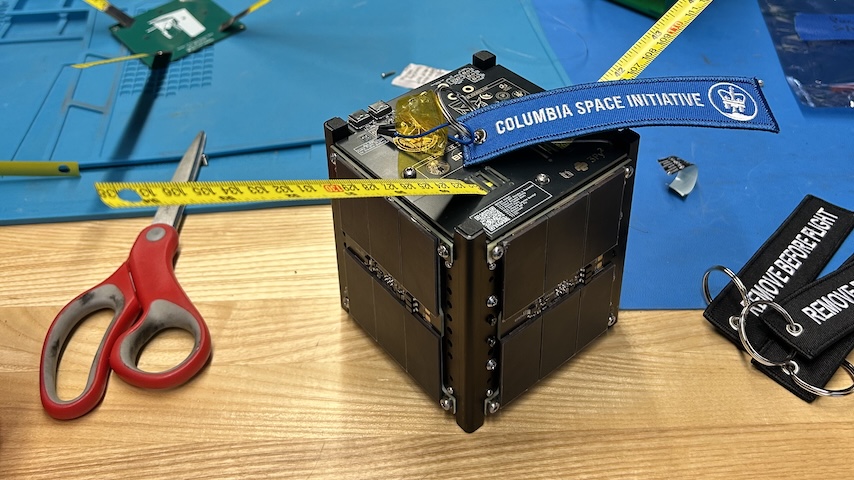
At Columbia University, participating in PROVES created a neat aluminum-frame cube. The outside has silicon solar panels, while inside are lithium-ion batteries and a stack of circuit boards made of FR4, a kind of reinforced epoxy. There’s also an aluminum outer door designed to spring open in space and let out a tiny resin version of the school mascot, Roar-ee the Lion.
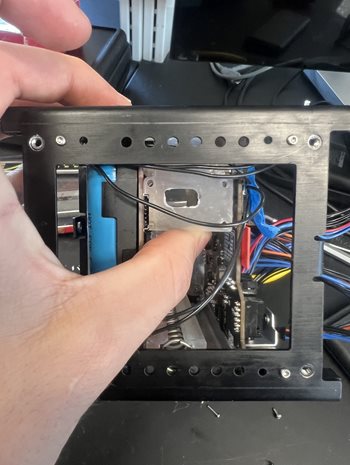 Photo: Columbia Space Initiative
The build-out pushed everyone working on the project to get specific about which components or abilities had to be prioritized for LionCub to work. Besides power, batteries, and the software, sensors, and other bits that make up its orientation abilities, or the Attitude Determination and Control System, LionCub needed its miniature mascot to fit into the design, too. Volume and weight had to be budgeted for all these needs.
The CubeSats also had to meet NASA safety standards. Outgassing isn’t allowed in case any would-be fumes are toxic, so materials were limited to a pre-approved list, added Smith, who is the director of regulatory and external affairs for the club’s CubeSat program. The satellites also went through vibrational testing to make sure it wouldn’t break or deform and risk harming other parts of the launch. Chang traveled down to the Voyager Technologies testing site in Texas to be there when each school’s cube got packed into the deployment pods and shaken to make sure nothing broke or turned on.
Exposing prototypes to radiation also helped some teams figure out how their satellite would fare in orbit. Versions of Cal Poly’s satellite were dying quickly, so the team booked time to use equipment at the Loma Linda University Proton Treatment and Research Center and worked with a Jet Propulsion Laboratory researcher to coordinate a free session with the cyclotron at the Lawrence Berkeley National Laboratory. When the team’s CubeSat was running and being hit with radiation, a purple line of garbled text flashed on their computer screens. “It felt like we were in a hacker movie,” Chang said. After that, the team added some redundancy to their circuit boards and a software failure monitor to make the gear more radiation-resistant.
All the equipment and testing takes time and money. A big CubeSat can range up to $200,000, and that’s before any added salary costs if a team hires an outside engineer for help, Lugaz said. The Cal Poly team made theirs for under $1,500, Chang said, with some costs rising over time because the club made several versions and tariffs raised product prices. Some of the funds came from Chang’s own pocket, but it felt worthwhile for the experience. “From the feedback we get, what students learn from this CubeSat design and testing is what got them the skills for the job,” Lugaz said.
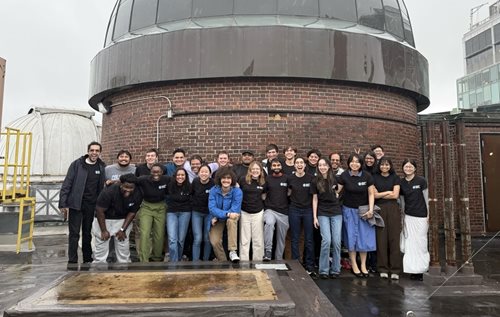 Photo: Columbia Space Initiative
Building components can be a way to save money and get some extra engineering lessons out of construction, Lugaz explained. Projects sometimes focus on creating just one element—the thrusters, the solar panels—to be better than what off-the-shelf offers. In New York, the Columbia Space Initiative has a lot of frugal learning in its future. If LionCub proved that the students could get a satellite launched and functioning, then the club’s LIONESS project will build on that success by putting scientific instruments in space. This CubeSat will have a spectrograph on board to glimpse light from other galaxies and help contribute to our understanding of how the systems form.
The project is more complex than LionCub and didn’t get NASA construction funding that the team was hoping for, so more of this second satellite will be handmade by students, says Ashling Walshe, an electrical engineering student and electronics lead for LIONESS. “Because it is a lower budget, we're going to have to solve a lot of these problems in-house,” she says. “It creates a more challenging and creative project for us.”
This fall, the club is excited to recruit new members—after all, it loses about a quarter of its workforce every year—and the team hasn’t given up on finding companies that might want to chip in. “If you'd like a little bit of space to put your hardware on our satellite or you'd like to work with us in some kind of capacity,” Smith said, “we'd really appreciate that.”
Leslie Nemo is an independent writer in Brooklyn, N.Y.
The perfectly square package Smith was watching for is called LionCub. It’s one of hundreds of CubeSats that have been sent into orbit after being assembled by students around the United States. As the portmanteau suggests, CubeSats are cube-shaped satellites, and their tasks once circulating the Earth run a wide range. Some serve as proof that students can build a device durable enough to withstand launch and then cruise through orbit at nearly 18,000 miles an hour, while others carry instruments on board that collect scientific data. The equipment has proved to be one of the best ways for future computer scientists and engineers interested in space to get first-hand experience for their potential careers.
A teaching tool
In 1999, professors at California Polytechnical State University at San Luis Obispo and Stanford University developed the idea of a satellite that could be launched by students. The modules would be small enough that they could hitch a ride into space on be added to already-planned launches by NASA or other agencies.
Photo: Columbia Space Initiative
Today, CubeSats occupy a Goldilocks middle ground for space-related engineering education, Lugaz said. A scientific balloon launch doesn’t prompt as much problem-solving—no one has to anticipate how space radiation might derail the project, for example. Embedding students in larger, NASA-backed space missions is only suitable for graduate students. In between are CubeSats.
“Everything students do on a CubeSat project is equivalent to what they’d be doing in industry or NASA,” Lugaz said. The mission Lugaz worked on had funding that let him and other mentors pay students for their time. Some schools also make CubeSat assembly part of a mechanical or electrical engineering class, where teams contribute over different semesters.
The Columbia LionCub came out of a third CubeSat organizing approach: A student club. The Columbia Space Initiative was in the middle of putting together a CubeSat project when, around 2022, team members met students from California State Polytechnic University, Pomona, who were looking for more people to join an initiative the west coast school had in the works.
The LionCub deployment. Photo: Columbia Space Initiative
Discover the Benefits of ASME Membership
At Columbia University, participating in PROVES created a neat aluminum-frame cube. The outside has silicon solar panels, while inside are lithium-ion batteries and a stack of circuit boards made of FR4, a kind of reinforced epoxy. There’s also an aluminum outer door designed to spring open in space and let out a tiny resin version of the school mascot, Roar-ee the Lion.
Photo: Columbia Space Initiative
The CubeSats also had to meet NASA safety standards. Outgassing isn’t allowed in case any would-be fumes are toxic, so materials were limited to a pre-approved list, added Smith, who is the director of regulatory and external affairs for the club’s CubeSat program. The satellites also went through vibrational testing to make sure it wouldn’t break or deform and risk harming other parts of the launch. Chang traveled down to the Voyager Technologies testing site in Texas to be there when each school’s cube got packed into the deployment pods and shaken to make sure nothing broke or turned on.
Exposing prototypes to radiation also helped some teams figure out how their satellite would fare in orbit. Versions of Cal Poly’s satellite were dying quickly, so the team booked time to use equipment at the Loma Linda University Proton Treatment and Research Center and worked with a Jet Propulsion Laboratory researcher to coordinate a free session with the cyclotron at the Lawrence Berkeley National Laboratory. When the team’s CubeSat was running and being hit with radiation, a purple line of garbled text flashed on their computer screens. “It felt like we were in a hacker movie,” Chang said. After that, the team added some redundancy to their circuit boards and a software failure monitor to make the gear more radiation-resistant.
A solid investment
All the equipment and testing takes time and money. A big CubeSat can range up to $200,000, and that’s before any added salary costs if a team hires an outside engineer for help, Lugaz said. The Cal Poly team made theirs for under $1,500, Chang said, with some costs rising over time because the club made several versions and tariffs raised product prices. Some of the funds came from Chang’s own pocket, but it felt worthwhile for the experience. “From the feedback we get, what students learn from this CubeSat design and testing is what got them the skills for the job,” Lugaz said.
Photo: Columbia Space Initiative
The project is more complex than LionCub and didn’t get NASA construction funding that the team was hoping for, so more of this second satellite will be handmade by students, says Ashling Walshe, an electrical engineering student and electronics lead for LIONESS. “Because it is a lower budget, we're going to have to solve a lot of these problems in-house,” she says. “It creates a more challenging and creative project for us.”
This fall, the club is excited to recruit new members—after all, it loses about a quarter of its workforce every year—and the team hasn’t given up on finding companies that might want to chip in. “If you'd like a little bit of space to put your hardware on our satellite or you'd like to work with us in some kind of capacity,” Smith said, “we'd really appreciate that.”
Leslie Nemo is an independent writer in Brooklyn, N.Y.
Building small satellites gives student engineers the kinds of hard skills and collaborative experience they’ll need for a career in space.

Related Content


Nov 2, 2026
Engineering Wonders of the 21st Century

NASA JPL, Columbia and Georgia Tech experts name the 21st century's mechanical engineering wonders, from the Ingenuity Mars helicopter to 3D printing and AI.

Oct 22, 2026
Developing Talent Where Impact Happens


How the E4C Fellowship helps early-career engineers build skills in sustainable development and energy access, featuring fellows from ASU’s LEAPS lab.

Oct 1, 2026
Engineering the Sounds of Silence

Many of the things that engineers create make a lot of noise. Now there’s a crop of engineers trying to turn the volume down for all of us.
Sep 29, 2026
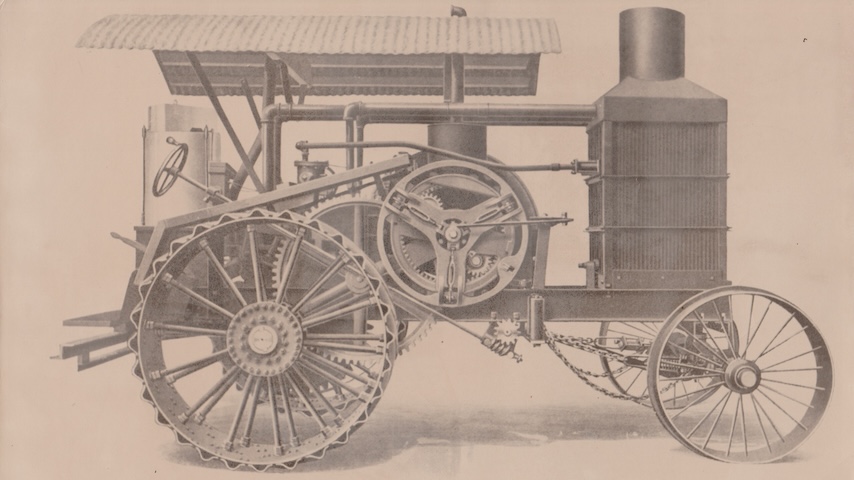
An Engineering Landmark in Tractor Innovation

The Hart-Parr Model 3 is the first tractor to be mass produced with an internal combustion engine, earning its designation as a Historical Mechanical Engineering Landmark.