5 Mechanical Innovations to Watch in 2026
5 Mechanical Innovations to Watch in 2026
From adaptive safety belts to biomechanical drug delivery, these recent mechanical engineering breakthroughs are setting the stage for the future.
Mechanical engineers are known for solving a wide host of different problems, applying the laws of physics in novel ways to solve thorny problems across industries. Their work has the power to develop stronger materials, advance healthcare, support sustainable energy, automate industry, and improve transportation. In 2026, like so many other years before it, several recent engineering advances continue to push the field forward.
While it would be impossible to list all innovations that are worth keeping an eye on, these five breakthrough discoveries are sure to reshape the future of design.
When asked for his list of top mechanical innovations, Robert S. Langer, Sc.D., renowned biomedical engineer at the Massachusetts Institute of Technology, points to a recent advance by fellow MIT colleague Giovanni Traverso, Ph.D., that uses a bioinspired approach to deliver large-molecule drugs through the digestive system. Taking a page from the squid’s unique underwater propulsion system, Traverso’s team has created a capsule that can withstand the harsh conditions of the stomach, using high-speed microjets to safely deliver the drug payload where it’s needed.
“This is a holy grail,” said Langer. “Many people hate needles—especially children—yet that’s what they have to do currently. This approach can support oral delivery of large molecules like insulin, antibodies, and mRNA vaccines.”
There’s no doubt that getting to space is an expensive proposition. But the introduction of fully reusable launch vehicles can help make space travel more economical—and sustainable. In the American Institute of Aeronautics and Astronautics (AIAA)’s 2026 report, Technologies Transforming Space, the development of lightweight, heat-resistant materials is making the idea of a single-stage-to-orbit (SSTO) system, or “integrated space plane that does not shed stages,” a reality.
Today, launching a spacecraft requires multi-stage rockets to help the craft overcome gravity and reach orbital velocity. Those rocket stages, however, are jettisoned as the craft makes its way to space, adding extra expense and waste to any launch. A viable reusable launch vehicle, however, could be used again and again, making space flight less expensive and more accessible in the future.
For some time, additive manufacturing, or the use of a digital model to 3D print parts and components, has only been feasible for prototypes. Over the past year, however, more organizations have been able to enable additive manufacturing at production scale—even using metallic materials. This allows the production of large, complex parts that can be used in a variety of aerospace, automotive, construction, and energy applications. Unlike traditional manufacturing, which machines or mills material away from components, production scale additive manufacturing can support increased complexity, reduced waste, and faster production speeds.
Brain-computer interfaces, or robotic systems controlled by thought alone, can confer many benefits, ranging from safer manufacturing to improved function in individuals with disabilities. But, according to Bin He, Ph.D., Trustee Professor of Biomedical Engineering at Carnegie Mellon University (CMU) and leading neuroengineer, said that many systems lack dexterity and precision. Now, he and his colleagues have developed a non-invasive brain-computer interface that can control a robotic hand at the individual finger level.
“This is the first time that humans can control a robotic finger by thought alone using a non-invasive system, reflecting a major advancement in ‘Mind Over Mechanics,’” he explained.
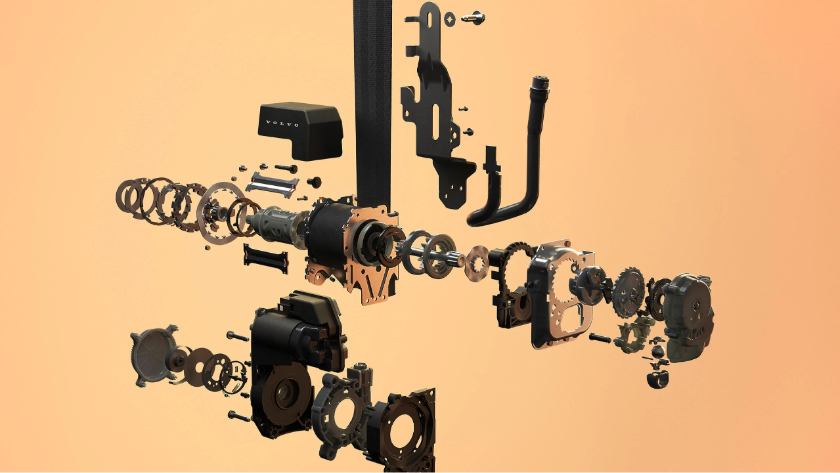
Sometimes the best engineering solves simple problems in ways that sometimes fall beneath our notice. Since 1959, every automobile passenger has been using Nils Bohlin’s three-point safety belt. The advance provided enough benefits that Volvo opted to share the design with all other automotive manufacturers. Bohlin’s design has stayed with us for more than 50 years for good reason: it works incredibly well—provided you fall within certain height and weight parameters. To help those who do not fit neatly into the “average” body type, Volvo has now created a multi-adaptive safety belt.
The new belt can fit snugly by adjusting across a continuum of heights, weights, and seating positions.
Kayt Sukel is a technology writer and author in Kansas City.
While it would be impossible to list all innovations that are worth keeping an eye on, these five breakthrough discoveries are sure to reshape the future of design.
Cephalopod-inspired drug delivery
When asked for his list of top mechanical innovations, Robert S. Langer, Sc.D., renowned biomedical engineer at the Massachusetts Institute of Technology, points to a recent advance by fellow MIT colleague Giovanni Traverso, Ph.D., that uses a bioinspired approach to deliver large-molecule drugs through the digestive system. Taking a page from the squid’s unique underwater propulsion system, Traverso’s team has created a capsule that can withstand the harsh conditions of the stomach, using high-speed microjets to safely deliver the drug payload where it’s needed.
“This is a holy grail,” said Langer. “Many people hate needles—especially children—yet that’s what they have to do currently. This approach can support oral delivery of large molecules like insulin, antibodies, and mRNA vaccines.”
Reusable launch vehicles
There’s no doubt that getting to space is an expensive proposition. But the introduction of fully reusable launch vehicles can help make space travel more economical—and sustainable. In the American Institute of Aeronautics and Astronautics (AIAA)’s 2026 report, Technologies Transforming Space, the development of lightweight, heat-resistant materials is making the idea of a single-stage-to-orbit (SSTO) system, or “integrated space plane that does not shed stages,” a reality.
Today, launching a spacecraft requires multi-stage rockets to help the craft overcome gravity and reach orbital velocity. Those rocket stages, however, are jettisoned as the craft makes its way to space, adding extra expense and waste to any launch. A viable reusable launch vehicle, however, could be used again and again, making space flight less expensive and more accessible in the future.
Additive manufacturing at production scale
For some time, additive manufacturing, or the use of a digital model to 3D print parts and components, has only been feasible for prototypes. Over the past year, however, more organizations have been able to enable additive manufacturing at production scale—even using metallic materials. This allows the production of large, complex parts that can be used in a variety of aerospace, automotive, construction, and energy applications. Unlike traditional manufacturing, which machines or mills material away from components, production scale additive manufacturing can support increased complexity, reduced waste, and faster production speeds.
Brain-controlled extremities
Brain-computer interfaces, or robotic systems controlled by thought alone, can confer many benefits, ranging from safer manufacturing to improved function in individuals with disabilities. But, according to Bin He, Ph.D., Trustee Professor of Biomedical Engineering at Carnegie Mellon University (CMU) and leading neuroengineer, said that many systems lack dexterity and precision. Now, he and his colleagues have developed a non-invasive brain-computer interface that can control a robotic hand at the individual finger level.
“This is the first time that humans can control a robotic finger by thought alone using a non-invasive system, reflecting a major advancement in ‘Mind Over Mechanics,’” he explained.
One seatbelt to fit them all
Sometimes the best engineering solves simple problems in ways that sometimes fall beneath our notice. Since 1959, every automobile passenger has been using Nils Bohlin’s three-point safety belt. The advance provided enough benefits that Volvo opted to share the design with all other automotive manufacturers. Bohlin’s design has stayed with us for more than 50 years for good reason: it works incredibly well—provided you fall within certain height and weight parameters. To help those who do not fit neatly into the “average” body type, Volvo has now created a multi-adaptive safety belt.
The new belt can fit snugly by adjusting across a continuum of heights, weights, and seating positions.
Kayt Sukel is a technology writer and author in Kansas City.
From adaptive safety belts to biomechanical drug delivery, these recent mechanical engineering breakthroughs are setting the stage for the future.

Freelance writer, author, and ghostwriter
Related Content


Oct 1, 2026
Engineering the Sounds of Silence

Many of the things that engineers create make a lot of noise. Now there’s a crop of engineers trying to turn the volume down for all of us.
Sep 29, 2026
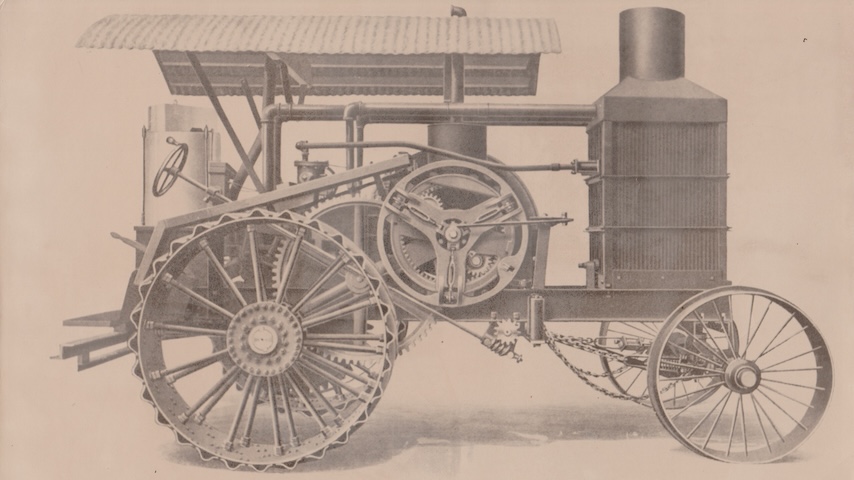
An Engineering Landmark in Tractor Innovation

The Hart-Parr Model 3 is the first tractor to be mass produced with an internal combustion engine, earning its designation as a Historical Mechanical Engineering Landmark.
Sep 1, 2026
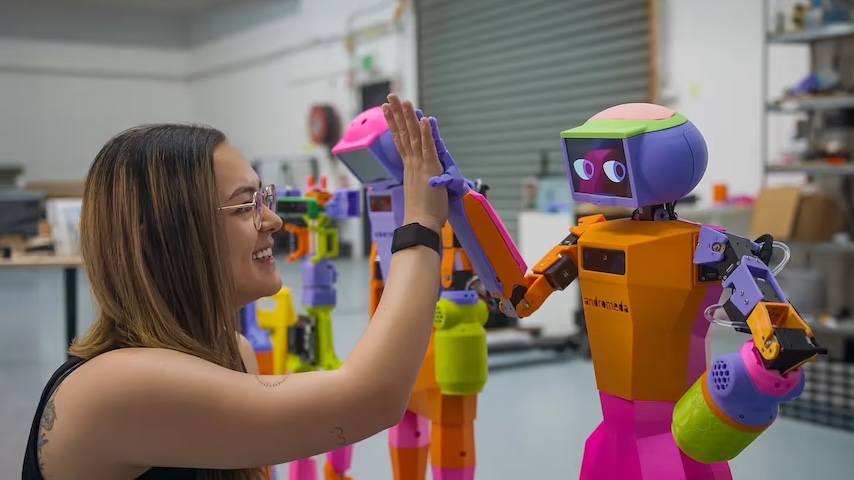
The Next Robotics Frontier


The robotics industry often focuses on scale, automation, and valuations. But a quieter group of founders is instead asking what robotics have overlooked as they innovate with compassion in mind.

Aug 28, 2026
Quiz: The Origins of Automation
Automation’s roots run back to mechanization and the first factories, and it has been compounding ever since. See how well you know that path.