Student Engineers Join Colombia Earthquake Relief
Student Engineers Join Colombia Earthquake Relief
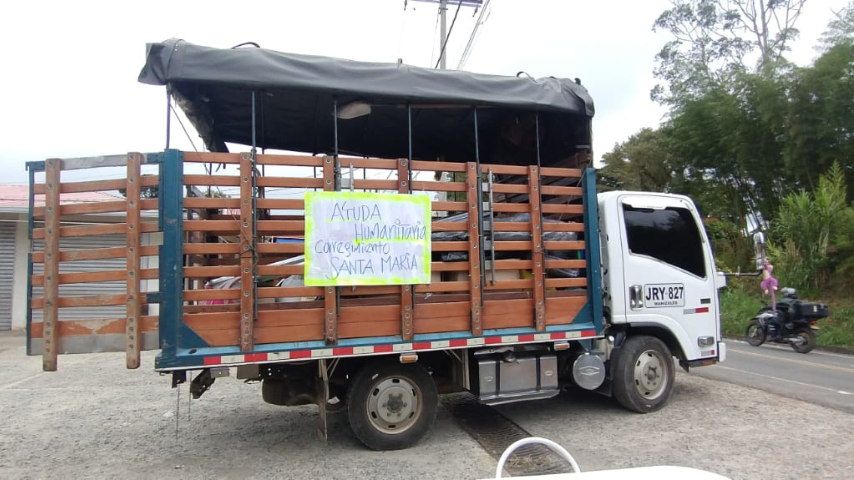
After Colombia’s deadly earthquake, ASME student sections helped deliver much-needed aid to families. Their efforts continue with assistance in building sustainable shelters for long-term recovery.
When a 7.5-magnitude earthquake struck Chocó in August, hundreds of people were killed and thousands more were injured. The catastrophe left nearby communities facing extensive damage and a long rebuilding process.
“We wanted not only to help immediately,” said Samuel Ignacio G. Santacruz, a mechanical engineering student and current chair of the ASME Universidad del Valle (Univalle) Student Section in Cali, Colombia, which helped with relief efforts. “But also, as much as we can, help with their systems and security, so [people] don’t have to go through this again.”
“Economically speaking, it’s a very vulnerable area,” Santacruz said of the rural region, one of the rainiest places on Earth and among the areas hit hard by the August earthquake. The ASME student section at Univalle, recently recognized by ASME for its student engagement and community work, saw an urgent need just a 45-minute drive from campus.
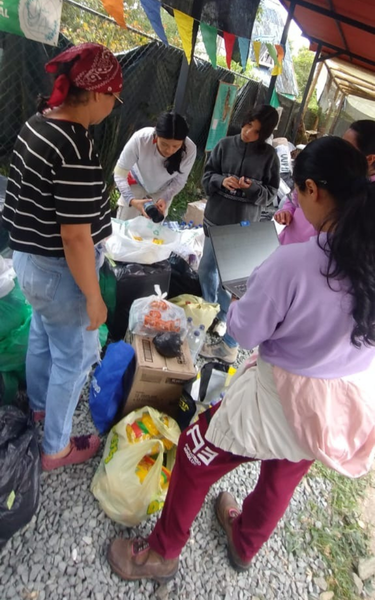 Taking inventory of donations Photo: Samuel Ignacio G. Santacruz
“Our city was the most populated one that was hit, and that affected a lot of people, with hundreds of deaths and many missing people,” Santacruz said of Cali, the closest major city to the earthquake’s epicenter. “But fortunately, there was a lot of support. Every person I knew came to volunteer and help and donate.”
Taking inventory of donations Photo: Samuel Ignacio G. Santacruz
“Our city was the most populated one that was hit, and that affected a lot of people, with hundreds of deaths and many missing people,” Santacruz said of Cali, the closest major city to the earthquake’s epicenter. “But fortunately, there was a lot of support. Every person I knew came to volunteer and help and donate.”
Carolina Lagos, a graduate student studying sustainable development at the university, connected residents who needed help with the ASME students who offered assistance. “I’ve been working with this local community for about seven years,” she said of her work with the rural community of Santa María in Dagua.
When the earthquake hit, Lagos’s first instinct was to help families whose homes had been damaged or destroyed. Working with local leaders and relief organizations, students organized, collected, and delivered bedding, food, bottled water, hygiene products, and medical supplies to families in the rural community. “This is my passion and vocation,” Lagos said. “It is what I do and what I love to do.”
For Santacruz, the experience offered a chance to “give back to the community” that helped him pursue his dream of an aerospace career. Univalle is a public university in Colombia, and many students pay little or nothing for their educations. “I feel like a social debt to my community because, thanks to them, I could have a higher education. Now I can give back,” he said.
The work quickly grew beyond immediate relief. With support from community members and technical experts, the students began helping build temporary shelters using guadua, a native species well suited to sustainable construction given the region’s terrain and climate.
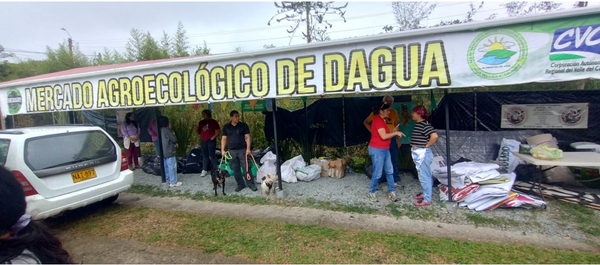 Local market in Dagua hosts collection center. Photo: Samuel Ignacio G. Santacruz
Guadua is a giant bamboo native to South America. It has physical and ecological properties that make it useful for sustainable construction and erosion control. Professionals from Colombia’s National Emergency Agency, who understood the need and how to work with guadua, arrived to help. “CENA taught us how to cure that material, how to drill it, and how to heat-treat it,” Santacruz said.
Local market in Dagua hosts collection center. Photo: Samuel Ignacio G. Santacruz
Guadua is a giant bamboo native to South America. It has physical and ecological properties that make it useful for sustainable construction and erosion control. Professionals from Colombia’s National Emergency Agency, who understood the need and how to work with guadua, arrived to help. “CENA taught us how to cure that material, how to drill it, and how to heat-treat it,” Santacruz said.
Lagos described the interaction among people with technical know-how, the local community, and outside volunteers as having “a lot of potential” in applying technical knowledge in a real context. Nine families were prioritized because they had lost their homes in an area known for cold weather and frequent rainstorms. Inside the shelter, Lagos said, “is dry and warm.”
The effort became a powerful lesson in what engineering can mean outside the classroom. The students brought organization, accountability, and problem-solving to a fast-moving crisis. They also learned from residents of the “mountainous country, that live at the tip of the Andes,” Santacruz said. Local residents best understood the needs, materials, and weather, he added.
The result was more than another relief effort. The work helped build trust. “One of the things we have done, at least as engineering students, is being very rigorous, very strict,” Santacruz said.
 Accountability for donations was essential, he explained, because supporters needed to know how their contributions were being distributed and used. He stressed the need for transparency because people continued to be generous after seeing what the materials and money helped accomplish.
That transparency, accountability, and determination did not go unnoticed by ASME. The Society offered an additional $200 to support the student section’s local work through the Society’s Student Section Community Grant Program.
By year’s end, the students expect to complete 20 shelters, improving families’ quality of life. The work helped families regain some stability and showed young engineers how their technical knowledge, leadership, and willingness to serve can make a direct impact when communities need it most.
The experience taught Santacruz the importance of using what you know and what you have learned to help people. “As an engineer, the main goal in life is, at the end of the day, helping people,” he said.
Cathy Cecere is membership content program manager.
“We wanted not only to help immediately,” said Samuel Ignacio G. Santacruz, a mechanical engineering student and current chair of the ASME Universidad del Valle (Univalle) Student Section in Cali, Colombia, which helped with relief efforts. “But also, as much as we can, help with their systems and security, so [people] don’t have to go through this again.”
Helping the community
“Economically speaking, it’s a very vulnerable area,” Santacruz said of the rural region, one of the rainiest places on Earth and among the areas hit hard by the August earthquake. The ASME student section at Univalle, recently recognized by ASME for its student engagement and community work, saw an urgent need just a 45-minute drive from campus.
Taking inventory of donations Photo: Samuel Ignacio G. Santacruz
Carolina Lagos, a graduate student studying sustainable development at the university, connected residents who needed help with the ASME students who offered assistance. “I’ve been working with this local community for about seven years,” she said of her work with the rural community of Santa María in Dagua.
When the earthquake hit, Lagos’s first instinct was to help families whose homes had been damaged or destroyed. Working with local leaders and relief organizations, students organized, collected, and delivered bedding, food, bottled water, hygiene products, and medical supplies to families in the rural community. “This is my passion and vocation,” Lagos said. “It is what I do and what I love to do.”
For Santacruz, the experience offered a chance to “give back to the community” that helped him pursue his dream of an aerospace career. Univalle is a public university in Colombia, and many students pay little or nothing for their educations. “I feel like a social debt to my community because, thanks to them, I could have a higher education. Now I can give back,” he said.
Engineering relief into recovery
The work quickly grew beyond immediate relief. With support from community members and technical experts, the students began helping build temporary shelters using guadua, a native species well suited to sustainable construction given the region’s terrain and climate.
Local market in Dagua hosts collection center. Photo: Samuel Ignacio G. Santacruz
Lagos described the interaction among people with technical know-how, the local community, and outside volunteers as having “a lot of potential” in applying technical knowledge in a real context. Nine families were prioritized because they had lost their homes in an area known for cold weather and frequent rainstorms. Inside the shelter, Lagos said, “is dry and warm.”
The effort became a powerful lesson in what engineering can mean outside the classroom. The students brought organization, accountability, and problem-solving to a fast-moving crisis. They also learned from residents of the “mountainous country, that live at the tip of the Andes,” Santacruz said. Local residents best understood the needs, materials, and weather, he added.
More than temporary
The result was more than another relief effort. The work helped build trust. “One of the things we have done, at least as engineering students, is being very rigorous, very strict,” Santacruz said.
Learn More About ASME Student Sections
Student Sections participate in design competitions, fundraising, volunteer work, university activities, and partner with local schools to provide STEM activities.
That transparency, accountability, and determination did not go unnoticed by ASME. The Society offered an additional $200 to support the student section’s local work through the Society’s Student Section Community Grant Program.
By year’s end, the students expect to complete 20 shelters, improving families’ quality of life. The work helped families regain some stability and showed young engineers how their technical knowledge, leadership, and willingness to serve can make a direct impact when communities need it most.
The experience taught Santacruz the importance of using what you know and what you have learned to help people. “As an engineer, the main goal in life is, at the end of the day, helping people,” he said.
Cathy Cecere is membership content program manager.
After Colombia’s deadly earthquake, ASME student sections helped deliver much-needed aid to families. Their efforts continue with assistance in building sustainable shelters for long-term recovery.

Membership content program manager for ASME
Related Content

Sep 4, 2026
Quiz: Engineering New Realities
The convergence of AI and XR is changing the game for human-machine interaction. See what you know about our new reality.

Sep 3, 2026
5 Mechanical Innovations to Watch in 2026

From adaptive safety belts to biomechanical drug delivery, these recent mechanical engineering breakthroughs are setting the stage for the future.
Sep 2, 2026
Engineers Must Prepare for an AI-Driven Future


Mechanical engineers who build AI fluency, strengthen communication skills, and keep learning can stay competitive as the technology reshapes engineering work.

Sep 1, 2026
Mechanical Engineers Turn Ideas into Businesses
Mechanical engineers have the problem-solving mindset entrepreneurship demands, but turning an idea into a business also requires persistence and a willingness to learn.