Workforce Blog: Inclusive Leadership Drives Tomorrow’s Workforce
Workforce Blog: Inclusive Leadership Drives Tomorrow’s Workforce

Growing a future-focused, powerful engineering workforce requires authenticity and inclusivity.
Hiring managers perform a balancing act for each engineering position they fill. While applicants must have the required skills and indicate the drive to be productive members of the team, today they may also be evaluated on how their unique perspectives complement existing staff. This applies as well to internal candidates seeking to advance into leadership roles.
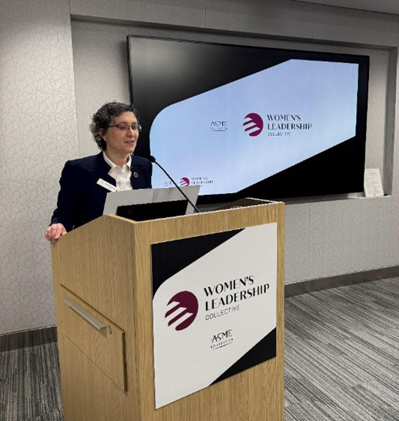 Susan Ipri-Brown, ASME Fellow and past president.
A few years ago, a candidate I interviewed initially presented as a classic example of “better on paper than in person.” Yet each of her responses also had a little curveball, an insightful comment about our customers, a perceptive observation about our work. As the committee discussed who to move to the second round, I couldn’t get these comments out of my head. Our rigid rubrics and assumptions about her past work history didn’t match what she brought to the conversation. I was honest with the team—I sensed a spark in her that our team needed. She wasn’t a typical candidate, but could we explore a potential match further? Two months later, that same applicant was successfully onboarded to the team.
Susan Ipri-Brown, ASME Fellow and past president.
A few years ago, a candidate I interviewed initially presented as a classic example of “better on paper than in person.” Yet each of her responses also had a little curveball, an insightful comment about our customers, a perceptive observation about our work. As the committee discussed who to move to the second round, I couldn’t get these comments out of my head. Our rigid rubrics and assumptions about her past work history didn’t match what she brought to the conversation. I was honest with the team—I sensed a spark in her that our team needed. She wasn’t a typical candidate, but could we explore a potential match further? Two months later, that same applicant was successfully onboarded to the team.
Engineering can lead the way by applying engineering principles to this challenge. Change disrupts equilibrium—new variables or new boundary conditions. When a significant change occurs in the workplace, think of it as a control lever shifting position. Recent changes at the federal level adjusted the variables and boundary conditions. Levers moved.
There are many societal levers that we can’t control, but there are also many that we can. Let’s be aware of all the levers that we do control. What can you adjust to create engineering spaces that are welcoming to all? These levers include work routines, partnerships, and language choices.
Discover the Benefits of ASME Membership
If moving these levers feels insignificant, it isn’t. Reframe that to realize that the point is to act, take control, and move closer to an optimal situation. Taking action gives you a measure of control and makes the situation less emotional and more logical. Moving the levers allows you to refocus and move forward instead of feeling like you and your community are moving backward.
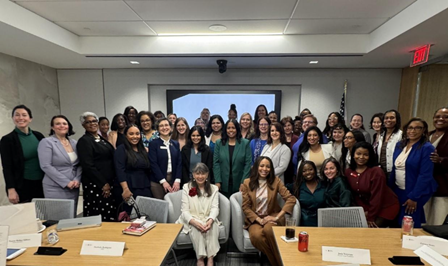 ASME's inaugural Women’s Leadership Collective meeting held in March 2025.
ASME, other engineering societies, and many of us personally have long advocated for inclusivity in the workplace. There are articles, books, training sessions, and workshops all providing insights and practices to achieve an inclusive workforce. However, that prior hiring experience reminded me firsthand that all those workshops mean nothing if they are not acted upon with each job description and hiring.
Two critical levers that ASME leaders have identified are:
To get more directly involved with ASME’s inclusive leadership efforts, consider:
Susan Ipri-Brown, served as the 143rd president of ASME and advocates for inclusive practices within education and organizations. She is a proud advocate for the ASME Foundation’s focus on engineers of the future and supports the Foundation scholarship programs.
To learn more about how the ASME Foundation is empowering the next generation, visit asmefoundation.org.
Susan Ipri-Brown, ASME Fellow and past president.
Inclusive Leadership
Inclusive leadership unlocks the varied, distinct, often contrasting voices from inside your organization, encompassing the diverse individual identities and lived experiences that comprise it, and ensuring they can lead. This flows from the intentional enactment of policies that welcome all voices into leadership positions. Inclusive leaders see each employee as a unique asset and allow their individuality to both grow and enrich the organization.Inclusive leadership in engineering spaces
As today’s technical workforce tackles sustainability, clean energy, AI, and biodiversity, among a host of other existential issues, inclusive leadership is more meaningful than ever.Engineering can lead the way by applying engineering principles to this challenge. Change disrupts equilibrium—new variables or new boundary conditions. When a significant change occurs in the workplace, think of it as a control lever shifting position. Recent changes at the federal level adjusted the variables and boundary conditions. Levers moved.
There are many societal levers that we can’t control, but there are also many that we can. Let’s be aware of all the levers that we do control. What can you adjust to create engineering spaces that are welcoming to all? These levers include work routines, partnerships, and language choices.
Discover the Benefits of ASME Membership
If moving these levers feels insignificant, it isn’t. Reframe that to realize that the point is to act, take control, and move closer to an optimal situation. Taking action gives you a measure of control and makes the situation less emotional and more logical. Moving the levers allows you to refocus and move forward instead of feeling like you and your community are moving backward.
Empowering inclusive leadership at ASME
At a moment when policy changes at the federal level demand a shift in business practices, ASME is directly leaning into these questions: “How do we redefine what leading with inclusivity means in the workforce? How do we move from workshops and sound bites to growing the powerful engineering workforce of the future? How do we create truly authentic leadership development that will shape tomorrow’s engineering leaders?”
ASME's inaugural Women’s Leadership Collective meeting held in March 2025.
ASME, other engineering societies, and many of us personally have long advocated for inclusivity in the workplace. There are articles, books, training sessions, and workshops all providing insights and practices to achieve an inclusive workforce. However, that prior hiring experience reminded me firsthand that all those workshops mean nothing if they are not acted upon with each job description and hiring.
Two critical levers that ASME leaders have identified are:
- Mentoring, where all employees are provided tools to move up in the organization and add to their leadership resumes. Research suggests we unconsciously mentor men to think strategically for the organization and women to improve their soft skills. Organizations must be intentional about eliminating this bias.
- Employee Development, where programs provide opportunities for employees to demonstrate their strategic thinking and implementation skills while enhancing employees’ understanding of executive presence and communication.
To get more directly involved with ASME’s inclusive leadership efforts, consider:
- Attending ASME’s Mechanical Engineering Education Conference (MEEd) Pre-conference Session: Strategic Inclusion in Academic Leadership on March 29.
- Following ASME’s Women’s Leadership Collective Group Page on LinkedIn.
Susan Ipri-Brown, served as the 143rd president of ASME and advocates for inclusive practices within education and organizations. She is a proud advocate for the ASME Foundation’s focus on engineers of the future and supports the Foundation scholarship programs.
To learn more about how the ASME Foundation is empowering the next generation, visit asmefoundation.org.
Growing a future-focused, powerful engineering workforce requires authenticity and inclusivity.
Related Content


Mar 4, 2026
Want a Successful Engineering Career? Work on Communication


Even exceptional technical expertise will only take a mechanical engineer so far. Verbal and written skills are also critical for a successful career.

Mar 3, 2026
Bubbles to Gently Scrub Algae Bioreactors

Electrochemically generated bubbles are the key to a new nontoxic defouling method.
Mar 2, 2026
Deep Sea Device Captures Whale Communication

A deep-sea device developed by Harvard researchers captures whale communication.



Mar 2, 2026
Engineer PMs Use Their Expertise for Design and Delivery

Mechanical engineers must learn to blend their technical Insight, real-world constraints, and understanding of systems to become better project managers.