Top 5 Landmarks of 2025
Top 5 Landmarks of 2025
See which profiles of ASME Mechanical Engineering Landmarks were the most-read of the year.
Since 1971, ASME has designated 284 historic Mechanical Engineering Landmarks, which are existing artifacts or systems representing a significant mechanical engineering technology. In fact, the most recent landmark was formally presented for the Duesenberg Four-Wheel Hydraulic Brakes for Automobile Vehicles in March 2025 (read on for more about that).
Given the significance of these landmarks for engineering, the staff at Mechanical Engineering magazine began a monthly profile series in 2024. Some of these first stories included the Evinrude Outboard Motor, Saugus Ironworks, Disneyland Monorail, and Radio City Music Hall’s Hydraulically Actuated Stage, and we continued the series on into 2025.
Here are the top five most-read landmark profiles of the year.
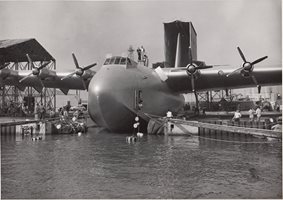 Photo: Evergreen Aviation and Space Museum
The H-4 Hercules, an obsession of Howard Hughes, is still the biggest wooden boat to go airborne after more than 75 years. Hughes’s biggest, most audacious, most life-consuming, most fought-for, and most lasting record was for the construction and—spoiler alert—brief flight of this massive seaplane, née the HK-1 and known to the world as the Spruce Goose. The aircraft was, and is, 284,000 pounds, eight stories tall from wheelbase to tail tip, and has a football field of a wingspan—with the wingtips extending well into the endzones. But size is just the most obvious innovation of the most jumbo of jumbo planes. In designing, constructing, and experimenting with it, Hughes and his engineers set many firsts before its flight, with its flight, and, also, after its flight.
Photo: Evergreen Aviation and Space Museum
The H-4 Hercules, an obsession of Howard Hughes, is still the biggest wooden boat to go airborne after more than 75 years. Hughes’s biggest, most audacious, most life-consuming, most fought-for, and most lasting record was for the construction and—spoiler alert—brief flight of this massive seaplane, née the HK-1 and known to the world as the Spruce Goose. The aircraft was, and is, 284,000 pounds, eight stories tall from wheelbase to tail tip, and has a football field of a wingspan—with the wingtips extending well into the endzones. But size is just the most obvious innovation of the most jumbo of jumbo planes. In designing, constructing, and experimenting with it, Hughes and his engineers set many firsts before its flight, with its flight, and, also, after its flight.
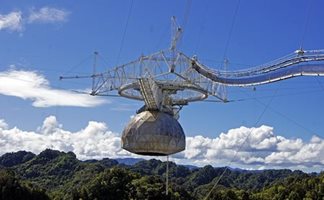 Photo: Getty
Not many major scientific installations claim a starring role in a major Hollywood movie—but the Arecibo Telescope in Puerto Rico holds the distinction of having been in multiple blockbusters, from “Contact” to “Goldeneye” and “Species,” among others, which gave it a little extra fame beyond the realm of science. This ASME Mechanical Engineering Landmark was the largest radio telescope in the world for nearly 50 years. Its location 19 kilometers south of the city of Arecibo had purpose, but that remoteness would prove to be something of a hindrance following the telescope’s unexpected collapse in 2020.
Photo: Getty
Not many major scientific installations claim a starring role in a major Hollywood movie—but the Arecibo Telescope in Puerto Rico holds the distinction of having been in multiple blockbusters, from “Contact” to “Goldeneye” and “Species,” among others, which gave it a little extra fame beyond the realm of science. This ASME Mechanical Engineering Landmark was the largest radio telescope in the world for nearly 50 years. Its location 19 kilometers south of the city of Arecibo had purpose, but that remoteness would prove to be something of a hindrance following the telescope’s unexpected collapse in 2020.
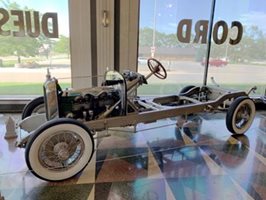 Photo: Auburn Cord Duesenberg Automobile Museum
In the early 20th century, driving a car was something of a physical test. The Duesenberg hydraulic braking system opened the roads to everyone. While the Big Three automakers—General Motors, Ford, and Chrysler—opened up car ownership to the masses, companies based outside of Detroit were competing for a slice of the high-end market and had to make their marks through luxury, craftsmanship, or high technology. One company that was renowned for both its luxury and technology was Duesenberg. Among those innovations was four-wheel hydraulic brakes, which were included as a standard in its Model A, known originally as the Duesenberg Straight Eight.
Photo: Auburn Cord Duesenberg Automobile Museum
In the early 20th century, driving a car was something of a physical test. The Duesenberg hydraulic braking system opened the roads to everyone. While the Big Three automakers—General Motors, Ford, and Chrysler—opened up car ownership to the masses, companies based outside of Detroit were competing for a slice of the high-end market and had to make their marks through luxury, craftsmanship, or high technology. One company that was renowned for both its luxury and technology was Duesenberg. Among those innovations was four-wheel hydraulic brakes, which were included as a standard in its Model A, known originally as the Duesenberg Straight Eight.
A Landmark Rocket Sent Humanity to the Moon
July 2025 marked 56 years since the Apollo 11 moon landing. That historic feat was made possible by the Saturn V rocket, designed and engineered at NASA’s Marshall Space Flight Center in Huntsville, Ala. At the time, this heavy lift vehicle was the tallest, heaviest, and most powerful rocket ever built. It moved people, ships, and even a space station beyond Earth’s atmosphere. In fact, it still holds the record for the largest payload delivered to low Earth orbit at 141 metric tons, which included the Apollo command and lunar modules, plus enough fuel to travel to and from the moon.
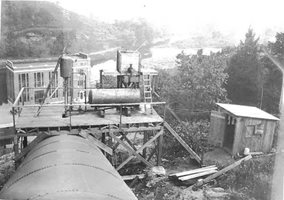 Photo: FirstLight Power
The flow of water has been doing our work for a few thousand years, hulling grain, crushing ore, and powering other tasks. The work that hydropower could help with expanded dramatically when, in the late 19th century, turbines began to be used to turn the force of falling water into electricity. But the average municipality with a river needed some way of storing the river’s power when the flow was plentiful for the times when it was not. Damming a short tributary of the Housatonic—or the Rocky River—created a giant reservoir from which to draw extra flow and power as needed. First built in 1926, Rocky River’s pumped storage facility remains Connecticut’s largest battery.
Photo: FirstLight Power
The flow of water has been doing our work for a few thousand years, hulling grain, crushing ore, and powering other tasks. The work that hydropower could help with expanded dramatically when, in the late 19th century, turbines began to be used to turn the force of falling water into electricity. But the average municipality with a river needed some way of storing the river’s power when the flow was plentiful for the times when it was not. Damming a short tributary of the Housatonic—or the Rocky River—created a giant reservoir from which to draw extra flow and power as needed. First built in 1926, Rocky River’s pumped storage facility remains Connecticut’s largest battery.
Given the significance of these landmarks for engineering, the staff at Mechanical Engineering magazine began a monthly profile series in 2024. Some of these first stories included the Evinrude Outboard Motor, Saugus Ironworks, Disneyland Monorail, and Radio City Music Hall’s Hydraulically Actuated Stage, and we continued the series on into 2025.
Here are the top five most-read landmark profiles of the year.
The Spruce Goose Is a Wooden Wonder
Photo: Evergreen Aviation and Space Museum
A One-Off Conjunction of Events Toppled the Arecibo Telescope
Photo: Getty
The Brakes That Got America Moving
Photo: Auburn Cord Duesenberg Automobile Museum
A Landmark Rocket Sent Humanity to the Moon
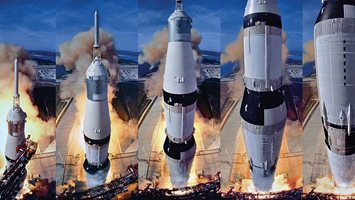 Photo: NASA
July 2025 marked 56 years since the Apollo 11 moon landing. That historic feat was made possible by the Saturn V rocket, designed and engineered at NASA’s Marshall Space Flight Center in Huntsville, Ala. At the time, this heavy lift vehicle was the tallest, heaviest, and most powerful rocket ever built. It moved people, ships, and even a space station beyond Earth’s atmosphere. In fact, it still holds the record for the largest payload delivered to low Earth orbit at 141 metric tons, which included the Apollo command and lunar modules, plus enough fuel to travel to and from the moon.
Photo: NASA
Pumping It Up at Rocky River
Photo: FirstLight Power
See which profiles of ASME Mechanical Engineering Landmarks were the most-read of the year.
Related Content


Oct 1, 2026
Engineering the Sounds of Silence

Many of the things that engineers create make a lot of noise. Now there’s a crop of engineers trying to turn the volume down for all of us.
Sep 29, 2026
An Engineering Landmark in Tractor Innovation

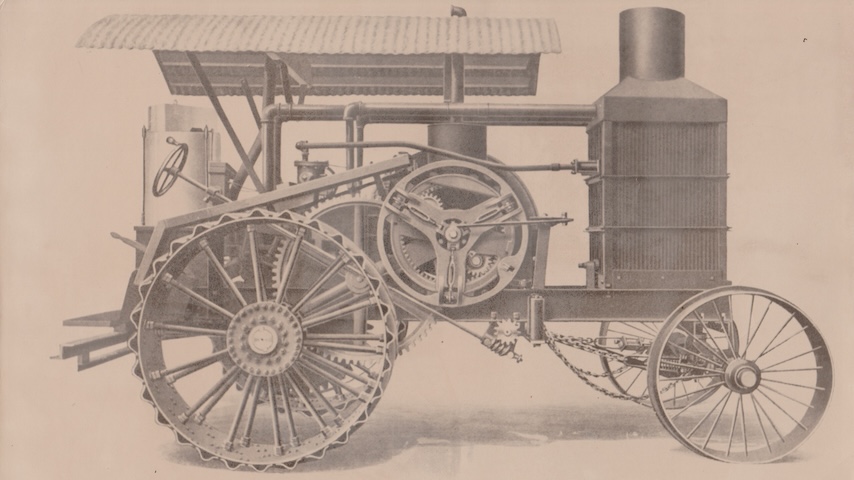
The Hart-Parr Model 3 is the first tractor to be mass produced with an internal combustion engine, earning its designation as a Historical Mechanical Engineering Landmark.

Sep 10, 2026
Smarter Models for Faster Fusion Research

A Virginia Tech researcher is developing reduced models that could help fusion researchers make faster predictions with less computing power.
Sep 3, 2026
5 Mechanical Innovations to Watch in 2026

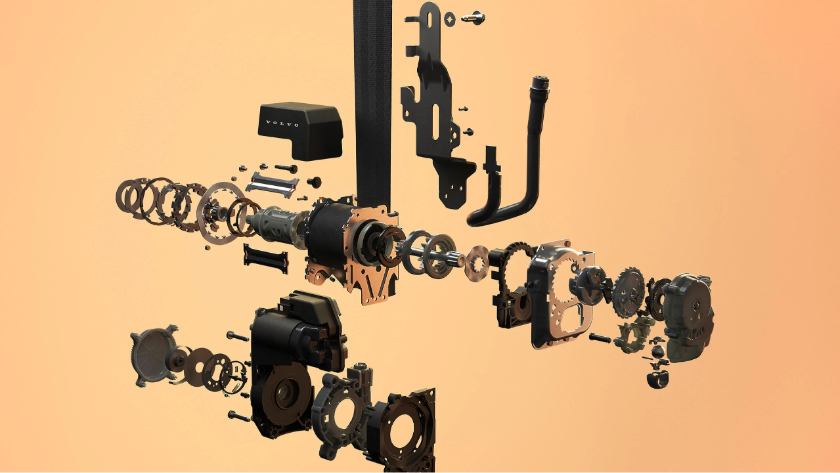
From adaptive safety belts to biomechanical drug delivery, these recent mechanical engineering breakthroughs are setting the stage for the future.