Metal Printing: Rapid and On-Demand
Metal Printing: Rapid and On-Demand
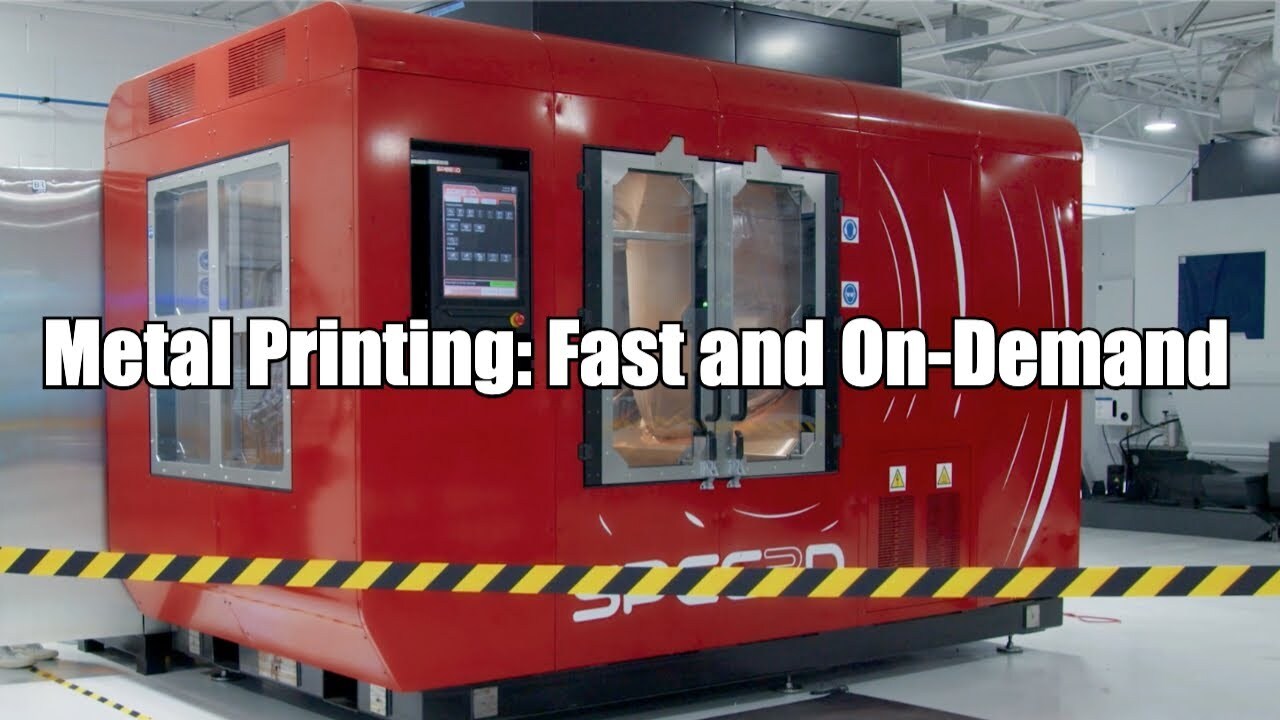
When engineers talk about the promise of on-demand metal manufacturing, they often point to faster prototyping cycles, distributed fabrication, and the chance to rethink how supply chains respond to crises. At New Jersey Institute of Technology’s (NJIT) COMET Center, an advanced manufacturing hub built through a public-private partnership with the U.S. Army, those ambitions are already underway.
“Additive manufacturing is really important to progress technology. The speed of innovation can really be accelerated with this equipment,” said Sam Gatley, deputy director of NJII’s Defense Division and the operational lead at COMET.
The ability for students and early-career engineers to turn a napkin sketch to something that they're handing me in a day now fundamentally alters the rhythm of engineering development. What once required weeks of machining time, vendor lead times, and multiple handoffs has been condensed into hours.
COMET was built specifically to explore this shift. Designed as a proving ground for advanced manufacturing technologies—from polymer additive printers to metal hybrid systems and additive electronics—the center supports workforce development and real-world demonstration projects.
“COMET is an advanced manufacturing center focused on workforce development and kind of proving out the use case for some of this new emerging technology,” Gatley said.
The legacy model of manufacturing relied on centralized facilities producing high-volume parts, often far from where they would be used. Gatley sees advanced manufacturing as an opportunity to invert that logic.
“Historically with manufacturing, you really benefited from economies of scale,” he said. “With advanced manufacturing, we can deploy those assets near the user instead of spending all of that carbon shipping from the middle of America all the way to the coast or halfway around the world.”
The benefit isn’t just carbon reduction. It’s resilience. A few years ago, there was a huge hurricane that knocked out essentially all of their pharmaceutical capabilities in Puerto Rico. In the future, if one site gets wiped out, it's not as terrible to the overall supply chain if they’re more distributed.
Advanced manufacturing systems—especially compact metal printers and hybrid subtractive/additive machines—allow fabrication sites to be intentionally dispersed. A facility like COMET can serve as both a regional manufacturing node and a training ground. Some machines can even be deployed in remote locations powered by solar, generators, or other modular systems.
“It just kind of opens up your capabilities a little bit more,” Gatley explained.
One of the most advanced systems at COMET is a hybrid subtractive/additive platform: a Haas UMC-750 mill integrated with a Meltio direct-energy-deposition print engine.
“At first blush it looks like an amazing five axis NC mill, which it is, but interestingly enough, it also integrates 3D printing and in one operation, you can build up a material, cut, go back and forth and unlock devices or products that otherwise could not be manufactured,” he said.
The hybrid system eliminates the traditional separation between machining and additive manufacturing—making it possible to fabricate internal cavities, repair components, or build metal geometries that would be impossible using either method alone.
It also solves a major logistical challenge for point-of-need metal printing. According to Gatley, if it's metal powder that's hazardous, it just makes life a lot more difficult. But with this machine using welding wire that is easily available, it's cheap and not dangerous.
The ability to manufacture closer to where parts are needed, without transporting sensitive powders, opens new paths for agile deployment.
COMET also uses a compact ExactMetal laser powder bed fusion system for materials validation and training.
“We can get running with just a few thousand dollars worth of powder, it's a little bit more accessible,” Gatley said, noting collaborations with small businesses developing novel powder formulations.
Beyond metals, COMET operates an additive electronics cleanroom that enables engineers to prototype microelectronic devices in-house using multi-material 3D printing, conductive inks, and automated pick-and-place systems.
“It's pretty nascent—it feels a little bit like where plastic 3D printing was 20 years ago,” Gatley emphasized.
A central part of COMET’s mission is workforce development. Gatley founded the internship program nearly a decade ago, growing it from four interns in a basement lab to nearly two dozen each summer.
“Some of our stakeholders have jokingly called what we do a finishing school for engineers. I love that term,” he said.
The program is designed to mimic the complexity of real engineering work. Interns collaborate across disciplines, manage procurement challenges, and navigate technical pivots—skills rarely taught in traditional coursework. Gatley deliberately allows teams to make mistakes and recover from them.
“The goal is to have really advanced engineers at the end of the summer,” he said.
This year’s cohort is developing a collaborative ground-and-air robotic system intended to operate in dense forests and extend communication signals for remote sensing. The challenge came from a real customer, as the interns were responsible for everything from defining requirements to presenting a narrative arc for their engineering decisions.
“They only have ten weeks and at the end of the summer, they need to present back to the customer,” Gatley said.
Hands-on time with advanced equipment is a non-negotiable part of that training. According to Gatley, getting time on the machine is 100% needed. As a result, many former interns now work full-time at COMET or partner organizations.
While COMET’s core partnership is with the U.S. Army, its umbrella facility, Landing 360, supports a much wider array of startups working on robotics, biomedical devices, materials, consumer technology, and more.
“We want to be the hub for an innovation ecosystem, identify the pain points and apply leverage where they can be most effective,” Gatley explained.
Doing so includes assisting companies with prototype devices, connecting startups with funding pathways, and providing researchers access to high-end equipment. COMET’s mix of metal additive manufacturing, hybrid systems, polymer 3D printing, electronics fabrication, and interdisciplinary mentorship positions it as a unique bridge between academia, government, and industry.
For Gatley, the work is as personal as it is technical. Years of coaching young engineers along with high school athletes prior, shapes how he approaches mentorship.
“My hope with COMET is that we're able to reach more people,” he expressed.
Video by ASME’s Video Production Team. Article by Aida M. Toro.
“Additive manufacturing is really important to progress technology. The speed of innovation can really be accelerated with this equipment,” said Sam Gatley, deputy director of NJII’s Defense Division and the operational lead at COMET.
The ability for students and early-career engineers to turn a napkin sketch to something that they're handing me in a day now fundamentally alters the rhythm of engineering development. What once required weeks of machining time, vendor lead times, and multiple handoffs has been condensed into hours.
COMET was built specifically to explore this shift. Designed as a proving ground for advanced manufacturing technologies—from polymer additive printers to metal hybrid systems and additive electronics—the center supports workforce development and real-world demonstration projects.
“COMET is an advanced manufacturing center focused on workforce development and kind of proving out the use case for some of this new emerging technology,” Gatley said.
Rewriting the supply chain
The legacy model of manufacturing relied on centralized facilities producing high-volume parts, often far from where they would be used. Gatley sees advanced manufacturing as an opportunity to invert that logic.
“Historically with manufacturing, you really benefited from economies of scale,” he said. “With advanced manufacturing, we can deploy those assets near the user instead of spending all of that carbon shipping from the middle of America all the way to the coast or halfway around the world.”
The benefit isn’t just carbon reduction. It’s resilience. A few years ago, there was a huge hurricane that knocked out essentially all of their pharmaceutical capabilities in Puerto Rico. In the future, if one site gets wiped out, it's not as terrible to the overall supply chain if they’re more distributed.
Advanced manufacturing systems—especially compact metal printers and hybrid subtractive/additive machines—allow fabrication sites to be intentionally dispersed. A facility like COMET can serve as both a regional manufacturing node and a training ground. Some machines can even be deployed in remote locations powered by solar, generators, or other modular systems.
“It just kind of opens up your capabilities a little bit more,” Gatley explained.
The meltio–haas advantage
One of the most advanced systems at COMET is a hybrid subtractive/additive platform: a Haas UMC-750 mill integrated with a Meltio direct-energy-deposition print engine.
“At first blush it looks like an amazing five axis NC mill, which it is, but interestingly enough, it also integrates 3D printing and in one operation, you can build up a material, cut, go back and forth and unlock devices or products that otherwise could not be manufactured,” he said.
The hybrid system eliminates the traditional separation between machining and additive manufacturing—making it possible to fabricate internal cavities, repair components, or build metal geometries that would be impossible using either method alone.
It also solves a major logistical challenge for point-of-need metal printing. According to Gatley, if it's metal powder that's hazardous, it just makes life a lot more difficult. But with this machine using welding wire that is easily available, it's cheap and not dangerous.
The ability to manufacture closer to where parts are needed, without transporting sensitive powders, opens new paths for agile deployment.
COMET also uses a compact ExactMetal laser powder bed fusion system for materials validation and training.
“We can get running with just a few thousand dollars worth of powder, it's a little bit more accessible,” Gatley said, noting collaborations with small businesses developing novel powder formulations.
Beyond metals, COMET operates an additive electronics cleanroom that enables engineers to prototype microelectronic devices in-house using multi-material 3D printing, conductive inks, and automated pick-and-place systems.
“It's pretty nascent—it feels a little bit like where plastic 3D printing was 20 years ago,” Gatley emphasized.
A central part of COMET’s mission is workforce development. Gatley founded the internship program nearly a decade ago, growing it from four interns in a basement lab to nearly two dozen each summer.
“Some of our stakeholders have jokingly called what we do a finishing school for engineers. I love that term,” he said.
The program is designed to mimic the complexity of real engineering work. Interns collaborate across disciplines, manage procurement challenges, and navigate technical pivots—skills rarely taught in traditional coursework. Gatley deliberately allows teams to make mistakes and recover from them.
“The goal is to have really advanced engineers at the end of the summer,” he said.
This year’s cohort is developing a collaborative ground-and-air robotic system intended to operate in dense forests and extend communication signals for remote sensing. The challenge came from a real customer, as the interns were responsible for everything from defining requirements to presenting a narrative arc for their engineering decisions.
“They only have ten weeks and at the end of the summer, they need to present back to the customer,” Gatley said.
Hands-on time with advanced equipment is a non-negotiable part of that training. According to Gatley, getting time on the machine is 100% needed. As a result, many former interns now work full-time at COMET or partner organizations.
A regional innovation hub
While COMET’s core partnership is with the U.S. Army, its umbrella facility, Landing 360, supports a much wider array of startups working on robotics, biomedical devices, materials, consumer technology, and more.
“We want to be the hub for an innovation ecosystem, identify the pain points and apply leverage where they can be most effective,” Gatley explained.
Doing so includes assisting companies with prototype devices, connecting startups with funding pathways, and providing researchers access to high-end equipment. COMET’s mix of metal additive manufacturing, hybrid systems, polymer 3D printing, electronics fabrication, and interdisciplinary mentorship positions it as a unique bridge between academia, government, and industry.
For Gatley, the work is as personal as it is technical. Years of coaching young engineers along with high school athletes prior, shapes how he approaches mentorship.
“My hope with COMET is that we're able to reach more people,” he expressed.
Video by ASME’s Video Production Team. Article by Aida M. Toro.
Related Content

Jan 13, 2026
Caltech's Autonomous IndyCar

Caltech’s autonomous race car takes on the challenge at Laguna Seca, pushing AI-driven speed and strategy to the limits.

Jan 7, 2026
3D-Printed Dental Crowns Ready in Hours

A new production method using enhanced heat transfer and porous graphite felt could soon offer a faster trip to the dentist.


Dec 16, 2025
Top 5 Engineering Quizzes of 2025
Put your engineering knowledge to the test with the top-performing ASME quizzes of 2025.
Dec 10, 2025
Blog: How Computational Modeling is Accelerating Industrial Innovation
Budgets and timelines once slowed innovation. Advanced computational modeling is removing barriers.