The New Race Car Missing a Key Component: A Human Driver
The New Race Car Missing a Key Component: A Human Driver
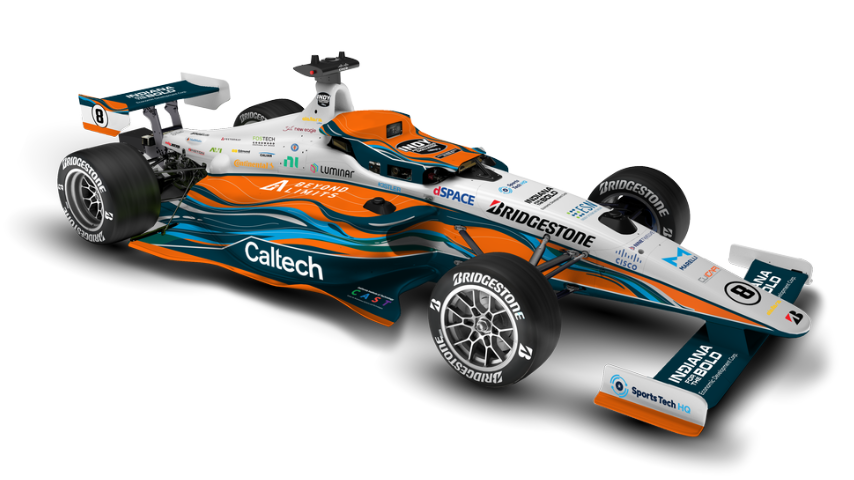
Caltech’s autonomous race car takes on the challenge at Laguna Seca, pushing AI-driven speed and strategy to the limits.
If you’ve been to a NASCAR race, you can attest to the rush, the energy, the noise, and the speed. At the US Road Course Challenge, you have all those same factors, but one key difference—the cars are autonomous, running without drivers at all.
Caltech’s engineers and researchers control the algorithm, ensuring the optimal grip of the tires on changing road conditions, the perfect strategy for tough corners, and calculations prepared to imitate other decisions human drivers make in milliseconds.
In the days ahead of the IndyCar Java House Grand Prix of Monterey, the vehicles navigated the tough track at WeatherTech Raceway Laguna Seca. A new player to the game of autonomous driving, the Caltech team “showed promise,” according to a recent release, though they didn’t rank among the top winners.
“It’s actually very similar to Formula One or IndyCar teams operating their daily race strategies. We are doing that essentially by AI software,” said Professor Soon-Jo Chung, Bren Professor of Control and Dynamical Systems at Caltech and a senior research scientist at Jet Propulsion Laboratory. “The team’s project aims to showcase the capabilities of AI and robotic autonomy in real-world systems.”
The concept of self-driving cars isn’t new, but self-driving race cars that can reach nearly 150 miles per hour, and navigate tricky situations with (nearly) the precision and skill of a career driver, is. That’s the challenge Indiana-based nonprofit Energy Systems Network proposed when they kicked off this project in 2019—to challenge university students around the world to imagine, invent, and prove a new generation of automated vehicle software to run fully autonomous race cars and inspire the next generation of STEM talent.
CalTech’s Center for Autonomous Systems and Technologies (CAST) accepted the challenge. After all, they’d previously been a team responsible for progress in futuristic concepts like flying ambulances and multimodal robots, control systems such as one designed to keep damaged unmanned aerial vehicles aloft, and spacecraft that can correct itself in emergency situations.
CalTech’s car raced against other universities’ models, including Michigan State University and Italy's Polytechnic of Milan winning car, followed by Purdue University in second place, and Korea Advanced Institute of Science and Technology in third.
CalTech’s orange, white, and light blue car, which the release said had two stuffed animals riding on top—a beaver and a Pokémon Psyduck just for fun—spun out on the third lap, after an impressive first and second lap. But each lap in a realistic environment feeds researchers data to improve the algorithm for the future.
The tech stack is nearly the same for all competitors, including the same four Bridgestone Racing Slick tires, modified IndyNXT chassis and engine, the CPU and GPU, and the suite of sensors: six color cameras, two radar sensors, GPS sensors, and four LiDAR (Light Detection and Ranging) sensors that use lasers, rather than radio waves as in radar, to create 3D maps of a vehicle's surroundings.
The difference, however, is in the algorithm, which researchers have to prepare and program far ahead of race day.
Chung explained the how behind a competitive strategy. The chance to outsmart other teams comes mostly in intense preparation, but also the 10-second period at the end of each lap, the only point at which researchers could “talk” to their systems ahead of the next lap.
According to Chung, that’s the whole point of an autonomous system: a truly hands-off approach where the previously completed research and science performs, or doesn’t. “Once you launch your race car or launch your spacecraft, you cannot really do manual control. So that’s why those cars [are] autonomous. It’s a great proving ground for real autonomy systems,” he said.
The researchers chose between eight precomputed trajectories for the vehicles. “In real time, it actually severely deviates from that race line, but still gives some overall strategy guidelines,” he said.
You May Want To Read: 10 Electric Cars With the Longest Range and Lowest Price
The details are in teaching computers how to recreate the split-second choices race car drivers make in extreme conditions. “My goal is to really learn from real human decision-making… at this time of immense stress,” Chung said. “I call this ‘really fast.’ You need to make a decision very fast. So I do believe that eventually AI software can do better than humans.”
Chung sees no reason to design systems that won’t withstand “real-world” conditions. “It’s a real Indy NXT car, and then they just added the computer and sensors to make it an autonomous car. This is a real machine with a 600-horsepower brake and steering wheel. So it’s quite complex—that was my motivation,” he said. “If you develop some new AI machine learning and robotic autonomy algorithms, let’s make sure that we can really show that to the world. That this is going to work right for the real-world systems.”
 A team of Caltech grad students, postdoc scholars, faculty members, and JPL researchers worked to get the Caltech Racer up and running at the Indy Autonomous Challenge. Image: Caltech
Just because a machine can perform in the lab doesn’t mean it can adjust to a specific type of roadway or challenging weather conditions, Chung pointed out. “There is a gap between what’s out there in terms of our real machines, real spacecraft and what we do use in our laboratory setting,” he said. “I wanted to challenge myself and my group, ‘Hey, I think there still is a gap. Let’s make sure that we can really make an impact.’”
A team of Caltech grad students, postdoc scholars, faculty members, and JPL researchers worked to get the Caltech Racer up and running at the Indy Autonomous Challenge. Image: Caltech
Just because a machine can perform in the lab doesn’t mean it can adjust to a specific type of roadway or challenging weather conditions, Chung pointed out. “There is a gap between what’s out there in terms of our real machines, real spacecraft and what we do use in our laboratory setting,” he said. “I wanted to challenge myself and my group, ‘Hey, I think there still is a gap. Let’s make sure that we can really make an impact.’”
The challenge was more complicated by the safety element. Cars travelling at 150 miles per hour can cause serious damage and threaten those around them, not to mention ruin their own car, if something goes awry. So the researchers were doing a constant give-and-take between pushing the speed and performance limits while considering safety for all involved.
“Everything is a trade-off… between performance and safety and robustness. So we have our own way of ensuring safety, and we’re adopting some of the safety boundaries in real time,” he said. “For example, let’s say this is the only maximum speed we can do in column number two. And then we are not going to go beyond that. It’s very easy. Then you just set the maximum speed there, and then you don’t change it.”
The team will continue to “innovate” on the algorithm differences, the key distinguishers between autonomous cars.
Discover the Benefits of ASME Membership
Though he’d love his car to rank in the next race, Chung has his eyes on a bigger prize—competing, and maybe even beating, human race car drivers in the future. “I’m going to invite the top drivers so that we can drive AI against the human,” he said.
Until then, the machines will look to the human experts for guidance, and the researchers will head back to the drawing board, preparing for the next race.
Alexandra Frost is a freelance writer and content strategist in Cincinnati.
Caltech’s engineers and researchers control the algorithm, ensuring the optimal grip of the tires on changing road conditions, the perfect strategy for tough corners, and calculations prepared to imitate other decisions human drivers make in milliseconds.
In the days ahead of the IndyCar Java House Grand Prix of Monterey, the vehicles navigated the tough track at WeatherTech Raceway Laguna Seca. A new player to the game of autonomous driving, the Caltech team “showed promise,” according to a recent release, though they didn’t rank among the top winners.
“It’s actually very similar to Formula One or IndyCar teams operating their daily race strategies. We are doing that essentially by AI software,” said Professor Soon-Jo Chung, Bren Professor of Control and Dynamical Systems at Caltech and a senior research scientist at Jet Propulsion Laboratory. “The team’s project aims to showcase the capabilities of AI and robotic autonomy in real-world systems.”
The race toward autonomous
The concept of self-driving cars isn’t new, but self-driving race cars that can reach nearly 150 miles per hour, and navigate tricky situations with (nearly) the precision and skill of a career driver, is. That’s the challenge Indiana-based nonprofit Energy Systems Network proposed when they kicked off this project in 2019—to challenge university students around the world to imagine, invent, and prove a new generation of automated vehicle software to run fully autonomous race cars and inspire the next generation of STEM talent. CalTech’s Center for Autonomous Systems and Technologies (CAST) accepted the challenge. After all, they’d previously been a team responsible for progress in futuristic concepts like flying ambulances and multimodal robots, control systems such as one designed to keep damaged unmanned aerial vehicles aloft, and spacecraft that can correct itself in emergency situations.
CalTech’s car raced against other universities’ models, including Michigan State University and Italy's Polytechnic of Milan winning car, followed by Purdue University in second place, and Korea Advanced Institute of Science and Technology in third.
CalTech’s orange, white, and light blue car, which the release said had two stuffed animals riding on top—a beaver and a Pokémon Psyduck just for fun—spun out on the third lap, after an impressive first and second lap. But each lap in a realistic environment feeds researchers data to improve the algorithm for the future.
The science behind the speed
The tech stack is nearly the same for all competitors, including the same four Bridgestone Racing Slick tires, modified IndyNXT chassis and engine, the CPU and GPU, and the suite of sensors: six color cameras, two radar sensors, GPS sensors, and four LiDAR (Light Detection and Ranging) sensors that use lasers, rather than radio waves as in radar, to create 3D maps of a vehicle's surroundings. The difference, however, is in the algorithm, which researchers have to prepare and program far ahead of race day.
Chung explained the how behind a competitive strategy. The chance to outsmart other teams comes mostly in intense preparation, but also the 10-second period at the end of each lap, the only point at which researchers could “talk” to their systems ahead of the next lap.
According to Chung, that’s the whole point of an autonomous system: a truly hands-off approach where the previously completed research and science performs, or doesn’t. “Once you launch your race car or launch your spacecraft, you cannot really do manual control. So that’s why those cars [are] autonomous. It’s a great proving ground for real autonomy systems,” he said.
The researchers chose between eight precomputed trajectories for the vehicles. “In real time, it actually severely deviates from that race line, but still gives some overall strategy guidelines,” he said.
You May Want To Read: 10 Electric Cars With the Longest Range and Lowest Price
The details are in teaching computers how to recreate the split-second choices race car drivers make in extreme conditions. “My goal is to really learn from real human decision-making… at this time of immense stress,” Chung said. “I call this ‘really fast.’ You need to make a decision very fast. So I do believe that eventually AI software can do better than humans.”
Closing the gap between the lab and reality, safely
Chung sees no reason to design systems that won’t withstand “real-world” conditions. “It’s a real Indy NXT car, and then they just added the computer and sensors to make it an autonomous car. This is a real machine with a 600-horsepower brake and steering wheel. So it’s quite complex—that was my motivation,” he said. “If you develop some new AI machine learning and robotic autonomy algorithms, let’s make sure that we can really show that to the world. That this is going to work right for the real-world systems.”
A team of Caltech grad students, postdoc scholars, faculty members, and JPL researchers worked to get the Caltech Racer up and running at the Indy Autonomous Challenge. Image: Caltech
The challenge was more complicated by the safety element. Cars travelling at 150 miles per hour can cause serious damage and threaten those around them, not to mention ruin their own car, if something goes awry. So the researchers were doing a constant give-and-take between pushing the speed and performance limits while considering safety for all involved.
“Everything is a trade-off… between performance and safety and robustness. So we have our own way of ensuring safety, and we’re adopting some of the safety boundaries in real time,” he said. “For example, let’s say this is the only maximum speed we can do in column number two. And then we are not going to go beyond that. It’s very easy. Then you just set the maximum speed there, and then you don’t change it.”
The future of autonomous racing
Like any great competitor, CalTech studies the competition, as do the other teams. They read each other’s published work on the processes, sharing in the same spirit as other projects between academic institutions for the sake of progress.The team will continue to “innovate” on the algorithm differences, the key distinguishers between autonomous cars.
Discover the Benefits of ASME Membership
Though he’d love his car to rank in the next race, Chung has his eyes on a bigger prize—competing, and maybe even beating, human race car drivers in the future. “I’m going to invite the top drivers so that we can drive AI against the human,” he said.
Until then, the machines will look to the human experts for guidance, and the researchers will head back to the drawing board, preparing for the next race.
Alexandra Frost is a freelance writer and content strategist in Cincinnati.
Caltech’s autonomous race car takes on the challenge at Laguna Seca, pushing AI-driven speed and strategy to the limits.

Journalist in Cincinnati
Related Content

Mar 17, 2026
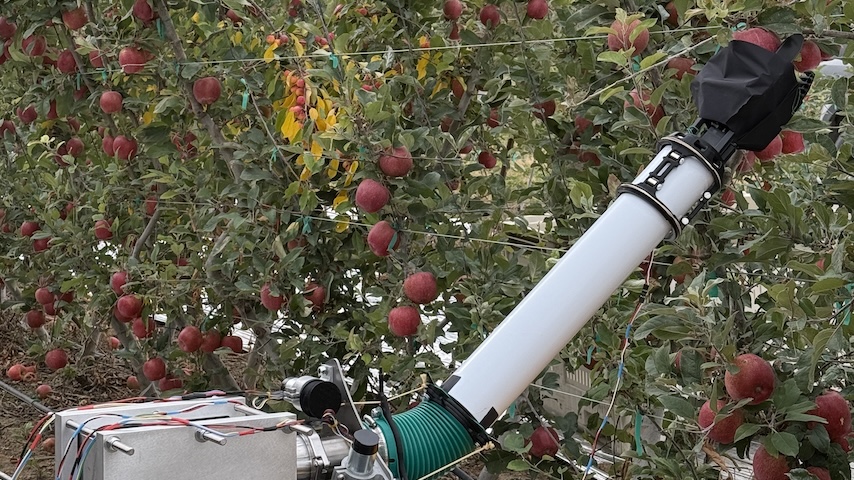
An Inflatable Apple Picker

An expandable soft robot can gently pluck a piece of fruit in around 25 seconds.
Mar 12, 2026
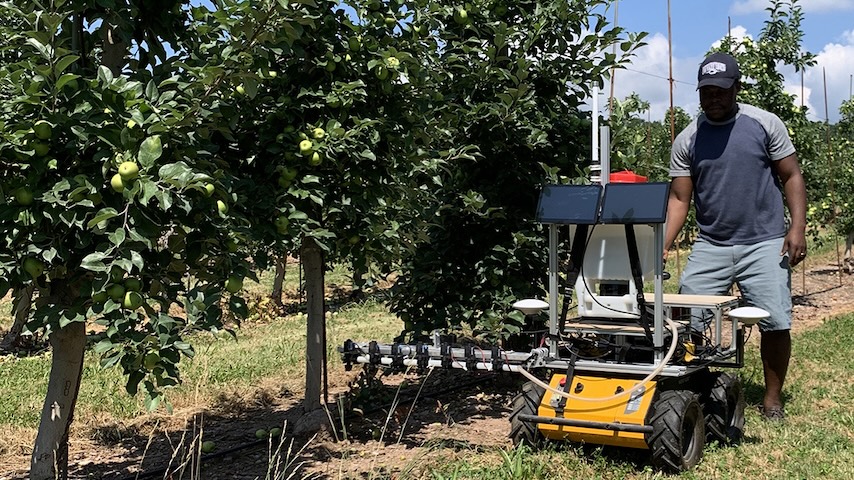
AI in the Weeds

Machine learning and robotic precision combine to battle weeds in orchards.
Mar 11, 2026
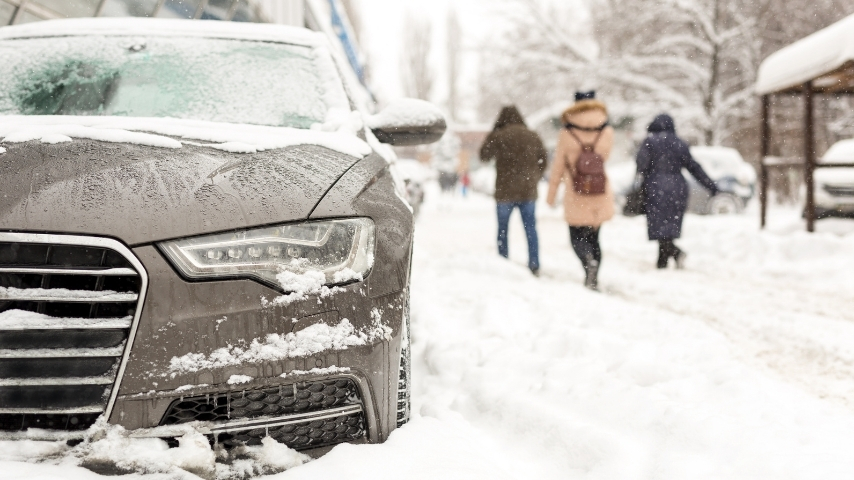
Blog: Snow Removal from Streets and Space

From city streets to Arctic shipping lanes, engineers deploy innovative tools and technology to manage the challenges of snow and ice.
Feb 27, 2026
One Cap to Bottle Them All

Bringing carbonated beverages beyond the soda fountain required a cap and capping process that are an ASME historical mechanical engineering landmark.