Management and the Engineer
Management and the Engineer

Management isn't a career track. It's a core engineering skill.
ASME was founded in 1880 to tackle the engineering problems of the industrial age, mainly deadly steam and boiler explosions that led to the development of the Boiler and Pressure Vessel Code. Yet the problems that emerged weren’t purely mechanical; they required coordination among engineers from different disciplines and specialties. It’s why Frederick Taylor, ASME’s 25th president, asked how a design could be executed efficiently through human effort and called his answer scientific management—making management an engineering discipline before it became a business one.
Somewhere along the way, the profession drifted. Management became the job of managers—the bosses and the businesspeople—while the engineer became the solitary expert, optimizing in isolation, and handing off to the next function in sequence. Organizational entropy did the rest.
The problems ahead will not be solved inside a single field of expertise. They require something engineers have too rarely been asked to develop: the capacity to work across differences, to collaborate with people who see the problem differently, to build the trust that makes genuine innovation possible. The siloed engineer is an artifact of a world we no longer live in. Today’s engineers need to work with and through others to solve those problems.
A core competency, not a career track
Management is not a career track. It is a core engineering competency. The word has been captured by a narrow meaning—being the boss or moving into administration—which is part of why we have dual promotional ladders that have always had limited success. Meanwhile, organizations are flatter, more agile, and more distributed. Planning, organizing, leading, and controlling are not just a manager’s job description. They are what every engineer does on every project, every day, either with skill and intention or by accident and improvisation.
An engineer who cannot organize a team, communicate with nontechnical stakeholders, navigate conflict, give feedback that changes behavior, and lead through uncertainty is a less capable engineer, regardless of technical excellence. The shift in mindset is real: from individual contributor to collaborative contributor, from the engineer who solves the problem alone to the engineer who creates conditions for a team to solve problems none of them could solve alone.
This is not about becoming a boss. It is about becoming the kind of engineer who can actually make hard things happen.
An engineering question
The question for engineers, and for the organizations they work in, is this: How do we create conditions, in organizations, in engineering projects, and in research relationships, where people can dwell securely enough to imagine boldly together? Those conditions do not arise by accident. They are designed, built, and maintained by engineers who understand that the human organization is a system, and that managing it well takes the same rigor and intentionality we bring to everything else we build. Where that security does not yet exist, the work is building it.
For too long, engineers have believed that the work is the science and everything else is someone else’s job. It is not. Management—working with and through others—is how the science becomes a solution. It is how the design meets the world. It is how the algorithm serves the people rather than replacing them.
Beyond technical expertise
That is the work of the ASME Management Division, which promotes management papers and programs, education and training in engineering management, and recognition of outstanding achievement in the field. Concerned with managing engineering processes at all levels, the division engages with other divisions, committees and groups within the society, and provides training opportunities for engineers with the goal of meeting their objectives efficiently and effectively.
Engineering and management are not competing paths. Together, they enable engineers to turn technical insight into collective action and lasting impact. Reuniting these disciplines is essential to fulfilling engineering’s highest purpose: improving the human condition.
Improve your management skills and become involved in the ASME Management Division.
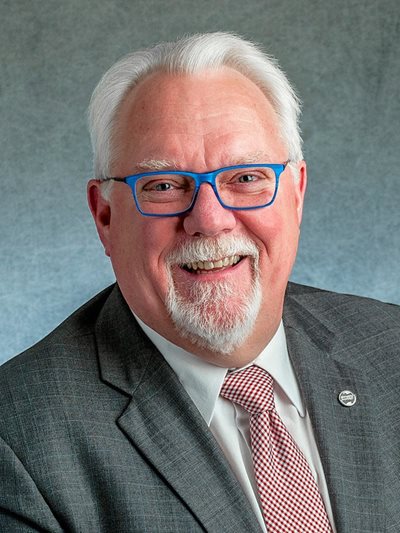
James R. Hemsath, Ph.D., is a licensed professional engineer and Member at Large (Programs) on the ASME Management Division Executive Committee.
Management isn't a career track. It's a core engineering skill.

Learning is a lifelong journey. Explore our growing collection of free learning resources and articles.