Workforce Blog: Engineers Fit to a “T”
Workforce Blog: Engineers Fit to a “T”

In the age of cyber-physical solutions, we need T-shaped innovators more than ever.
I was drawn to tears. On the television was a story of a fellow citizen who had to call the fire department numerous times for help with her husband who had difficulty getting out of bed. The story should be seen as a wake-up call.
In the United States, 61.2 million of us have crossed the 65-year age mark. Many of us have, or will soon have, similar needs, and calling the fire department will not scale. There are simply too few support personnel—including nurses and home health aides—to meet the needs of the aging population. Even in places where there is sufficient supply of providers, many seniors demand their independence.
My late father, at age 83 and living in Vadodara, Gujarat, India, had live-in support available. Yet he crafted a human augmentation device to lift himself from the bed. He sketched out an electro-mechanical design comprising a motor, motor driver, pulleys, a track, an industrial power switch, and a hook to attach to body-worn straps. I cautioned him that the powerful motor may yank him off the bed and recommended appropriate gearing and limit switches. The homemade solution was constructed for less than $200 and served to gently lift him from the bed at the touch of a switch.
You Might Also Enjoy: Launching Future Innovators
Today, the world is rife with conversations about artificial intelligence (AI), about gigawatt-scale data centers to power it, and all the jobs sure to be lost in the AI age. Meanwhile, instead of practical solutions to everyday problems, we are busy conjuring up Jetsonian visions of tomorrow, complete with robot butlers and flying cars. Lost in all that clamor is clear articulation of solutions to meet humanity’s basic needs.
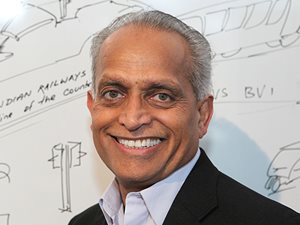 Chandrakant Patel
Devising these solutions—the simple physical ones like my father’s bed hoist, to more complex cyber-physical solutions—requires integrating cyber and physical technologies.
Chandrakant Patel
Devising these solutions—the simple physical ones like my father’s bed hoist, to more complex cyber-physical solutions—requires integrating cyber and physical technologies.
The solutions we need span every critical sector: power, water, waste, transportation, healthcare, agriculture, and manufacturing, to name a few. All these sectors lack enough subject matter experts, and those that remain are retiring at an accelerating rate.
In almost every instance, the solutions that matter most to society are cyber-physical, integrating physical and information technologies. For example, robotic surgery enables just a few sub-specialized surgeons to serve many more patients. Likewise, virtual reality (VR) solutions empower one subject matter expert to simultaneously monitor multiple systems and processes while also training others remotely.
To understand the nature of cyber-physical solutions, it helps to visualize a stack of physical technologies overlaid with a stack of information technologies. Thanks to generative AI, the IT stack, from user to database, can be largely built with an artfully worded prompt. This opens the door for physical technologists (especially mechanical engineers) to become full-stack contributors, with hardware designers enabled to execute the entire stack. In this context, the mechanical engineer can use AI and their own physical science domain knowledge to deliver a complete solution.
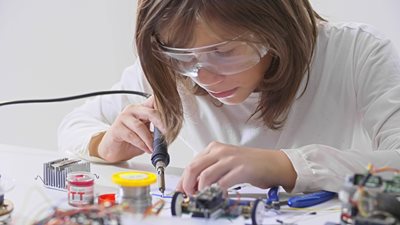 Photo: Getty Images
To succeed in this new landscape, engineers must become T-shaped, combining deep expertise in one area (the vertical bar) and broad, collaborative knowledge across multiple other fields (the horizontal bar), including cyber sciences, economics, social sciences, art, and culture.
Photo: Getty Images
To succeed in this new landscape, engineers must become T-shaped, combining deep expertise in one area (the vertical bar) and broad, collaborative knowledge across multiple other fields (the horizontal bar), including cyber sciences, economics, social sciences, art, and culture.
Discover the Benefits of ASME Membership
The truly T-shaped engineer is imbued with systems-thinking: deep subject matter expertise in engineering but with a holistic view of the entire cyber-physical system. Move fast, learn-by-doing, share, and move-on to the next subject.
The journey to T-shaped starts in secondary school with a return to hands-on curriculum such as metal working, wood working, art classes, and field trips to learn the supply side. Wastewater treatment plants, power stations, farms, and factories all fit the bill. In high school, when my son, now a cardio-thoracic surgeon, asked me if he should take a computer class, my reaction was, “anybody can be a mouse jockey.” I advised him to learn wood working, metal working, or ceramics. This advice served him well when, as a medical student, he was tasked with building a fixture to improve blood circulation in patients.
While the world rushes toward AI, I believe it’s time to get back to basics. Being a successful problem solver requires deep knowledge of basic engineering skills and principles, combined with a freewheeling imagination. These strengths will go a long way in building solutions that have the greatest social impact—solutions that will be good for the planet, for business, and for people.
Chandrakant D. Patel, P.E., is retired chief engineer and senior fellow at HP. He is also an ASME Fellow and a member of the ASME Foundation’s executive council.
To learn more about ASME’s workforce development initiatives and how you can support them, visit asmefoundation.org.
In the United States, 61.2 million of us have crossed the 65-year age mark. Many of us have, or will soon have, similar needs, and calling the fire department will not scale. There are simply too few support personnel—including nurses and home health aides—to meet the needs of the aging population. Even in places where there is sufficient supply of providers, many seniors demand their independence.
My late father, at age 83 and living in Vadodara, Gujarat, India, had live-in support available. Yet he crafted a human augmentation device to lift himself from the bed. He sketched out an electro-mechanical design comprising a motor, motor driver, pulleys, a track, an industrial power switch, and a hook to attach to body-worn straps. I cautioned him that the powerful motor may yank him off the bed and recommended appropriate gearing and limit switches. The homemade solution was constructed for less than $200 and served to gently lift him from the bed at the touch of a switch.
You Might Also Enjoy: Launching Future Innovators
Today, the world is rife with conversations about artificial intelligence (AI), about gigawatt-scale data centers to power it, and all the jobs sure to be lost in the AI age. Meanwhile, instead of practical solutions to everyday problems, we are busy conjuring up Jetsonian visions of tomorrow, complete with robot butlers and flying cars. Lost in all that clamor is clear articulation of solutions to meet humanity’s basic needs.
Chandrakant Patel
The solutions we need span every critical sector: power, water, waste, transportation, healthcare, agriculture, and manufacturing, to name a few. All these sectors lack enough subject matter experts, and those that remain are retiring at an accelerating rate.
In almost every instance, the solutions that matter most to society are cyber-physical, integrating physical and information technologies. For example, robotic surgery enables just a few sub-specialized surgeons to serve many more patients. Likewise, virtual reality (VR) solutions empower one subject matter expert to simultaneously monitor multiple systems and processes while also training others remotely.
To understand the nature of cyber-physical solutions, it helps to visualize a stack of physical technologies overlaid with a stack of information technologies. Thanks to generative AI, the IT stack, from user to database, can be largely built with an artfully worded prompt. This opens the door for physical technologists (especially mechanical engineers) to become full-stack contributors, with hardware designers enabled to execute the entire stack. In this context, the mechanical engineer can use AI and their own physical science domain knowledge to deliver a complete solution.
The Rise of the T-shaped
After a gap of some four decades, years dominated by cyber-age solutions, we have finally arrived at the dawn of the cyber-physical age. The stage is now set for physical contributors to play the leading role.
Photo: Getty Images
Discover the Benefits of ASME Membership
The truly T-shaped engineer is imbued with systems-thinking: deep subject matter expertise in engineering but with a holistic view of the entire cyber-physical system. Move fast, learn-by-doing, share, and move-on to the next subject.
The journey to T-shaped starts in secondary school with a return to hands-on curriculum such as metal working, wood working, art classes, and field trips to learn the supply side. Wastewater treatment plants, power stations, farms, and factories all fit the bill. In high school, when my son, now a cardio-thoracic surgeon, asked me if he should take a computer class, my reaction was, “anybody can be a mouse jockey.” I advised him to learn wood working, metal working, or ceramics. This advice served him well when, as a medical student, he was tasked with building a fixture to improve blood circulation in patients.
While the world rushes toward AI, I believe it’s time to get back to basics. Being a successful problem solver requires deep knowledge of basic engineering skills and principles, combined with a freewheeling imagination. These strengths will go a long way in building solutions that have the greatest social impact—solutions that will be good for the planet, for business, and for people.
Chandrakant D. Patel, P.E., is retired chief engineer and senior fellow at HP. He is also an ASME Fellow and a member of the ASME Foundation’s executive council.
To learn more about ASME’s workforce development initiatives and how you can support them, visit asmefoundation.org.
In the age of cyber-physical solutions, we need T-shaped innovators more than ever.
Related Content


Jul 2, 2026
Quiz: Engineering the American Revolution
Engineering ingenuity played a big part during the American Revolution. In honor of the U.S.’s 250th, test your knowledge about such solutions with this ASME quiz.

Jun 29, 2026
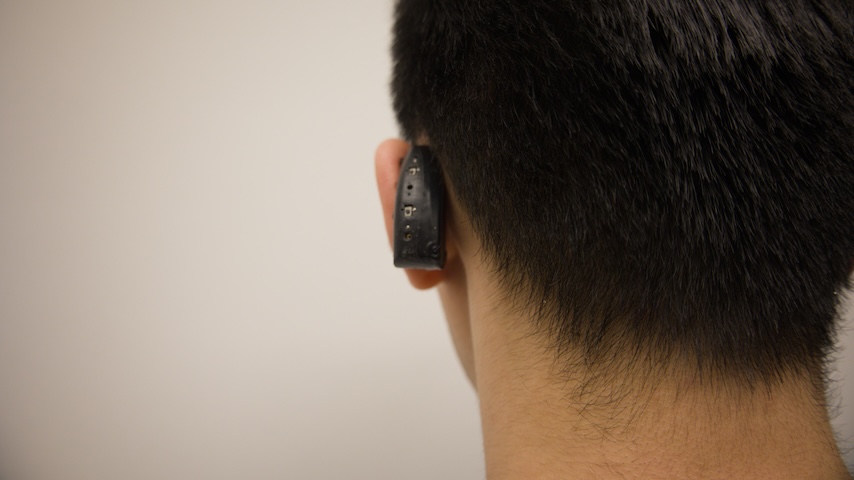
A Device to Tune In or Out

How humans speak, by taking turns, forms the basis for automated AI-driven proactive hearing assistance.
Jun 25, 2026
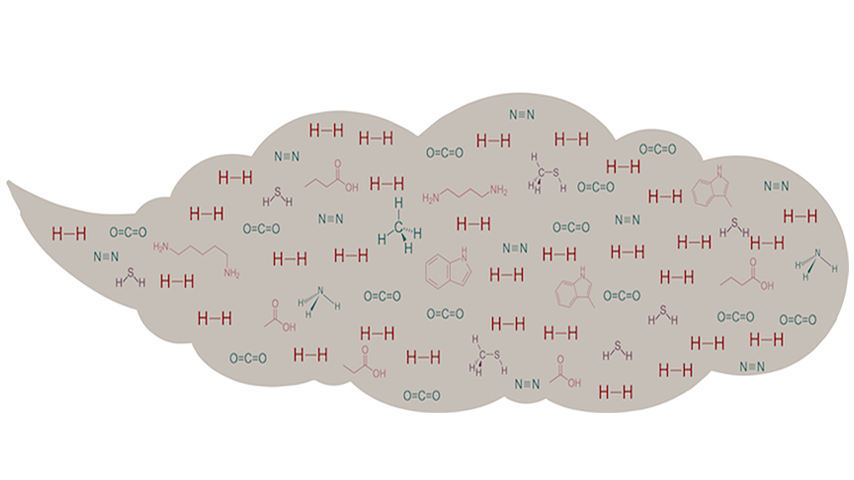
A Mighty Wind Project

You probably don’t know how much you fart. And turns out, nobody else does either. Researchers at the University of Maryland have created a tool to finally answer this vital question.
Jun 22, 2026
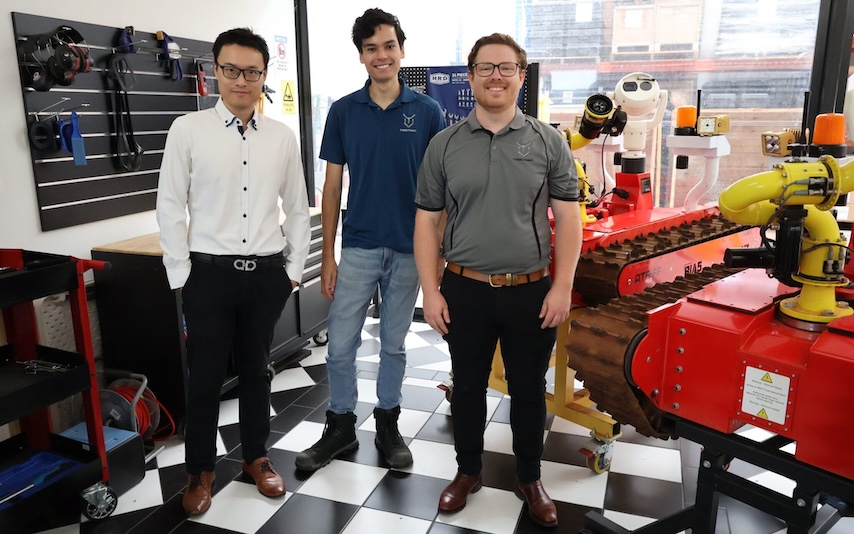
Blaze-Battling Bots Ahead


A novel system that uses AI-powered robots to extinguish fires could eliminate the need to put firefighters in dangerous situations.