Pulse of the Engineering Profession: Small Modular Reactors
Pulse of the Engineering Profession: Small Modular Reactors

A Unique Moment—and Opportunity—for Nuclear Power
It’s far from hyperbole to say that humanity now finds itself at a pivotal time for energy innovation. As the need for climate solutions becomes ever more pressing, a global array of engineers is investigating possibilities not only for reducing the amount of fossil fuels needed to power the world, but also for generating electricity without using them at all.
Enter nuclear power, a form of electricity generation that’s existed for 72 years and counting—and is now shifting into a new and exciting era. With the advent of the Small Modular Reactor (SMR), a more adaptable cousin to the large-scale reactors of yesteryear, fresh possibilities for siting, building, moving, and grouping reactors are coming to the fore. The net result? A renewed sense of possibility that’s enlivening the nuclear field.
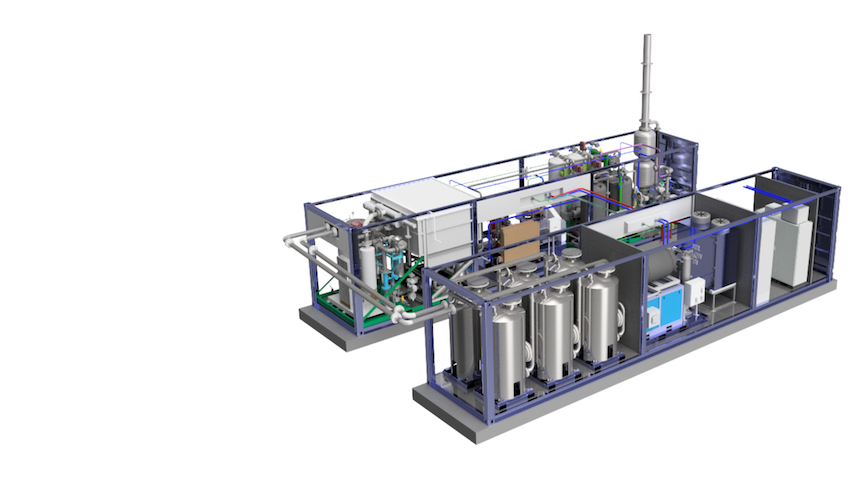
In comparison to conventional reactors, which generate 700 megawatts (MW) or more, SMRs generate 300MW or less. Their upsides are that they are inherently faster and cheaper to build and far nimbler (their smaller footprint means they can be used in more locations). But crucially, SMRs are also, as the name indicates, modular, meaning their components can be manufactured offsite and assembled at its intended location. They’re also safer, given their decreased volume of radioactive material needed and the modern failsafe solutions built into their design, such as passive measures that allow overheating reactors to shut themselves off without electrical power. In all, SMRs are a more flexible, dynamic version of the massive reactors that have long dominated the field.
Little wonder, then, that there is such global enthusiasm for SMRs, along with an expectation of rapid growth in the years to come. In 2020, the worldwide SMR market value topped out at $3.5 billion; by 2030, it’s expected to jump to nearly $19 billion, with applications not only for power generation but also desalination, process heat, and other industrial uses.
But the chief source of excitement is, of course, the potential of SMRs to mitigate the current reliance on fossil fuels—as well as to supplement the power created by renewable energy sources. “A nuclear power plant is very base loaded, so it can help with the stability of the grid,” says John Grimes, Senior Manager, Emerging Technologies at ASME. “If you're bringing on a lot of renewables, they can fluctuate unless you have really good storage—you don’t have consistency in if the wind’s not blowing or the sun isn’t shining. Nuclear power can provide stabilization during those times.”
Kathryn Hyam, Director of Nuclear Codes and Standards at ASME, agrees that this resurgence of interest in nuclear power is directly tied to the emissions targets many nations have adopted—and the urgent need to find a way to reach them. “It really comes down to all the carbon net zero goals that have been set worldwide,” Hyam says. “How can you reach a carbon zero by 2050 goal? Or…2030? [These goals] are very aggressive. And nuclear power is a way to reach that because there are no carbon emissions from a nuclear power plant.”
SMRs are no longer an abstract concept. They are real and they are ready for deployment. This is innovation at its finest and we are just getting started here in the U.S
—Dr. Kathryn Huff, Assistant Secretary for Nuclear Energy
Where SMRs Stand Now
At the start of 2023, the U.S. Nuclear Regulatory Commission (NRC) certified the first-ever SMR design in the United States. (Though six other SMR designs have been cleared for use in the U.S., they have not yet been certified.) The VOYGR SMR power plant, the vision of Portland, Oregon-headquartered power company NuScale, will be an advanced light-water SMR, with power modules able to generate 50MW of electricity each—without producing any emissions. The plant, set to be up and running by 2029, is intended to house 12 such power modules, giving it a potential total output of 600MW. The Department of Energy noted that this landmark moment “equips the nation with a new clean power source to help drive down emissions across the country.”The NRC’s approval of NuScale’s innovative design is testament not only to the huge strides SMR technology has made in recent years, but to the global investment in this promising technology. Since 2014, the department has granted more than $600 million in funds to NuScale and other reactor development companies to encourage SMR development as part of its Advanced Reactor Demonstration Program (ARDP).
But the U.S. is not the only nation pursuing SMR concepts—not by a long shot. As of late 2022, numerous SMR projects are underway around the world, with roughly 50 in the conception phase, 25 in the design stage, a handful under construction, and three that are fully operational. Here, we take a closer look at SMR projects around the globe, both in process and already completed.
Akademik Lomonosov Floating Nuclear Co-Generation Plant
Vilyuchinsk, Russia
Reactor Type: Pressurized Water Reactor (PWR)
A floating power station, this imposing 474-foot white barge houses two nuclear reactors jointly capable of generating 300MW. The world’s northernmost nuclear plant, it’s been connected to the local power grid since 2019 and is cleared to perform its service for 40 years.
Rolls Royce SMR Ltd.
United Kingdom
Reactor Type: PWR
The leading aerospace and defense manufacturer has been working closely with U.K. governmental bodies on a high-profile SMR project. Currently embarking upon the licensing phase, in April 2023 the proposed light-water reactor completed its first round of regulatory assessment. The company has identified four potential plant sites in England and Wales, with a target commercial operation date of 2030.
ACP100 Linglong One
Hainan, China
Reactor Type: PWR
Located at the Changjiang nuclear power plant on the island province of Hainan, Linglong One will be, upon its deployment, the first commercial onshore SMR in use. Capable of generating 125MW, the plant will be used—starting in 2026, per the current target commercial operation date—not only for providing power to thousands of homes in the region, but also for industrial uses and water desalination.
BWRX-300
U.S./Japan
Reactor Type: Boiling Water Reactor (BWR)
Spearheaded by Hitachi/GE, the BWRX-300 is a tenth-generation boiling water reactor (BWR). BWR reactors possess certain advantages over the PWR model, including fewer components needed for operation, less cumbersome maintenance requirements, and a stronger containment failsafe for accident prevention. And according to GE, their BWR is projected to cost 60% less than a PWR SMR. Currently in the licensing stage, the BWRX-300 is slated to be deployed at Canada’s Darlington Nuclear Generating Station in 2029.
Integral Molten Salt Reactor (IMSR)
Ontario, Canada
Reactor Type: Molten Salt Reactor (MSR)
The brainchild of Ontario-based Terrestrial Energy, the IMSR uses molten salt to fuel and cool its reactor core, unlike traditional water-pressure-cooling technology, which costs more to produce and maintain. Terrestrial’s target deployment date for their first plant is 2030, and its SMR will be used to generate electricity and support industrial processes.
Nuclear energy already provides 60% of our carbon free energy in the United States, and it is set to play an even larger role as we look to diminish our carbon footprint while meeting a growing energy demand … Small modular reactor (SMR) technology, and our NuScale Power Module™ (NPM) in particular, are uniquely positioned to lead the transition away from fossil fuels and traditional, large-scale nuclear facilities that come with burdensome costs and inefficiencies.
—Jose Reyes, Co-founder and Chief Technology Officer, NuScale Power
All Hands on Deck: What the Industry Needs Now
While nuclear power has the potential to play an even more integral role, it’s abundantly clear that more brains are needed to move innovation along. In other words, the industry is facing a talent shortage, says Hyam. “The field has been reducing for so many years that I think one of the challenges is the workforce. I hear at every conference that there are not enough engineers, there aren’t enough welders certified to be nuclear grade. So, there’s a need for more learning and development, both in colleges and in the trades.”The data certainly bears this out. Since 2014, the number of professionals working in the nuclear industry has been steadily dwindling, from more than 50,000 in 2014 to roughly 42,000 in 2023. Hyam blames a lack of outreach and education to would-be workers, some of whom may be turned off by common concerns about the industry. If that’s the case, they’d be in line with many Americans, 47% of whom do not support nuclear power, according to a 2022 Gallup poll.
“Nuclear’s had a bad rap in the past,” Hyam admits. “But I think there's a lot underway right now to show just how effective it is as a source of energy, and how safe and clean, and that it's a great place to have your career. So, I think it's knowledge for incoming STEM students…to take a look at this type of career, because they may not have been aware that there’s a need out there or that this might be right for them.” Those who work in nuclear energy also often earn 50% more on average than those in other segments of the energy industry.
Some nuclear companies have begun crafting internal recruitment strategies designed to inspire entry-level or intern-level young people to enter the industry. For example, NuScale kicked off its Energy Exploration Centers program last year, allowing would-be future employees to train and hone their skills within a simulated power plant control room. These training modules will be installed at three college campuses in the U.S. and one in Bucharest, Romania, to kickstart interest in nuclear work in Europe as well.
That's the value proposition for these new SMR designs: Because they are smaller, because they don't rely on external sources of electricity, they don't require the number of different types of components, especially those related to safety. It opens the aperture on where these designs can be built and what they can be used for…The variety and volume of new technologies that are under development makes this a really exciting time.
—Niko McMurray, Managing Director for Public Policy, ClearPath
An Area Ripe for Development—and a Need for Urgency
As the rise of SMRs invigorates both the nuclear sector and the global discourse on climate change and clean energy, several things must happen to allow these promising solutions to come to fruition. Public sentiment must be brought around to the promise and possibility of nuclear power. More funding and resources must be devoted to further design, development, and implementation of SMRs, a lengthy and costly process with high barriers to entry for many would-be innovators. More personnel are also needed to build, maintain, and run reactors—and to envision their next-generation iterations, improving upon the industry’s foundational technology as industry experts have been doing for more than half a century.The need is urgent. The road is clear. And as dozens of game-changing SMR designers and developers are proving, now is the time to take bold steps forward.
Virtual Special Issue for Small Modular Reactors
List of Articles from the ASME Digital Collection
Virtual Special Issue for Small Modular Reactors
Related Content