How M2X Energy Turns Waste Methane Into Fuel
How M2X Energy Turns Waste Methane Into Fuel
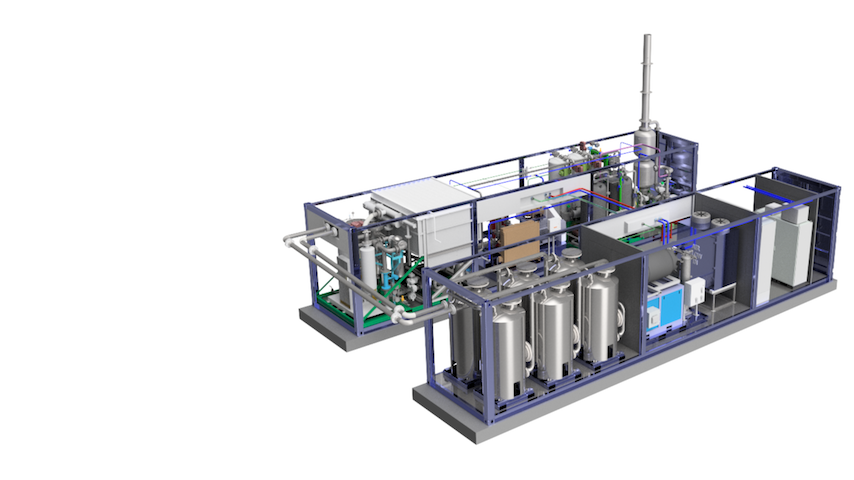
A Florida-based startup has collaborated with Engineering for Change across multiple Impact Projects, each one pushing its mobile, modular methane-conversion systems forward.
Every day, oil fields, landfills, and other sites vent or burn off excess methane. Although flaring is intended to dispose of the waste product, research suggests that flares let far more methane escape than once assumed. M2X Energy is building a way to put that gas to work instead.
“M2X designs mobile, modular systems that convert wasted methane into low-carbon methanol and renewable natural gas,” explained Nicholas Schwartz, a chemical engineer on the company’s engineering and manufacturing team.
Based in Rockledge, Fla., M2X designs and builds transportable gas-to-liquids plants that can be brought directly to small or remote sources, such as stranded wells and landfills, which are often too small or isolated for conventional infrastructure. The company's process utilizes an engine-based reformer to transform methane into syngas, which is then converted into liquid methanol—a fuel and chemical feedstock that is easy to store and ship.
Backed by investors such as Breakthrough Energy Ventures, M2X raised a $40 million Series B in 2024 to scale manufacturing and deploy its first commercial fleet. The company is currently building systems in its own 10,000-square-foot facility in Florida.
Energy problems are local and global at the same time, Schwartz added. Good engineering can make a difference, solving problems that go beyond one company or product.
“One of the biggest challenges in sustainability engineering is that a good technical solution still has to survive the economics and the market,” he said. “You can build something that works, but if it isn’t cost-effective or lacks a path to adoption, it won’t get deployed. As engineers, you’re always balancing what we know is possible with what can actually work commercially.”
Engineering for Change (E4C) and M2X have collaborated for four years, partnering with E4C Fellows—early-career technical professionals—on various five-month-long Impact Projects. Each project has followed the company’s own engineering roadmap.
“They’ve progressed right alongside the systems we’re working on at M2X,” Schwartz said. “From 3D modeling and weight distribution for our systems, containerization, and, more recently, preparing our nitrogen-removal system for manufacturing.”
The first partnership began when M2X’s engineering team was much smaller and stretched across urgent priorities.
Learn More: Mechanical Design of the Container Based Gas Clean up System (GCS)
“There were projects we couldn’t necessarily dedicate our own time and effort to, even though they could help us shape the direction we might go in the future,” Schwartz recalled. “E4C gave us someone who could carry the torch on those initiatives while our team stayed focused on the immediate, critical work at hand.”
He credited E4C’s hands-on management with making that model work.
“I appreciated how responsive the E4C Impact program was to our needs,” he said. “They took the time to understand the project, helped identify and introduce the Fellows who fit the work, and then stayed involved throughout, supporting the Fellow, following the progress, and adapting the program based on our feedback. It was a supportive partnership from start to finish.”
The investment M2X has put into the E4C Fellowship has paid off, but Schwartz emphasized that “you get out what you put in. Give [Fellows] a thoughtful project, the right information, clear expectations, and strong communication.” In fact, one of the Fellows the company met through E4C still works with M2X today.
M2X’s system was originally built as a trailer-mounted unit, designed to move between well sites. Under the 2025 Impact Project, managing Fellow Williams Ibeh worked on containerizing M2X’s syngas conditioning system for global deployment. The solution involved repackaging the system into standard shipping containers, making worldwide deployment possible.
This effort shows how far a Fellow’s contribution can reach, Schwartz noted.
“The containerization projects are a good example of where the impact went beyond the design work itself,” he said. Exploring containerized versions of the systems allowed the team to play forward different scenarios, from both an engineering design perspective and a business one.
“It became useful enough that we shared some of the work with leadership as we considered where M2X might go in the future,” Schwartz added.
Applications for the next round of E4C Impact Projects are now open through November 23, 2026! Organizations working on sustainable development can propose an Impact Project to gain access to technical support and the chance to collaborate with up-and-coming engineers from around the world.
“M2X designs mobile, modular systems that convert wasted methane into low-carbon methanol and renewable natural gas,” explained Nicholas Schwartz, a chemical engineer on the company’s engineering and manufacturing team.
Based in Rockledge, Fla., M2X designs and builds transportable gas-to-liquids plants that can be brought directly to small or remote sources, such as stranded wells and landfills, which are often too small or isolated for conventional infrastructure. The company's process utilizes an engine-based reformer to transform methane into syngas, which is then converted into liquid methanol—a fuel and chemical feedstock that is easy to store and ship.
Backed by investors such as Breakthrough Energy Ventures, M2X raised a $40 million Series B in 2024 to scale manufacturing and deploy its first commercial fleet. The company is currently building systems in its own 10,000-square-foot facility in Florida.
Energy problems are local and global at the same time, Schwartz added. Good engineering can make a difference, solving problems that go beyond one company or product.
“One of the biggest challenges in sustainability engineering is that a good technical solution still has to survive the economics and the market,” he said. “You can build something that works, but if it isn’t cost-effective or lacks a path to adoption, it won’t get deployed. As engineers, you’re always balancing what we know is possible with what can actually work commercially.”
A growth collaboration
Engineering for Change (E4C) and M2X have collaborated for four years, partnering with E4C Fellows—early-career technical professionals—on various five-month-long Impact Projects. Each project has followed the company’s own engineering roadmap.
“They’ve progressed right alongside the systems we’re working on at M2X,” Schwartz said. “From 3D modeling and weight distribution for our systems, containerization, and, more recently, preparing our nitrogen-removal system for manufacturing.”
The first partnership began when M2X’s engineering team was much smaller and stretched across urgent priorities.
Learn More: Mechanical Design of the Container Based Gas Clean up System (GCS)
“There were projects we couldn’t necessarily dedicate our own time and effort to, even though they could help us shape the direction we might go in the future,” Schwartz recalled. “E4C gave us someone who could carry the torch on those initiatives while our team stayed focused on the immediate, critical work at hand.”
He credited E4C’s hands-on management with making that model work.
“I appreciated how responsive the E4C Impact program was to our needs,” he said. “They took the time to understand the project, helped identify and introduce the Fellows who fit the work, and then stayed involved throughout, supporting the Fellow, following the progress, and adapting the program based on our feedback. It was a supportive partnership from start to finish.”
From design to strategy
The investment M2X has put into the E4C Fellowship has paid off, but Schwartz emphasized that “you get out what you put in. Give [Fellows] a thoughtful project, the right information, clear expectations, and strong communication.” In fact, one of the Fellows the company met through E4C still works with M2X today.
M2X’s system was originally built as a trailer-mounted unit, designed to move between well sites. Under the 2025 Impact Project, managing Fellow Williams Ibeh worked on containerizing M2X’s syngas conditioning system for global deployment. The solution involved repackaging the system into standard shipping containers, making worldwide deployment possible.
This effort shows how far a Fellow’s contribution can reach, Schwartz noted.
“The containerization projects are a good example of where the impact went beyond the design work itself,” he said. Exploring containerized versions of the systems allowed the team to play forward different scenarios, from both an engineering design perspective and a business one.
“It became useful enough that we shared some of the work with leadership as we considered where M2X might go in the future,” Schwartz added.
Applications for the next round of E4C Impact Projects are now open through November 23, 2026! Organizations working on sustainable development can propose an Impact Project to gain access to technical support and the chance to collaborate with up-and-coming engineers from around the world.

Explore ASME's commitment to sustainability, addressing climate challenges through innovation, policy, & workforce development. Get informed and involved!