5 Propulsion Breakthroughs That Got America Moving
5 Propulsion Breakthroughs That Got America Moving
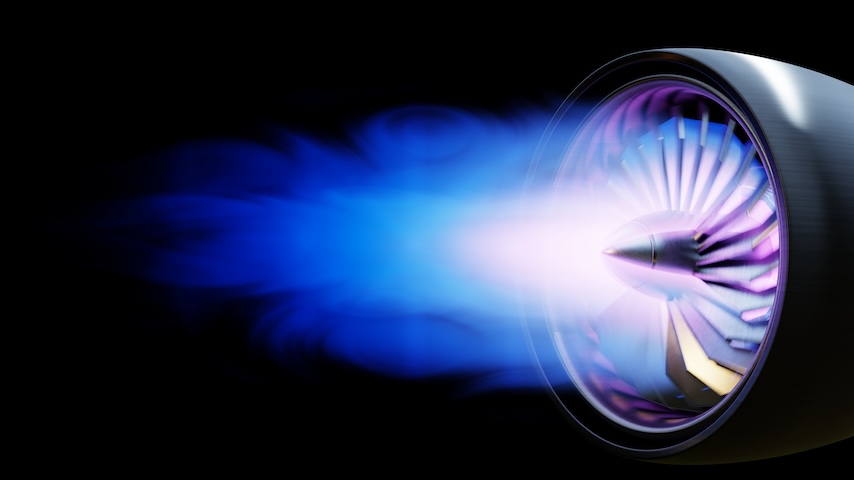
Mechanical engineers have long pushed transportation’s boundaries, connecting the world, spurring economic growth, and providing the foundation of modern life.
From thermodynamic cycles to nuclear reactors and rocket engines, five propulsion breakthroughs fundamentally expanded the transportation systems engineers could design. Every major advance has expanded the limits of vehicle speed, power density, range, endurance, or operating environment.
Steam engines made continuous mechanical power available for locomotives and ships. Internal combustion engines increased power-to-weight ratios and enabled mass automobile transportation. Gas turbines and jet engines transformed aircraft performance. Nuclear propulsion separated naval endurance from conventional fuel logistics. Rocket propulsion extended transportation beyond the Earth’s atmosphere.
Tariq Shamim, chair and professor of mechanical engineering at Northern Illinois University in DeKalb, Ill. and an ASME Fellow, described five mechanical engineering innovations that got America moving and continue to impact life today.
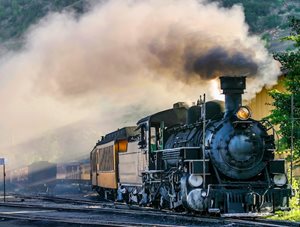 Photo: Getty Images
Steam power was the foundation of the first large-scale industrial transportation systems. Thomas Newcomen developed an atmospheric steam engine around 1712 for pumping water from mines. James Watt later introduced major improvements, most notably the separate condenser, which reduced energy losses and substantially improved efficiency.
The steam engine’s importance is due to its ability to convert thermal energy into continuous mechanical work. Fuel could be burned externally to heat water, while expanding steam drove a piston. That mechanical output could then be transmitted to wheels, paddle wheels or propellers.
“Steam power played a critical role in the early development of the United States by powering trains and ships, and connecting people, industries, and markets across the country,” Shamin said.
In the United States, Robert Fulton demonstrated the commercial potential of steam navigation with the Clermont in 1807. Steam engines subsequently became essential to railroad expansion, connecting agricultural regions, industrial centers, and coastal ports.
Steam power created an integrated transportation network capable of moving large numbers of people and amounts of materials, and helped spur the industrial economy that followed.
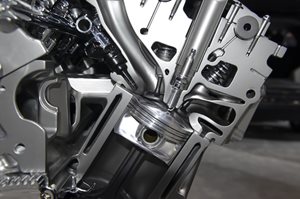 Photo: Getty Images
The internal-combustion engine solved a major limitation of steam propulsion: the weight and complexity of the external boiler system.
Early internal-combustion development included Etienne Lenoir’s gas engine in the 1850s. Nikolaus Otto later developed the four-stroke cycle, while Karl Benz and Gottlieb Daimler demonstrated the potential of gasoline-powered automobiles.
In a steam engine, fuel heats water in a separate boiler to produce steam, which serves as the working fluid. In an internal-combustion engine, combustion occurs directly within the cylinder, producing high-pressure gases that act on the piston. The result is increased power density and reduction in the amount of equipment required to generate mechanical work. Vehicles could carry liquid fuel rather than boilers and large quantities of water.
The advantage made the internal combustion engine practical for automobiles and trucks, and eventually for locomotives, ships, and aircraft. In the U.S., Henry Ford’s manufacturing innovations made gasoline-powered automobiles affordable on a mass scale, which fundamentally changed American mobility, freight distribution and urban development.
“The internal combustion engine transformed transportation by powering automobiles, trucks, trains, and ships, and enabling the large-scale movement of people and goods,” Shamim said.
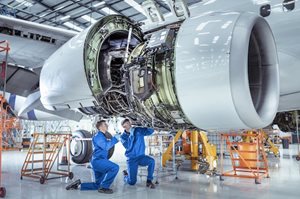 Photo: Getty Images
The gas turbine represented a major shift from reciprocating machinery to continuous-flow propulsion. British engineer Frank Whittle and German engineer Hans von Ohain independently developed practical jet-engine concepts during the 1930s.
The turbojet compresses incoming air, mixes it with fuel, combusts the mixture and expands the resulting gases through a turbine and exhaust nozzle. Unlike piston engines driving propellers, the gas turbine can generate thrust directly through high-velocity exhaust, which proved a major advantage as aircraft designers pushed toward higher speeds and altitudes. It reduced the mechanical limitations associated with reciprocating engines and propellers, and provided a much greater potential for high-speed flight.
Van Ohain’s engine powered the Heinkel He 178, which flew in 1939. After World War II, jet propulsion moved rapidly into military and commercial aviation, the result was a dramatic reduction in long-distance travel times. Jet aircraft connected the U.S. with the rest of the world while establishing high by-pass turbo fans as the dominant propulsion technology for modern commercial airlines.
“The gas turbine and jet engine revolutionized aviation by enabling faster and more reliable air transportation, and connecting the United States with the rest of the world,” Shamim said.
 Photo: Getty Images
Nuclear propulsion answered one of the most persistent limitations in marine transportation: fuel capacity. Under Admiral Hyman G. Rickover, the U.S. developed naval nuclear propulsion. The USS Nautilus was the world’s first nuclear-powered submarine, showing the potential of nuclear energy in naval transportation.
“Nuclear propulsion transformed naval transportation by giving submarines and aircraft carriers extraordinary range and endurance without conventional refueling,” Shamim said.
 Photo: Getty Images
Rocket propulsion has a history that traces back centuries, with its roots in ancient China where gunpowder-filled tubes were used to create the first rudimentary rockets. However, the true modernization of rocket propulsion began when Dr. Robert H. Goddard constructed and launched the world’s first liquid-fueled rocket in 1926, demonstrating the principles of controlled propulsion essential for space travel.
Today, rocket propulsion is important not only because it enables space exploration, but because it supports the satellite infrastructure that is a foundation of modern life. For mechanical engineers, it provides an example of how fundamental engineering principles—from conservation of momentum to heat transfer and structural mechanics—combine to solve an extreme systems-engineering problem.
“Rocket propulsion extended American mobility beyond the atmosphere, enabling satellites, human spaceflight, lunar exploration, and the modern space industry,” Shamim said.
Annemarie Mannion is an independent writer in Chicago.
Steam engines made continuous mechanical power available for locomotives and ships. Internal combustion engines increased power-to-weight ratios and enabled mass automobile transportation. Gas turbines and jet engines transformed aircraft performance. Nuclear propulsion separated naval endurance from conventional fuel logistics. Rocket propulsion extended transportation beyond the Earth’s atmosphere.
Tariq Shamim, chair and professor of mechanical engineering at Northern Illinois University in DeKalb, Ill. and an ASME Fellow, described five mechanical engineering innovations that got America moving and continue to impact life today.
Steam Power: The Foundation of Industrial Transportation
Photo: Getty Images
The steam engine’s importance is due to its ability to convert thermal energy into continuous mechanical work. Fuel could be burned externally to heat water, while expanding steam drove a piston. That mechanical output could then be transmitted to wheels, paddle wheels or propellers.
“Steam power played a critical role in the early development of the United States by powering trains and ships, and connecting people, industries, and markets across the country,” Shamin said.
In the United States, Robert Fulton demonstrated the commercial potential of steam navigation with the Clermont in 1807. Steam engines subsequently became essential to railroad expansion, connecting agricultural regions, industrial centers, and coastal ports.
Steam power created an integrated transportation network capable of moving large numbers of people and amounts of materials, and helped spur the industrial economy that followed.
Internal Combustion Engines: The Rose of Power Density
Photo: Getty Images
Early internal-combustion development included Etienne Lenoir’s gas engine in the 1850s. Nikolaus Otto later developed the four-stroke cycle, while Karl Benz and Gottlieb Daimler demonstrated the potential of gasoline-powered automobiles.
In a steam engine, fuel heats water in a separate boiler to produce steam, which serves as the working fluid. In an internal-combustion engine, combustion occurs directly within the cylinder, producing high-pressure gases that act on the piston. The result is increased power density and reduction in the amount of equipment required to generate mechanical work. Vehicles could carry liquid fuel rather than boilers and large quantities of water.
The advantage made the internal combustion engine practical for automobiles and trucks, and eventually for locomotives, ships, and aircraft. In the U.S., Henry Ford’s manufacturing innovations made gasoline-powered automobiles affordable on a mass scale, which fundamentally changed American mobility, freight distribution and urban development.
“The internal combustion engine transformed transportation by powering automobiles, trucks, trains, and ships, and enabling the large-scale movement of people and goods,” Shamim said.
Gas Turbines and Jet Engines: Engineering High-Speed Flight
Photo: Getty Images
The turbojet compresses incoming air, mixes it with fuel, combusts the mixture and expands the resulting gases through a turbine and exhaust nozzle. Unlike piston engines driving propellers, the gas turbine can generate thrust directly through high-velocity exhaust, which proved a major advantage as aircraft designers pushed toward higher speeds and altitudes. It reduced the mechanical limitations associated with reciprocating engines and propellers, and provided a much greater potential for high-speed flight.
Van Ohain’s engine powered the Heinkel He 178, which flew in 1939. After World War II, jet propulsion moved rapidly into military and commercial aviation, the result was a dramatic reduction in long-distance travel times. Jet aircraft connected the U.S. with the rest of the world while establishing high by-pass turbo fans as the dominant propulsion technology for modern commercial airlines.
“The gas turbine and jet engine revolutionized aviation by enabling faster and more reliable air transportation, and connecting the United States with the rest of the world,” Shamim said.
Nuclear Propulsion: Redefining Naval Endurance
Photo: Getty Images
“Nuclear propulsion transformed naval transportation by giving submarines and aircraft carriers extraordinary range and endurance without conventional refueling,” Shamim said.
Rocket Propulsion: Extending Mobility Beyond the Atmosphere
Photo: Getty Images
Today, rocket propulsion is important not only because it enables space exploration, but because it supports the satellite infrastructure that is a foundation of modern life. For mechanical engineers, it provides an example of how fundamental engineering principles—from conservation of momentum to heat transfer and structural mechanics—combine to solve an extreme systems-engineering problem.
“Rocket propulsion extended American mobility beyond the atmosphere, enabling satellites, human spaceflight, lunar exploration, and the modern space industry,” Shamim said.
Annemarie Mannion is an independent writer in Chicago.
Mechanical engineers have long pushed transportation’s boundaries, connecting the world, spurring economic growth, and providing the foundation of modern life.

Freelance writer based in Chicago
Related Content


Nov 18, 2026
ASME CATALYZE Summit Program Takes Shape as Industry Looks to Move Industrial Technologies from Demonstration to Deployment
Nov 18, 2026
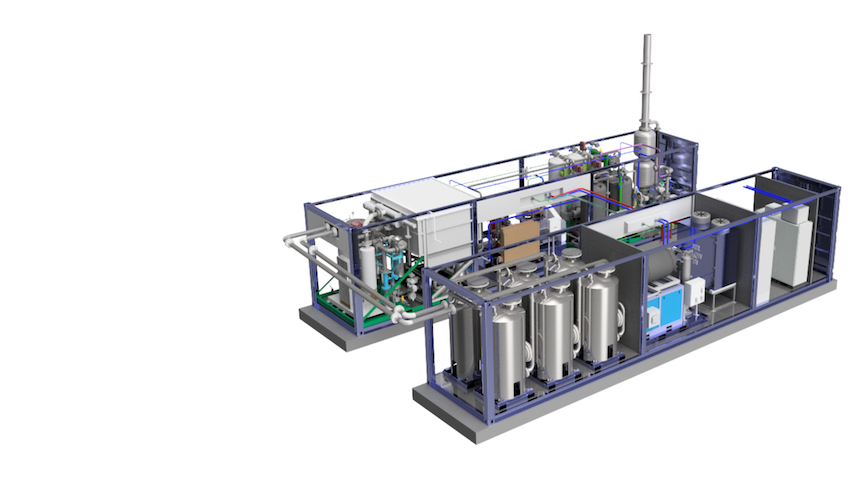
How M2X Energy Turns Waste Methane Into Fuel

M2X Energy’s mobile systems turn flared and vented methane into methanol. See how four years of E4C Impact Projects helped move its technology forward.
Nov 17, 2026
ASME Foundation Welcomes New Board, Philanthropy Committee Members
Nov 17, 2026
Scaling Skills Training for Tomorrow’s Tradespeople

BluLever Education trains young South Africans in skilled trades. See how an E4C Impact Project helped it prototype a student information system to scale.