Description
The worldwide pandemic of COVID-19 has pushed the world to pay more attention to challenges in public health, and at the same time calls for fundamental understandings of viruses and their mechanisms, as well as treatments for viral infections and preparations for future outbreaks. This talk is aimed to discuss how mechanics can be used as an enabling tool to help address challenges in this field. First, we review some recent studies demonstrating that mechanics can play important roles in combating viruses and treating viral infections, examples including the development of membrane targeting antiviral peptides with broad spectrum efficacy against different viruses and the utilization of ultrasound waves to potentially collapse and rupture the viruses’ shell and spikes. We then turn to discussions around the following questions: why and how does cellular uptake of viral particles depend on their size, shape, elasticity and surface structure? In particular, we will discuss the influence of particle size on receptor-mediated endocytosis, a process by which cells take in substances from outside of the cell. We also will discuss the effects of particle stiffness and surface structure on cell-particle interactions based on a theoretical framework for receptor-mediated endocytosis.About the Speaker
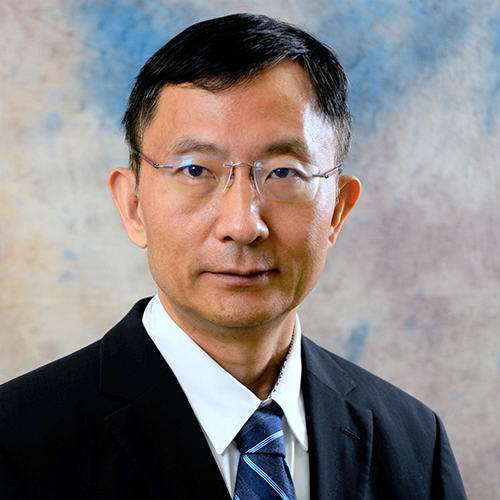
Professor Huajian Gao
Scientific Director, Institute of High Performance Computing
Professor Gao’s research has been focused on the understanding of basic principles that control mechanical properties and behaviors of materials in both engineering and biological systems. He is the Editor-in-Chief of Journal of the Mechanics and Physics of Solids, the flagship journal of his field. He has been elected to memberships in US National Academy of Sciences, US National Academy of Engineering, American Academy of Arts and Sciences, German National Academy of Sciences, Chinese Academy of Sciences and Academia Europaea. He has also received numerous awards and honors, including the John Simon Guggenheim Fellowship, the Rodney Hill Prize in Solid Mechanics from the International Union of Theoretical and Applied Mechanics, the William Prager Medal from Society of Engineering Science, the Nadai Medal from American Society of Mechanical Engineers and the Theodor von Karman Medal from American Society of Civil Engineers.