Description
Living nature, through some 3 billion years of evolution, has developed materials, objects, and processes that function from the nanoscale to the macroscale. The understanding of the functions provided by species and processes found in living nature can guide us to design and produce bioinspired surfaces for various applications. There are a large number of flora and fauna with properties of commercial interest. Nature provides many examples of surfaces that repel or attract water. The most famous is the lotus leaf. Its surface contains a hierarchical structure that, combined with specific surface chemistry, results in a water repellant surface that is self-cleaning, as water droplets collect contaminants as they roll off. Some plant leaves, such as fagus leaves, are hydrophilic, allowing water to rapidly spread into a thin layer, increasing evaporation, leading to a dry and self-cleaning surface. By taking inspiration from nature, it is possible to create hierarchically–structured surfaces with re-entrant geometry and surface chemistry that provide multifunctional properties including superliquiphilicity/phobicity, self-cleaning/low biofouling, and/or low drag.A facile, substrate-independent, multilayered nanoparticle/binder composite coating technique has been developed to produce various combinations of water and oil repellency and affinity with self-cleaning properties. These coatings having a so-called re-entrant geometry can also repel surfactant-containing liquids. Some of the nanostructured surfaces have been found to be anti-bacterial. These coatings provide the basis to fabricate surfaces for a range of applications including self-cleaning, anti-fouling, anti-smudge, optical transparency, anti-fogging, anti-icing, low drag, water purification, and oil–water separation. The coatings have been found to be mechanically durable and self-healing.
About the Speaker
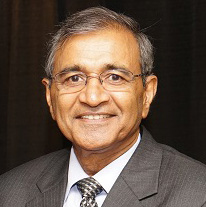
Dr. Bharat Bhushan
Academy Professor, The Ohio State University
His biography has been listed in over two dozen Who's Who books including Who's Who in the World. He has received more than two dozen awards for his contributions to science and technology from professional societies, industry, and U.S. government agencies including International Tribology Gold Medal and Institution of Chemical Engineers (UK) Global Award for bioinspired surfaces. He received NASA’s Certificate of Appreciation to recognize the critical tasks performed in support of President Reagan’s Commission investigating the Space Shuttle Challenger Accident. He is also the recipient of various international fellowships including the Alexander von Humboldt Research Prize for Senior Scientists, Max Planck Foundation Research Award for Outstanding Foreign Scientists, and Fulbright Senior Scholar Award. He is foreign member of the International Academy of Engineering (Russia), Byelorussian Academy of Engineering and Technology and the Academy of Triboengineering of Ukraine, honorary member of the Society of Tribologists of Belarus and STLE, fellow of ASME, IEEE, and the New York Academy of Sciences, and member of ASEE, Sigma Xi and Tau Beta Pi.
He is an accomplished organizer. He organized the Ist Symposium on Tribology and Mechanics of Magnetic Storage Systems in 1984 and the Ist Int. Symposium on Advances in Information Storage Systems in 1990, both of which are now held annually. He organized two international NATO institutes in Europe. He is founder of an ASME Information Storage and Processing Systems Division founded in 1992 and served as founding chair during 1993-1998.
He has previously worked for Mechanical Technology Inc., Latham, NY; SKF Industries Inc., King of Prussia, PA; IBM, Tucson, AZ; and IBM Almaden Research Center, San Jose, CA. He has held visiting professorship at University of California at Berkeley, University of Cambridge, UK, Vienna University of Technology, Austria, University of Paris, Orsay, ETH Zurich, EPFL Lausanne, Univ. of Southampton, UK, Univ. of Kragujevac, Serbia, Tsinghua Univ., China, Harbin Inst., China, and KFUPM, Saudi Arabia.