Description
This talk will take place in Eastern Standard Time and will last one hour.If aviation is to continue to play a crucial role in the global economy and in global culture, then we urgently need to find a way of reducing its climate impact. Today, aviation accounts for around 2% of global CO2 emissions and around 5% when the non-CO2 effects are included. This is predicted to double by 2050 as the number of people flying in Africa, Latin America and East and Southeast Asia rise towards the levels seen in Western Europe and America.
There is no silver bullet for achieving climate neutral aviation, the scale of the problem is immense, and time is limited. Three possible pathways include sustainable aviation fuels, zero carbon emission aircraft and battery electric aircraft. The energy requirement and infrastructure investment to realise each of these pathways is extremely large and huge uncertainty remains around the energy, technology, investment, policy, and behavioural change required.
Transitioning to climate neutral aviation therefore requires navigating both challenging technical change and a complex behavioural, economic and policy landscape. To meet this challenge in 2020 the Aviation Impact Accelerator (AIA) was setup. Convened by the University of Cambridge it brings together multi-disciplinary expertise from an international group of academics and industry partners to develop interactive, evidence-based models, simulations, and visualisations that help both policy makers and industry unlock change.
The talk will describe the modelling approach and the team which has been assembled. A preview of the model will be shown allowing a number of pathways to be compared in terms of their true climate impact and resource requirement. Finally, the model is used to identify several technology unlocks.
About the Speaker
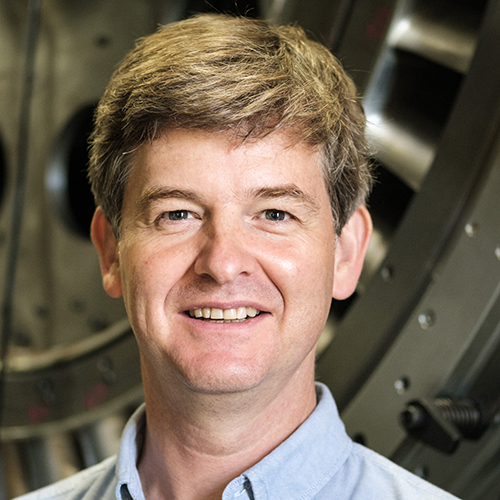
Prof. Rob Miller, FREng
Chair in Aerothermal Technology and Whittle Lab Director
His honours include the Royal Academy of Engineering President's Special Awards for Pandemic Service, the Institution of Mechanical Engineers Thomas Hawksley Gold Medal, the American Institute of Aeronautics and Astronautics Air Breathing Propulsion Award, and the American Society of Mechanical Engineers highest honour in the field, The Gas Turbine Award, four times.