Kathleen Kosmoski | Ashley Huderson | Rebecca Lakhani | Stephanie Viola | Daniel Pino | Steven Roberts
Executive Summary
The Accelerating Engineering Pathways (AEP) initiative, supported by ECMC Foundation and implemented by the American Society of Mechanical Engineers (ASME) under the broader Community College Engineering Pathways (CCEP) program, aimed to strengthen the engineering talent pipeline by expanding access, increasing persistence, and improving career readiness for community college students, particularly those from groups historically underrepresented in STEM. Over its two-year implementation period (July 2023 – June 2025), AEP engaged 395 unique students and 27 faculty across 15 community colleges nationwide, more than 60% of which were Minority Serving Institutions (MSIs). Through a comprehensive model that integrated hands on learning, mentorship, work-based learning, faculty development, and system level partnerships, the program demonstrated measurable gains in enrollment, persistence, and student confidence, offering a scalable framework for national workforce development needs.
AEP addressed a critical national challenge: the growing gap between the demand for engineering talent and the available workforce. Analysis of Bureau of Labor Statistics (BLS) data indicates that engineering related occupations are projected to grow sharply through the next decade, with supply lagging significantly behind demand. At the same time, women and BIPOC workers remain underrepresented in STEM fields, underscoring a potential pool of talent that can help fill the gaps but that require equitable, community-based pathways into high demand engineering and technical careers. Leveraging community colleges as high impact access points, AEP pursued a multifaceted approach to closing representation and talent gaps by aligning academic experiences with real workforce needs.
A core contribution of AEP was the development of a structured, evaluative program framework anchored in nine implementation components, ranging from stakeholder engagement and needs assessment to formalized partnerships, program delivery, and continuous improvement. This structured framework served as the initiative’s guiding theory of change, supporting both local customization and cross institutional consistency. Programming spanned technical workshops, engineering competitions, mentorship, scholarships, and the EMPOWER work-based learning program—a key innovation designed explicitly to address barriers in student access to employer aligned experiential learning.
Evaluation data from The Rucks Group indicates strong growth in student engagement and enrollment across partner institutions. Engineering related program enrollment across the 15 colleges increased by 37% from Fall 2022 to Fall 2024, with women representing 53% of participants—far exceeding the 20% national average in engineering and related fields. Hispanic or Latino students made up half of participants, with growth across all demographic groups. Average student persistence increased from 46% at baseline to 62% by Spring 2025, signaling meaningful improvements in students’ academic continuity within engineering pathways.
Qualitative data further highlights the program’s effect on students’ confidence, sense of belonging, and professional identity. Exposure to role models who reflected students’ backgrounds, coupled with hands on workshops and mentorship, helped students visualize themselves as engineers and increased their motivation to persist. Technical and professional workshops, covering topics such as CAD, AI in engineering, research methods, résumé writing, and networking, received consistently high satisfaction ratings, signaling strong alignment with student needs and career preparation goals.
A landmark feature of the initiative, the EMPOWER work-based learning (WBL) program, offered a replicable, employer aligned model that directly addresses longstanding barriers to WBL access, such as limited employer networks and inconsistent program structures. EMPOWER placements increased 159% in Year 2, and participating students reported meaningful gains in technical skills, career readiness, and clarity around future pathways. By pairing project-oriented work with structured support, EMPOWER demonstrates how community colleges can integrate high value, scalable experiential learning opportunities even in geographically or resource constrained contexts.
AEP also strengthened institutional capacity through faculty engagement and professional development. Faculty benefited from ASME memberships, access to industry aligned curricular resources, and participation in ASME’s Mechanical Engineering Education (MEEd) conference, improving their ability to integrate engineering tools and real-world applications into coursework. Strategically implementing system level partnerships with Ivy Tech Community College, Ohio Association of Community Colleges, and City Colleges of Chicago expanded AEP’s reach substantially through an opt-in model that positioned ASME for broader national scaling.
Despite strong outcomes, the initiative surfaced persistent systemic challenges in community college environments including faculty turnover, variability in institutional data systems, limitations in employer engagement, and student scheduling constraints. These barriers reflect structural realities within community colleges rather than shortcomings of the program model, reinforcing the value of AEP’s adaptable approach. AEP evaluation identified actionable short- and long-term recommendations, including expanding asynchronous resources, strengthening faculty employer networks, introducing digital credentials, and replicating state and regional system level partnership strategies.
Overall, the AEP initiative demonstrates that community colleges, when equipped with strategic partnerships, equity centered programming, and clear alignment with workforce needs, can play a transformative role in strengthening the U.S. engineering pipeline. By improving access, creating and enhancing support structures, and providing relevant, employer aligned experiences, AEP offers a scalable blueprint for cultivating a more inclusive and industry-ready engineering workforce. The program demonstrates that investing in community college pathways is not only effective but also essential to meet the technical workforce demands of a rapidly evolving economy.
Abstract
The demand for skilled professionals in the engineering and advanced manufacturing sectors continues to outpace supply, particularly among populations historically underrepresented in science, technology, engineering, and mathematics (STEM). To address this need, the American Society of Mechanical Engineers (ASME), through support from the ECMC Foundation, implemented the Accelerating Engineering Pathways for Career Technical Education Students in a COVID-Changed World (AEP) initiative over the past two years, under the broader Community College Engineering Pathways (CCEP) program. This initiative sought to increase associate degree completion, promote transfer to four-year programs, and expand access to engineering technology careers for community college students. Through the project, AEP engaged 395 students and 27 faculty across 15 community colleges, over 60% of which were Minority-Serving Institutions. Through structured workshops, work-based learning experiences, scholarships, student competitions, and faculty professional development, the program demonstrated measurable progress in student engagement, skill acquisition, institutional capacity building, and equitable access to engineering compared to national benchmarks. This white paper presents an integrated analysis of evaluation data generated by The Rucks Group on the project, highlighting the program’s outcomes, challenges, and implications for scaling inclusive engineering education across U.S. community colleges.
Introduction
Across the United States, industries reliant on technical and engineering expertise face persistent workforce shortages. These gaps are particularly acute in the manufacturing and technology sectors, where employers struggle to fill positions requiring applied engineering skills. According to analysis of Bureau of Labor Statistics (BLS) data by Boston Consulting Group, the demand for engineering skills will grow by about 13% from 2023 to 2031, while the supply will grow significantly less quickly, leaving 1 in 3 engineering roles unfilled each year. The mismatch between labor market demand and workforce preparedness is compounded by the underrepresentation of women, Black, Indigenous, and People of Color (BIPOC) in STEM disciplines. According to BLS data, women make up slightly more than a third of the STEM workforce (Figure 1), and both Black and Hispanic workers make up three percentage points less of the STEM workforce (Figure 2) than of the workforce as a whole (8% vs. 11%, 15% vs. 18%, respectively).
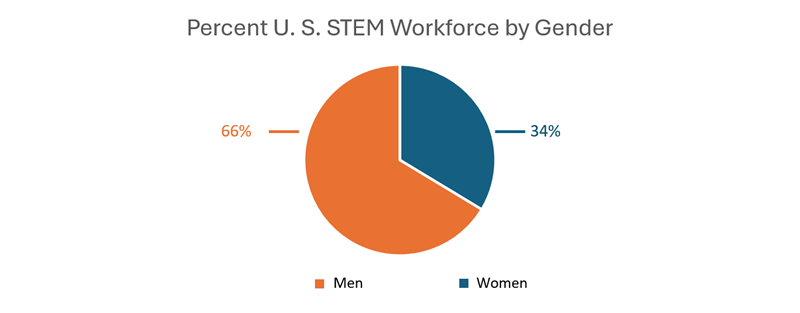 Figure 1 - Percentage of men and women in the U.S. STEM workforce.
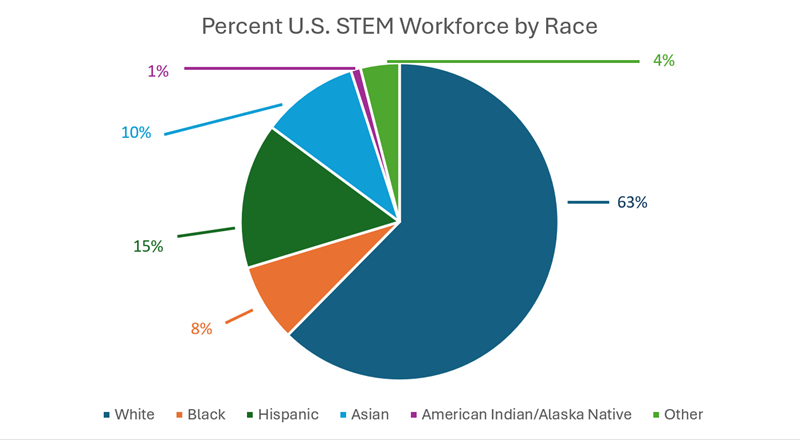 Figure 2 – Percentage breakdown by race of the U.S. STEM workforce.
Community colleges are uniquely positioned to bridge this gap. Their accessibility, affordability, and regional reach make them critical entry points for students seeking technical careers. However, traditional engineering education pathways often fail to fully leverage community colleges as incubators of future engineers. Recognizing this opportunity, the American Society of Mechanical Engineers (ASME) launched the Community College Engineering Pathways (CCEP) program in 2021 to cultivate a robust talent pipeline from two-year institutions into four-year programs and the technical workforce.
Recognizing the potential for improved student success in engineering and technical roles, the ECMC Foundation awarded ASME an $800,000 grant in 2023 to implement the Accelerating Engineering Pathways for Career Technical Education (CTE) Students in a COVID-Changed World (AEP) initiative. The two-year project (2023–2025) aimed to identify scalable strategies for increasing community college student persistence, transfer, and career placement in engineering. Through partnerships, mentorship, competitions, and work-based learning, AEP created a dynamic ecosystem for improving these metrics for student success while also providing additive professional development for faculty and institutional partners.
Program Overview
The AEP project operated under ASME’s CCEP umbrella, with an explicit focus on supporting community and technical colleges in reimagining their engineering education models. CCEP is a broader ASME initiative that aims to align academia, government, and industry around a shared agenda of engaging, equipping, and empowering the next generation of STEM professionals by fostering inclusivity and mobility from classroom to career for students at two-year institutions.
Program Framework
AEP’s design was grounded in nine implementation components:
- Define the problem: What gaps exist in community and technical colleges, and in the broader ecosystem, that prevent students, and especially students from groups that have historically been underrepresented in STEM, from entering, persisting in, and ultimately completing degrees or certifications in these fields?
- Identify stakeholders: What are the characteristics of the best-situated potential participants and how are they most effectively reached? Which offices, departments, staff, and faculty members on campuses have a role to play in reimagining these models? Which local industry partners and other workforce development partners have a role to play?
- Assess needs and resources: What assets do each of the stakeholders bring to the program? What do they need from the program for the engagement to be considered successful?
- Develop the engagement program: Which programs and activities will leverage the resources and address the needs identified? How should these programs and activities be sequenced and structured?
- Formalize partnerships: How can partnerships be most effectively structured for efficient communication and the accomplishment of all stakeholders’ goals?
- Create culturally competent marketing and outreach: How can the program most effectively reach the students for whom it is designed?
- Implement engagement programs: Ensure tailored programs are run at each campus and across campuses.
- Evaluate activities and outcomes: Did the activities achieve their intended impact? Which activities played the greatest and least role in programming impact?
- Incorporate feedback for continuous improvement: Which elements of programming are highest-impact and most-appreciated by participants, which elements are non-essential, and how can the program be refined for future iterations?
These components were designed to ensure iterative learning, institutional collaboration, and sustainability. Activities included student workshops, engineering competitions, scholarships, faculty advisory meetings, student ambassadors, and the EMPOWER (Engineering Mentorship and Project-Oriented Work Experience Resource) work-based learning/internship program, which integrated career readiness with applied engineering projects.
College Partners
Within the first six months of the grant period, ASME had formalized partnerships with 15 community colleges across the continental United States, intentionally reaching both rural and urban student populations, and included nine Minority-Serving Institutions (MSIs).
The program also evolved to expand its reach by cultivating system-level partnerships with Ivy Tech Community College System in Indiana, Ohio Association of Community Colleges (OACC), and City Colleges of Chicago. By leveraging a system-level partnership strategy, ASME was able to accelerate AEP’s network by potentially adding over 45 additional institutions from those states/regions and enhance program expansion for greater national impact.
The partner AEP community colleges are:
- Big Bend Community College in Moses Lake, WA*
- Central Virginia Community College in Lynchburg, VA
- Community College of Aurora in Aurora, CO*
- Dallas College in Dallas, TX*
- Foothill College in Los Altos Hills, CA*
- Hostos Community College in Bronx, NY*
- Lone Star College in Cypress, TX*
- New York City College of Technology (City Tech) in Brooklyn, NY*
- North Central Michigan College in Petoskey, MI
- North Shore Community College in Danvers, MA
- Northeast Wisconsin Technical College in Green Bay, WI
- Prince George’s Community College in Largo, MD*
- SUNY Niagara (formerly Niagara County Community College) in Sanborn, NY
- Tacoma Community College in Tacoma, WA
- Wilbur Wright College in Chicago, IL*
* Denotes Minority-Serving Institution
Evaluation Design
To ensure rigor and accountability, ASME engaged The Rucks Group, LLC as the external evaluator for both years of the grant. Using a mixed-methods approach, the evaluation integrated quantitative and qualitative data sources, including:
- Institutional data submissions, focused on the number of student participants, their educational status, and other core factors
- Student and faculty surveys, to measure program satisfaction and self-reported increases in skills, competencies, and interest in STEM careers
- Focus groups, to provide additional qualitative data on the most valued elements to measure program impact that surveys may not have captured
- Project documentation and activity logs, to ensure robustness and fidelity to the program model
- Longitudinal tracking of student participation and outcomes, to understand program impact of degree/certificate completion and career progress of participants.
The evaluation addressed six guiding questions related to (1) implementation, (2) partnerships, (3) curriculum alignment, (4) student impacts, (5) academic and professional outcomes, and (6) dissemination of findings.
This structure enabled the evaluators to assess not only program effectiveness but also to recognize key institutional and systemic factors affecting sustainability and scalability.
Findings and Outcomes
Evaluation suggests the following impact of the program.
- AEP community college engineering and related program enrollment trends show progress in expanding equitable access to engineering compared to national benchmarks. While women make up only about 20% of engineering, manufacturing, and construction degree completers nationally, women students prominently represented 53% of enrollment in AEP partner college engineering programs. Overall enrollment grew by approximately 37% from Fall 2022 to Fall 2024, with increases across all racial and ethnic groups, and Hispanic or Latino students represent the largest share of participants at 50%. These trends reinforce the value and importance of community college pathways in recruiting individuals from underrepresented communities to high-value STEM fields.
- Student persistence trends indicate the program is strengthening continuity in engineering pathways, particularly when examined across spring cohorts. Average persistence rates across AEP college partners have slightly increased over time from baseline (Fall 2022) of 46% to 62% (Spring 2025). National research consistently shows that women and students from historically underrepresented racial and ethnic groups face higher attrition rates in STEM fields than their peers, even when they start at similar levels due to longstanding structural barriers to persistence. In this national context, Year 2 persistence findings are best viewed as general indicators of pathway continuation across institutions rather than precise or fully comparable retention metrics, especially given the wide variation in enrollment sizes and small subgroup counts in some engineering programs.
- Combining completion and transfer outcomes offer a clearer understanding of student momentum in community college engineering pathways than either measure alone. Credential completion and transfer to a four-year institution each indicate successful progress along postsecondary engineering and technology pathways, especially since many students transfer before earning an associate degree. Presenting these outcomes together provides a more comprehensive view of student success across institutions, while also considering differences in student goals, program structures, and reporting practices. Together, these numbers reflect student progress along intended engineering pathways. Among AEP colleges, the number of program completions and transfers to four-year institutions showed a 13% increase over time from baseline (Fall 2022 to Spring 2025). Since transfer reporting often lags behind graduation data, AY 2024–25 transfer counts should be viewed as provisional.
- Exposure to relatable role models and mentors, along with hands-on workshops led by facilitators from diverse backgrounds, boosted students’ confidence and sense of belonging. By providing various support systems, students can envision themselves as engineers and are more likely to remain in college and graduate to either transfer to a four-year institution to obtain a bachelor’s degree or enter the engineering workforce.
Program Reach and Participation
By June 2025, AEP had directly served 395 unique community college students, representing a 63% increase over Year 1. Among these participants, the majority identified as students of color, reflecting ASME’s success in advancing inclusion in engineering education.
In addition to student participation, 27 faculty and staff engaged in professional development through ASME membership, conference attendance, and monthly Faculty Advisory Council sessions. Faculty reported gains in access to industry resources, curriculum-aligned lesson plans, and professional networks as a result of participation.
It is important to note that institutional enrollment figures represent total engineering-related program enrollment at partner colleges, while AEP participation data reflects students who directly engaged in AEP-supported activities.
Recognizing the unique needs and assets of each institution, ASME implemented a flexible engagement model to accommodate varying factors such as faculty workload, and student obligations. Each institution was offered a bespoke mix of activities and was then able to choose and participate in those that resonated with their local needs, assets, and partner priorities.
Student Engagement and Learning
Enrollment data were available for all fifteen colleges from Fall 2022 (baseline) through Academic Years 2023–24 and 2024–25. Since the fall term captures the entire incoming cohort and provides a consistent annual baseline, fall enrollment offers a more accurate view of trends than spring, which can fluctuate due to mid-year transfers and re-enrollments. Across the fifteen college partners, enrollment in engineering-related programs increased from 20,980 students in Fall 2022 to 28,846 students in Fall 2024, representing a 37% increase. (Figure 3) The majority of students across all college partners identified as Hispanic or Latino (50%), and enrollment increased in all racial and ethnic categories from Fall 2022 to Fall 2024. Women students continue to be well represented (53%) compared to national averages, as only 20% of U.S. graduates in engineering, manufacturing, or construction are women nationwide.
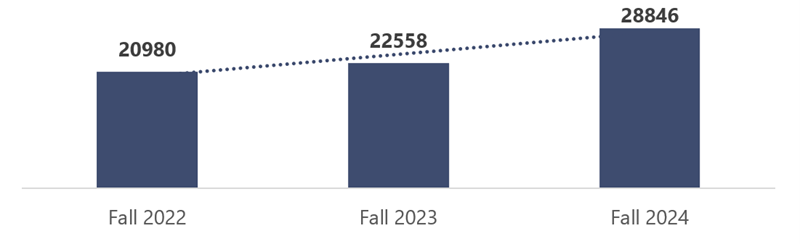 Figure 3 – Fall enrollment of students in engineering and related programs at community college grant participants.
The program delivered a rich mix of technical and professional workshops designed to enhance students' engagement and progress along their academic trajectories. Topics included CAD simulation using Autodesk Fusion, AI in engineering, nanorobotics, and project management, alongside sessions on resume writing, interviewing, and networking.
Post-event surveys indicated high satisfaction, with average scores ranging from 6.2 to 6.8 on a 7-point scale for relevance and quality. Students identified technical workshops and soft-skill sessions such as elevator pitch development as particularly valuable.
EMPOWER – A Scalable Model for Work-Based Learning
The EMPOWER program was designed to be easily replicated across industries, using a clear framework that aligns students’ knowledge and skills with employer needs and expectations. By integrating real-world skill development with structured support, the model addresses well documented barriers such as limited professional networks, lack of exposure to career pathways, and inequitable access to hands-on experience. Its emphasis on employer partnerships, consistent mentoring, and flexible implementation ensures it can be scaled while remaining responsive to both workforce demands and learner needs.
The EMPOWER program emerged as a cornerstone of the initiative, blending training in Computer-Aided Design (CAD), research methods, professional communication, critical thinking, and teamwork with project-based work experiences. Forty-four students completed work-based learning placements during Year 2, marking a 159% increase over Year 1.
Students who completed the EMPOWER program consistently reported increased confidence, improved technical proficiency, and a clearer sense of professional identity in engineering fields. “The EMPOWER program helped me gain valuable skills that will help me for a lifetime and provided me with an opportunity to use these skills to solve a real-world problem. It gave me a sense of belonging,” stated Michelle Rivera from Lone Star College in Cypress, Texas.
Faculty and Institutional Development
Community college faculty often struggle to access the full range of support and opportunities available to faculty at four-year institutions. To address this gap and understand its impact, AEP provided two complimentary ASME professional memberships per institution and funded faculty attendance at ASME’s Mechanical Engineering Education (MEEd) conference. Faculty cited these experiences as critical for integrating new tools and methods into instruction and for connecting classroom learning to current industry practices.
Advisory meetings further exposed faculty to resources such as AccessEngineering textbook repository, Ansys simulation software, Engineering for One Planet climate curriculum, and MathWorks educational tools, enabling enhanced curriculum alignment with employer expectations.
Competitions and Experiential Learning
ASME’s competition offerings of E-Fest Tech Connect, EFx, and E-Week Challenge provided a range of opportunities for students and young engineers from around the world to engage in virtual and in-person programs through which they complete technical challenges and competitions, build their resumes, meet with potential employers, and strengthen their identities as engineers. These programs served as a unique experiential component of AEP. The 2025 E-Week Challenge competition achieved record participation, with 126 student teams totaling 504 students from across 15 colleges, an increase from 88 teams, 176 students, and 9 colleges from 2024. Faculty and students emphasized that these competitions cultivated collaboration, problem-solving, and communication skills—competencies closely tied to workforce success.
The addition of a Fall Impromptu Challenge in 2024 extended engagement throughout the academic year and was well received for its creativity and accessibility. By conducting the challenge during the Fall Semester, faculty were able to encourage engagement and networking amongst students as well as show the value of engaging with ASME.
System-Level Partnerships and National Reach
Through targeted engagement with state and regional education systems, ASME established system-level agreements that opened CCEP access to over 45 additional colleges under an opt-in model. These partnerships marked a significant shift from individual to ecosystem-level collaboration, positioning CCEP for scalable national growth.
Challenges and Lessons Learned
Despite measurable progress, several challenges persisted across institutions and from year to year:- Faculty turnover and limited capacity sometimes hindered consistent engagement or resulted in newly developed capacity dissipating.
- Work-based learning barriers include geographic constraints and employer hesitancy as well as limited placement opportunities. The bulk of placements took place at the few institutions with robust local employer networks.
- Data collection inconsistencies across colleges impeded comprehensive tracking of student transfer and employment outcomes, and program staff were not equipped to fill these gaps.
- Scheduling conflicts reduced synchronous workshop attendance, underscoring the need for asynchronous delivery options. This is particularly relevant with a community college population that is often working outside of classes or performing family care and similar responsibilities.
These challenges highlight structural issues within the community college ecosystem rather than deficiencies in program design, reinforcing the value of AEP’s flexible engagement model approach.
Recommendations
Based on findings across both years, there are several proposed short-term and long-term strategies for ASME to implement to strengthen future AEP iterations.
Short-Term – next 1-3 years
- Expand Asynchronous Learning – Develop supplementary modular online toolkits and recorded workshops to accommodate student schedules and the various time zones.
- Leverage Digital Credentials – Introduce micro-credentials and digital badges to document skills and increase student engagement and motivation.
- Enhance Communication Channels – Implement a centralized monthly student newsletter to strengthen the sense of cross-campus collaboration and ensure that students and faculty have a robust sense of the opportunities available.
Long-Term – 3-5 years
- Strengthen Employer-Faculty Networks – Establish regional coordinators to build partnerships and streamline work-based learning, improving the work of work-based learning placement while reducing the loss of human capital when faculty leave a given institution.
- Adopt a Multi-Pronged Data Strategy – Integrate institutional reporting with external sources such as LinkedIn and the National Student Clearinghouse for robust longitudinal tracking.
- Scale Through System Partnerships – Replicate state and regional system-level agreements as a model for nationwide adoption.
Conclusion
The Accelerating Engineering Pathways for Career Technical Education Students in a COVID-Changed World initiative demonstrates that targeted interventions, when strategically aligned with institutional needs and industry expectations, can substantially strengthen community college students’ engineering education-to-workforce continuum.
Through evidence-based design, strong partnerships, and a commitment to equity, ASME’s model provides a scalable blueprint for engaging underrepresented students, empowering faculty, and transforming the community college role in STEM education. The AEP initiative affirms that sustainable, inclusive engineering pathways are not only possible but essential to meeting the technical workforce demands of a rapidly evolving economy.
References
Boston Consulting Group (2023, December 13). The US Needs More Engineers. What’s the Solution? https://www.bcg.com/publications/2023/addressing-the-engineering-talent-shortage
Bureau of Labor Statistics (2024, May 30). The STEM Labor Force: Scientists, Engineers, and Skilled Technical Workers. https://ncses.nsf.gov/pubs/nsb20245/representation-of-demographic-groups-in-stem