#36 RL-10 Rocket Engine
1958
First rocket engine to use high-energy liquid hydrogen as fuel
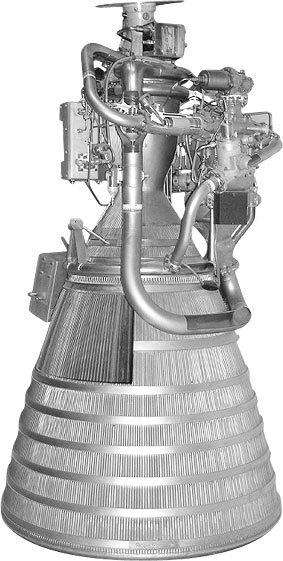 Rocket Engine, Liquid Fuel, Cutaway, RL-10. photo source: Nasm.si.edu
The RL-10, which served as the power plant for NASA's upper-stage Centaur space launch vehicle, was the first rocket engine to use high-energy liquid hydrogen as a fuel. It has provided precisely controlled, reliable power for lunar and planetary explorations. The RL-10 embodied numerous advanced design features, including multiple use of its fuel with the "bootstrap cycle." The RL-10 is also capable of multiple restarts in space, which enables positioning of satellites or further escape of Earth's gravity.
Design of the RL-10 began in the fall of 1958 at the Pratt & Whitney Aircraft Florida Research and Development Center. In the first flight demonstration on November 27, 1963, a pair of RL-10s successfully boosted a Centaur space vehicle into orbit around the earth. Two months later, on January 29, 1964, a six-engine cluster of RL-10s generated 90,000 pounds of thrust to lift the first test flight of the Saturn S-IV stage, pioneering hydrogen technology on the Saturn I booster. A mock up of the RL-10 is now at the aerospace museum at the Smithsonian Institution.

More Information
The Pratt Whitney Office
(not open to public)
West Palm Beach, FL
Owner, if different than above
Pratt and Whitney
Ceremony Notes
April 1979