Workforce Blog: Engineering Education Falls Short on GD&T
Workforce Blog: Engineering Education Falls Short on GD&T
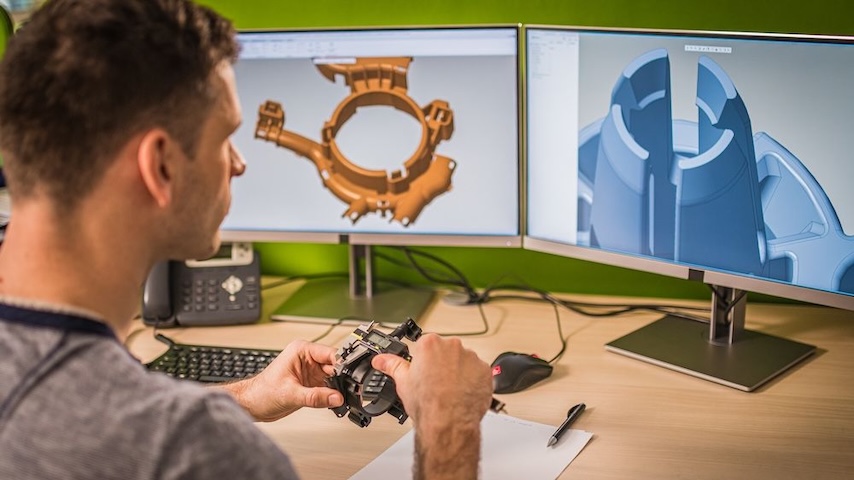
New research shows that most engineering programs omit fundamental GD&T concepts, likely contributing to a persistent workforce skills gap.
 Jaime Berez
Although this skills gap has been anecdotally observed, actual quantitative data on the subject is sparse. As far back as 1981, “graphics, drafting, and sketching” along with “codes and standards” have consistently been identified as major shortcomings in mechanical engineering programs. This suggests systemic issues in how engineering education addresses technical
 Rustin Webster
It’s not just inadequate coverage in engineering curricula. Evidence also suggests widespread deficiency among practicing engineers, which means the problem extends beyond new graduates and includes experienced professionals who may have never received proper training. In 2007, a paper titled, “The GD&T Knowledge Gap in Industry” made this very argument.The problem appears to persist today.
To uncover where some of the shortcomings are, we launched a study in 2025 to assess the current state of D&T pedagogy in post-secondary engineering
 Rudy Ottway
A prevalent issue
Despite not being rigorously documented, the D&T skills gap is considered common knowledge by industry and academia alike. Widespread prevalence of on-the-job training focused specifically on GD&T provides strong evidence of educational shortcomings. If graduates arrived adequately prepared, companies would not need to invest substantial resources in remedial training.From across the pond, German companies surveyed about tolerance engineering—which is an equivalent term encompassing both GD&T and tolerance stack-up analysis—noted that tolerancing principles were neither universally adopted nor seamlessly integrated into industrial practice. This may well indicate the skills gap is a global problem.
Multiple reasons for the gap have been suggested, from GD&T’s complex system of symbols, definitions, and practices, to the spatial visualization skills required, to the lack of appropriate instructional materials to teach it. Since CAD has become central to engineering curricula, it too may have inadvertently contributed to the problem. There is an intense focus on CAD modeling and given the ability to generate 2D views that import model dimensions automatically, this may have reduced emphasis on technical drawing and tolerancing.
Key findings
After surveying 67 engineering instructors who taught courses requiring students to understand, apply, or analyze D&T topics within the past six semesters, we determined that about 75 percent of the engineering and engineering technology programs in the United States evaluated in the survey require D&T in coursework and that GD&T is included as a course learning outcome in less than half of these courses. When GD&T is covered, it only receives about 15 hours of coursework on average, which means some fundamental concepts are often left by the wayside. Additionally, most D&T courses are taught to freshmen and sophomores as required classes, primarily alongside CAD and engineering drawing. Photo: Getty
One of the many challenges appears to be a lack of instructor expertise. While these instructors reported feeling competent teaching CAD, engineering drawings, and basic plus/minus tolerancing, they were far less confident with GD&T. Only 26.57 percent rated themselves as extremely competent in GD&T compared to 59.70 percent for basic tolerancing methods. Only three respondents held ASME GD&T certification.
Two fundamental concepts, which are essential concepts that underpin proper understanding of GD&T, received minimal coverage as well. The envelope principle (Rule #1) was covered in only 31 percent of courses and datum reference frames in just 43 percent of courses that covered D&T. Instructors also emphasized basic dimensioning rules and legacy plus/minus tolerancing methods over modern GD&T practices.
Instructors identified multiple challenges, including minimal instructional time and low student engagement, as well as limited accessibility to teaching tools beyond CAD and PowerPoint. Only about half of instructors used the actual ASME or ISO standards as teaching resources as well.

GDTP Certification
ASME’s latest GDTP professional certification exam (per ASME Y14.5-2018) is launching this spring. Join our waitlist to be among the first to apply.
Overall, there must be better alignment between academic preparation and industry expectations as well.
Next steps
While our past analysis revealed educational norms, we are now conducting a study to assess current industrial practices and workforce needs related to dimensioning and tolerancing (including GD&T) across all industries. To do that, we need your responses.Potential respondents may have roles in:
- Drafting/design,
- Engineering (design, analysis, manufacturing, quality, systems),
- Metrology/inspection, or
- Skilled manufacturing trades (machinist, cam programmer, etc.).
Follow the link below to take a quick 15-minute (or less) survey. Please share this survey with colleagues who qualify. (This survey is best viewed on a laptop or desktop computer. Mobile device view is not optimized.)
Jaime Berez is an assistant professor of mechanical engineering and engineering science at the University of North Carolina at Charlotte. Rustin Webster is an associate professor in the Purdue Polytechnic Institute (School of Engineering Technology) at Purdue University. Rudy Ottway is an associate professor of design and engineering technology at Murray State University.
New research shows that most engineering programs omit fundamental GD&T concepts, likely contributing to a persistent workforce skills gap.
Related Content


Apr 17, 2026
Future of Mechanical Engineering Education: Trends for 2026

Advance your engineering education approach by mastering leadership strategies that foster collaboration, curriculum flexibility, and student success.


Jul 23, 2026
Video: ASME Live Takes New Orleans

ASME Live is designed for engineers looking to build or maintain their skills in pressure vessels and piping, GD&T, and related specialties while connecting with peers and educators.

Jul 22, 2026
Training and Certifying GD&T: The Universal Language of Precision Manufacturing


As design, sourcing, and manufacturing grow ever more complex, Dean Odell explains why GD&T remains essential to clear engineering communication.


Feb 23, 2026
Podcast: Welding Pathways

A new series, “Meet Your Educator,” brings the stories and experiences of ASME’s educator community to ASME TechCast.