Nuclear Energy Outlook for 2026
Nuclear Energy Outlook for 2026
.png?width=854&height=480&ext=.png)
A realistic look at what’s advancing in nuclear energy in 2026, including SMRs, fusion milestones, and new reactor projects.
The “nuclear renaissance” is not a new idea. But history has shaped a more measured perspective on how quickly nuclear power can scale. Ambitious concepts often encounter familiar challenges: timelines, costs, regulation complexity, and moving projects from planning into construction. That doesn’t mean progress isn’t happening; it means it often looks quieter than expected.
Rather than asking whether nuclear will change everything this year, a more useful question is simpler: Which nuclear technologies are actually advancing in 2026?
MIT’s Future of Nuclear Power report in 2003 framed the opportunity clearly: nuclear could play a meaningful role in a low-carbon grid if challenges around cost, safety, waste, and institutional factors could be addressed. More than two decades later, those same considerations continue to influence how the industry evolves.
Accordingly, if progress is real, it should show up in defined milestones, funded programs, and physical infrastructure. Through that lens, the developments carrying into 2026 start to look less like vague headlines and more like slow but legitimate movement. In reality, today’s fusion work is incremental, engineering-heavy, and still searching for a clear commercial end state.
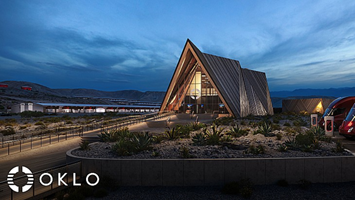 Rendering of Oklo's Aurora powerhouse. The company is to build and operate three fuel fabrication facilities to support its reactors. Image: Oklo
Many of last year’s headlines focused on familiar themes like small modular reactors, fusion, advanced fuels, and microreactors. Small modular reactors gained clearer project definition through federal funding decisions tied to specific utilities and sites. Fusion developers reported measurable experimental progress and secured targeted public funding.
Rendering of Oklo's Aurora powerhouse. The company is to build and operate three fuel fabrication facilities to support its reactors. Image: Oklo
Many of last year’s headlines focused on familiar themes like small modular reactors, fusion, advanced fuels, and microreactors. Small modular reactors gained clearer project definition through federal funding decisions tied to specific utilities and sites. Fusion developers reported measurable experimental progress and secured targeted public funding.
The Department of Energy selected companies including TRISO-X, Oklo, Terrestrial Energy, and Valar Atomics for advanced nuclear fuel line pilot projects aimed at demonstrating domestic fuel fabrication and qualification capabilities needed to support next-generation reactors. Across advanced reactor development more broadly, projects began moving from planning toward physical infrastructure, including construction on fuel facilities and demonstration systems.
Among the nuclear technologies under development, SMRs continue to be one of the most structured areas in terms of near-term planning. In December 2025, the Department of Energy announced up to $800 million in cost-shared funding for two SMR projects: one led by TVA at the Clinch River site in Tennessee and another led by Holtec tied to the Palisades site in Michigan. The announcement identified specific utilities, sites, and reactor designs, offering a clearer idea of how these projects are expected to move forward.
The SMR programs are also explicit about timelines, with initial operations generally projected for the early 2030s. Over the course of 2026, progress in this area is likely to focus on permitting activity, design refinement, supply-chain development, and workforce preparation. And while these are largely behind-the-scenes steps, they do represent the practical groundwork for future deployment.
The January 2026 Mechanical Engineering feature, “Fission Within Fusion,” examines the major fusion approaches currently being pursued—including tokamaks, stellarators, magnetized target fusion, and alternative confinement concepts—and explores the engineering challenges researchers are working to address within each. A growing number of startups are also pursuing alternative architectures outside the dominant tokamak model, including inertial electrostatic confinement and pulsed fusion concepts.
Helion is developing a field-reversed configuration system in which plasma rings are accelerated toward each other and merged to trigger fusion, with successive prototype machines (including Trenta and Polaris) designed to incrementally test performance and scalability.
Realta Fusion is advancing a magnetic mirror approach, sending plasma back and forth inside a cylindrical chamber rather than around a torus, with experiments conducted in partnership with the University of Wisconsin’s WHAM facility to inform the design of future machines.
Blue Laser Fusion is pursuing a laser-based inertial confinement concept inspired by optical cavity designs used in gravitational wave detectors, aiming to deliver frequent, lower-energy laser pulses rather than single massive shots.
And Zap Energy is developing a Z-pinch approach, using sheared plasma flow to stabilize confinement and reporting repeated plasma formation in its Century test platform as part of its engineering development path.
Some of the clearest indicators of progress are manifesting through structured programs. The Department of Energy’s Reactor Pilot Program includes a specific benchmark: selected projects are expected to achieve reactor criticality by July 4, 2026. Setting defined dates encourages technical maturity, coordination with regulators, and disciplined project development.
A similar dynamic can be seen in U.S. Army microreactor initiatives, which are organized around concrete operational needs rather than broad technological ambition. Programs tied to identified users and applications tend to bring greater clarity to engineering requirements and timelines, helping move concepts toward implementation.
Beyond program milestones and funding decisions, nuclear projects are also advancing through visible construction and installation activity.
Internationally, ITER (International Thermonuclear Experimental Reactor) continues to progress through complex assembly phases. The placement of additional vacuum vessel sector modules represents a substantial engineering step for a machine designed to test fusion physics at unprecedented scale. Although ITER is not intended as a commercial reactor, its progress contributes directly to the technical foundation needed for future systems.
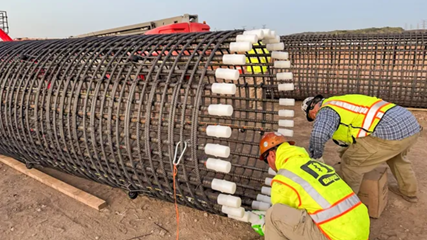 Workers preparing a rebar cage. Image: Kairos Power
In the United States, two projects are frequently cited for their 2026 timelines. Kairos Power’s Hermes demonstration reactor in Oak Ridge has entered visible construction phases on its foundation and safety-related structures as part of its development as a non-power test bed for fluoride salt-cooled reactor technology. Natura Resources reports having secured enriched molten salt allocation and stated it remains on track to deploy its MSR-1 molten salt research reactor in 2026.
Workers preparing a rebar cage. Image: Kairos Power
In the United States, two projects are frequently cited for their 2026 timelines. Kairos Power’s Hermes demonstration reactor in Oak Ridge has entered visible construction phases on its foundation and safety-related structures as part of its development as a non-power test bed for fluoride salt-cooled reactor technology. Natura Resources reports having secured enriched molten salt allocation and stated it remains on track to deploy its MSR-1 molten salt research reactor in 2026.
From an engineering perspective, meaningful signals over the coming year are likely to appear in continued follow-through on milestones, progress in licensing coordination, the evolution of early projects into repeatable models, and the development of supporting supply chains and workforce capacity.
The bottom line is: If a nuclear renaissance is taking shape, it is not likely to be defined by a single breakthrough moment or leap into sci fi, but by steady systems engineering and the accumulation of progress.
Sarah Alburakeh is strategic content editor.
Rather than asking whether nuclear will change everything this year, a more useful question is simpler: Which nuclear technologies are actually advancing in 2026?
Looking forward by looking back
MIT’s Future of Nuclear Power report in 2003 framed the opportunity clearly: nuclear could play a meaningful role in a low-carbon grid if challenges around cost, safety, waste, and institutional factors could be addressed. More than two decades later, those same considerations continue to influence how the industry evolves.Accordingly, if progress is real, it should show up in defined milestones, funded programs, and physical infrastructure. Through that lens, the developments carrying into 2026 start to look less like vague headlines and more like slow but legitimate movement. In reality, today’s fusion work is incremental, engineering-heavy, and still searching for a clear commercial end state.
Rendering of Oklo's Aurora powerhouse. The company is to build and operate three fuel fabrication facilities to support its reactors. Image: Oklo
The Department of Energy selected companies including TRISO-X, Oklo, Terrestrial Energy, and Valar Atomics for advanced nuclear fuel line pilot projects aimed at demonstrating domestic fuel fabrication and qualification capabilities needed to support next-generation reactors. Across advanced reactor development more broadly, projects began moving from planning toward physical infrastructure, including construction on fuel facilities and demonstration systems.
Small Modular Reactors (SMRs)
Among the nuclear technologies under development, SMRs continue to be one of the most structured areas in terms of near-term planning. In December 2025, the Department of Energy announced up to $800 million in cost-shared funding for two SMR projects: one led by TVA at the Clinch River site in Tennessee and another led by Holtec tied to the Palisades site in Michigan. The announcement identified specific utilities, sites, and reactor designs, offering a clearer idea of how these projects are expected to move forward.The SMR programs are also explicit about timelines, with initial operations generally projected for the early 2030s. Over the course of 2026, progress in this area is likely to focus on permitting activity, design refinement, supply-chain development, and workforce preparation. And while these are largely behind-the-scenes steps, they do represent the practical groundwork for future deployment.
Fusion progress
The January 2026 Mechanical Engineering feature, “Fission Within Fusion,” examines the major fusion approaches currently being pursued—including tokamaks, stellarators, magnetized target fusion, and alternative confinement concepts—and explores the engineering challenges researchers are working to address within each. A growing number of startups are also pursuing alternative architectures outside the dominant tokamak model, including inertial electrostatic confinement and pulsed fusion concepts.Helion is developing a field-reversed configuration system in which plasma rings are accelerated toward each other and merged to trigger fusion, with successive prototype machines (including Trenta and Polaris) designed to incrementally test performance and scalability.
Realta Fusion is advancing a magnetic mirror approach, sending plasma back and forth inside a cylindrical chamber rather than around a torus, with experiments conducted in partnership with the University of Wisconsin’s WHAM facility to inform the design of future machines.
Blue Laser Fusion is pursuing a laser-based inertial confinement concept inspired by optical cavity designs used in gravitational wave detectors, aiming to deliver frequent, lower-energy laser pulses rather than single massive shots.
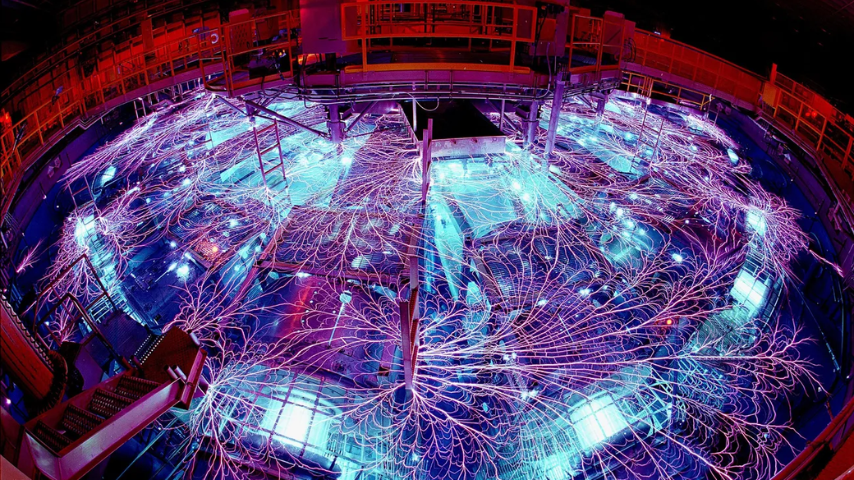
And Zap Energy is developing a Z-pinch approach, using sheared plasma flow to stabilize confinement and reporting repeated plasma formation in its Century test platform as part of its engineering development path.
Notable nuclear programs in 2026
Some of the clearest indicators of progress are manifesting through structured programs. The Department of Energy’s Reactor Pilot Program includes a specific benchmark: selected projects are expected to achieve reactor criticality by July 4, 2026. Setting defined dates encourages technical maturity, coordination with regulators, and disciplined project development.A similar dynamic can be seen in U.S. Army microreactor initiatives, which are organized around concrete operational needs rather than broad technological ambition. Programs tied to identified users and applications tend to bring greater clarity to engineering requirements and timelines, helping move concepts toward implementation.
Build it and energy will come
Beyond program milestones and funding decisions, nuclear projects are also advancing through visible construction and installation activity.Internationally, ITER (International Thermonuclear Experimental Reactor) continues to progress through complex assembly phases. The placement of additional vacuum vessel sector modules represents a substantial engineering step for a machine designed to test fusion physics at unprecedented scale. Although ITER is not intended as a commercial reactor, its progress contributes directly to the technical foundation needed for future systems.
Workers preparing a rebar cage. Image: Kairos Power
A look toward the future
The Department of Energy has communicated a long-term objective of tripling U.S. nuclear capacity by 2050. Whether such goals are achieved will depend on how effectively current projects, programs, and technologies progress through development and deployment.From an engineering perspective, meaningful signals over the coming year are likely to appear in continued follow-through on milestones, progress in licensing coordination, the evolution of early projects into repeatable models, and the development of supporting supply chains and workforce capacity.
The bottom line is: If a nuclear renaissance is taking shape, it is not likely to be defined by a single breakthrough moment or leap into sci fi, but by steady systems engineering and the accumulation of progress.
Sarah Alburakeh is strategic content editor.


As renewable energy gains momentum, oil and natural gas continue to remain primary global energy sources. This collection delves into latest digital trends enabling breakthroughs in energy transformation.