The Evolution of the Plug-In Hybrid
The Evolution of the Plug-In Hybrid
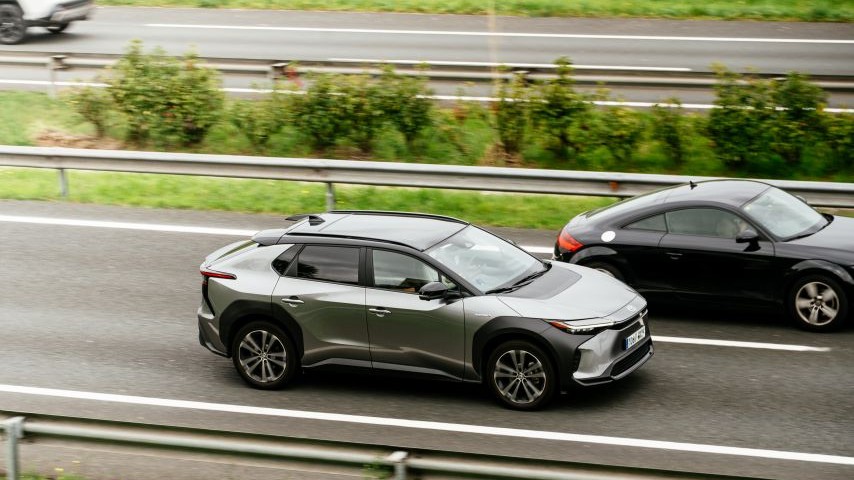
Toyota's six generations of hybrid technology demonstrate how continuous engineering refinement can reduce emissions while delivering value to drivers.
The road to lower emissions is not a one-way street. While much of the automotive industry is pursuing entirely new technologies, Toyota has taken a different approach: refining and scaling proven solutions. Built on decades of engineering experience and customer feedback, its latest vehicles demonstrate how familiar technology can still deliver meaningful emissions reductions.
“The story of plug-in hybrid electric vehicles—PHEVs—at Toyota is one of disciplined continuity,” said Brian Schneidewind, vice president of powertrain design at Toyota North America during his technical presentation at the inaugural ASME DRIVN conference in Detroit. “We chose to perfect a single power-split architecture, and each generation targeted a specific lever: higher voltage, larger displacement, miniaturization, higher motor output, and now silicon-carbide power electronics.”
“The story of plug-in hybrid electric vehicles—PHEVs—at Toyota is one of disciplined continuity,” said Brian Schneidewind, vice president of powertrain design at Toyota North America during his technical presentation at the inaugural ASME DRIVN conference in Detroit. “We chose to perfect a single power-split architecture, and each generation targeted a specific lever: higher voltage, larger displacement, miniaturization, higher motor output, and now silicon-carbide power electronics.”
Toyota’s sixth-generation hybrid system serves as a prime example of engineering innovation in automotive sustainability. By optimizing a successful technology, rather than making an entirely new one, engineers at Toyota are able to adjust to changing infrastructure and keep pace with new innovations, taking a multi-pathway approach to decarbonization.
“We believe this PHEV system can widely contribute to reducing real-world CO2 emissions and can be adopted as a practical and scalable solution toward carbon neutrality,” he said. That confidence is rooted in nearly three decades of hybrid development and continuous refinement.
“We believe this PHEV system can widely contribute to reducing real-world CO2 emissions and can be adopted as a practical and scalable solution toward carbon neutrality,” he said. That confidence is rooted in nearly three decades of hybrid development and continuous refinement.
Small advances, significant impact
Toyota’s investment in PHEVs began with the original Prius in 1997, which was profoundly successful and is still sold today. That led to the 2012 third-generation PHEV, taking advantage of an opportunity to combine the benefits of electric driving with the flexibility of a gasoline vehicle.
Since then, the technology has matured significantly. Built on its longstanding power-split hybrid architecture—a design that continuously distributes power instead of switching between powering the gasoline engine and electric motors—each iteration maintains the same system and updates the technology to increase fuel efficiency, durability, and overall value.
“Battery performance has improved, power electronics have become more efficient, and customers are increasingly comfortable with electrification. Together, those factors have created a strong environment for plug-in hybrid growth,” he said.
 The modern Toyota hybrid vehicle lineup. Credit: Brian Schneidewind
Those technical improvements have arrived at a time when consumer interest in electrified vehicles is accelerating. Customers want hybrid vehicles, with sales jumping about 36 percent year over year. In part, this is due to customers wanting the EV experience without the potential drawbacks of an electric-only vehicle. Recent technological advances combined with improved infrastructure to support EV growth positions PHEVs as an especially attractive option for consumers.
“For many customers, a plug-in hybrid can cover the entire daily commute on electricity alone but still provides the flexibility to take a long road trip without changing driving habits. That combination of electrification and convenience is a powerful advantage,” said Schneidewind.
Maintaining the same architecture allows the engine to operate in its most efficient range while electric motors provide propulsion or generate electricity. But it is the technological advancements built around that foundation, from silicon-carbide power electronics to a larger battery and integrated e-Axle, that define the capabilities of Toyota’s sixth-generation system.
Since then, the technology has matured significantly. Built on its longstanding power-split hybrid architecture—a design that continuously distributes power instead of switching between powering the gasoline engine and electric motors—each iteration maintains the same system and updates the technology to increase fuel efficiency, durability, and overall value.
“Battery performance has improved, power electronics have become more efficient, and customers are increasingly comfortable with electrification. Together, those factors have created a strong environment for plug-in hybrid growth,” he said.
The modern Toyota hybrid vehicle lineup. Credit: Brian Schneidewind
Those technical improvements have arrived at a time when consumer interest in electrified vehicles is accelerating. Customers want hybrid vehicles, with sales jumping about 36 percent year over year. In part, this is due to customers wanting the EV experience without the potential drawbacks of an electric-only vehicle. Recent technological advances combined with improved infrastructure to support EV growth positions PHEVs as an especially attractive option for consumers.
“For many customers, a plug-in hybrid can cover the entire daily commute on electricity alone but still provides the flexibility to take a long road trip without changing driving habits. That combination of electrification and convenience is a powerful advantage,” said Schneidewind.
Maintaining the same architecture allows the engine to operate in its most efficient range while electric motors provide propulsion or generate electricity. But it is the technological advancements built around that foundation, from silicon-carbide power electronics to a larger battery and integrated e-Axle, that define the capabilities of Toyota’s sixth-generation system.
The technology behind the transformation
The new system introduces several key upgrades, most notably replacing conventional silicon semiconductors in the Power Control Unit (PCU) with silicon carbide (SiC) devices. The PCU manages the flow of electricity between the battery, motor, generator, and engine, and the switch to SiC allows it to operate more efficiently with less energy lost as heat. The result is improved fuel economy, greater electric driving range, and stronger overall system performance.
“We wanted to make the vehicle behave more like a battery-electric vehicle in daily use,” said Schneidewind. “The latest generation has a much stronger electrical system, which allows drivers to accelerate quickly, merge onto highways, and handle demanding situations without requiring engine intervention.”

The semiconductor upgrade was only part of the equation. Toyota also reexamined how the system was packaged. E-Axle packaging—a system that integrates the car’s electric motor, PCU, inverter, and transaxle gears—introduces a more compact assembly, becoming more efficient through shorter electrical pathways, more space for batteries and passengers, and reduced vehicle weight. The improvement extends battery range and reduces carbon footprint.
Instead of one breakthrough leading to a new line of vehicles, small engineering advances have compounded over time, creating substantial change. Each step forward in automotive and battery technology can be applied to the same familiar system.
“Over time, we’ve been able to scale the technology across much larger vehicles while preserving the efficiency benefits. The capability and utility of Toyota’s hybrid systems have expanded dramatically since those early years,” said Schneidewind.
And Toyota sees plenty of room for further refinement. The team is now taking steps toward a seventh-generation PHEV. “The next generation will continue to benefit from advances in batteries, power electronics, and engine technology. The challenge is finding ways to integrate those improvements into a system that delivers greater efficiency, performance, and utility.”
“We wanted to make the vehicle behave more like a battery-electric vehicle in daily use,” said Schneidewind. “The latest generation has a much stronger electrical system, which allows drivers to accelerate quickly, merge onto highways, and handle demanding situations without requiring engine intervention.”
How Well Do You Know Mobility?
Test your engineering IQ and explore the innovations redefining mobility and transportation.
The semiconductor upgrade was only part of the equation. Toyota also reexamined how the system was packaged. E-Axle packaging—a system that integrates the car’s electric motor, PCU, inverter, and transaxle gears—introduces a more compact assembly, becoming more efficient through shorter electrical pathways, more space for batteries and passengers, and reduced vehicle weight. The improvement extends battery range and reduces carbon footprint.
Instead of one breakthrough leading to a new line of vehicles, small engineering advances have compounded over time, creating substantial change. Each step forward in automotive and battery technology can be applied to the same familiar system.
“Over time, we’ve been able to scale the technology across much larger vehicles while preserving the efficiency benefits. The capability and utility of Toyota’s hybrid systems have expanded dramatically since those early years,” said Schneidewind.
And Toyota sees plenty of room for further refinement. The team is now taking steps toward a seventh-generation PHEV. “The next generation will continue to benefit from advances in batteries, power electronics, and engine technology. The challenge is finding ways to integrate those improvements into a system that delivers greater efficiency, performance, and utility.”
Innovation starts with conversation
While Toyota’s innovations are the result of decades of engineering refinement, those advances are also shaped by a broader community of researchers and industry leaders sharing knowledge across the transportation ecosystem. The insights behind Toyota’s sixth-generation hybrid system are exactly the type of engineering discussions that make DRIVN valuable for transportation professionals.
“[ASME] DRIVN brings together research and development from automakers, national laboratories, and universities in one place. Those perspectives are often where the next wave of innovation begins, and it’s important for us to stay connected to those emerging ideas,” he said.
As the transportation industry works toward increasingly ambitious goals for emissions, fuel economy, affordability, and performance, conferences like ASME DRIVN provide a forum for sharing ideas, challenging assumptions, and accelerating innovation for generations to come.
From emerging technologies to real-world engineering solutions, the next generation of transportation ideas starts with technical conversations. Submit an abstract for ASME DRIVN 2027 and help drive the future of mobility.
Conner Allen is a writing specialist at ASME.
Toyota's six generations of hybrid technology demonstrate how continuous engineering refinement can reduce emissions while delivering value to drivers.

Related Content


Oct 21, 2026
ESOPs Makes Mechanical Engineers Stakeholders


Mechanical engineers are uniquely positioned to shift into fast-growing sectors.
Oct 21, 2026
Manufacturing Engineer Shares and Adapts

Connections are vital to create networking, training, and community engagement opportunities, along with access to critical resources.
Oct 19, 2026
Pivoting to a New Industry
Mechanical engineers are uniquely positioned to shift into fast-growing sectors.

Oct 16, 2026
ASME Names Leah Putman as President, Engineering for Change