Printing a Stronger Aluminum Alloy
Printing a Stronger Aluminum Alloy
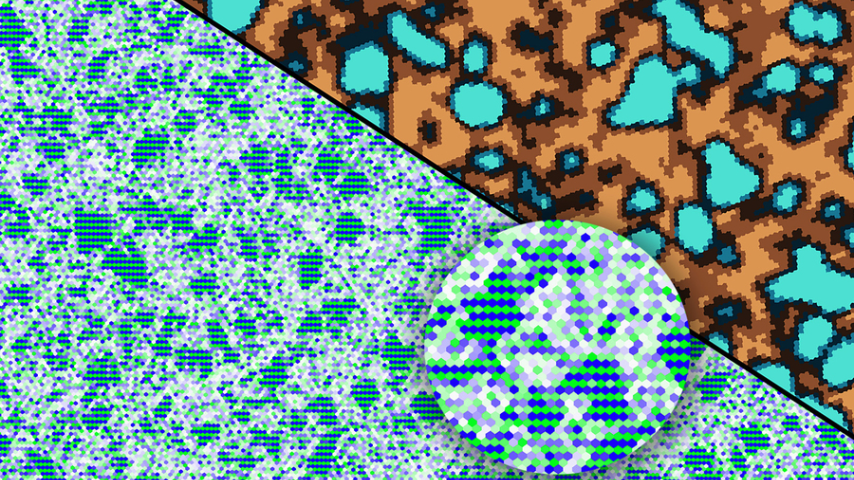
Combining machine learning with metal 3D printing, a materials scientist helped create a high-temperature aluminum alloy that is far stronger and more reliable than anything printable before.
Mohadeseh Taheri-Mousavi was a postdoctoral researcher in an additive manufacturing laboratory led by John Hart at the Massachusetts Institute of Technology in 2020 when she did something optional that changed the course of her career: She audited a class.
During the class, materials scientist Greg Olson challenged students to think computationally about alloy design. Introducing a group project, he posed a question that inspired her: Could they design an aluminum alloy stronger than the strongest printable aluminum alloy available at the time?
The class project did not result in a new alloy. But Taheri-Mousavi began to see an underexplored path: using machine learning to manage the extreme complexity of alloy design. With the support of Hart, who heads the mechanical engineering department at MIT, that idea evolved into a new printable aluminum alloy that can withstand high temperatures and is five times stronger than the same composition made using traditional casting.
At the time, additive manufacturing was emerging as a method for producing metal components. Rather than pouring molten metal into a mold, the process builds parts layer by layer, using a laser to melt metal powder with micron-scale precision. The technique allows engineers to fabricate complex geometries directly from digital designs.
But geometry was not the field’s main limitation, Taheri-Mousavi said. Reliability was.
“The whole community can print with micron-size resolution, but we cannot certify the properties,” said Taheri-Mousavi, now an assistant professor at Carnegie Mellon University. “Without consistent and predictable material properties, printable metals can’t be used in critical applications.”
Discover the Benefits of ASME Membership
Much of the early research in additive manufacturing focused on replicating the properties of cast alloys, which are well understood and widely used. Taheri-Mousavi saw an opportunity to move beyond that goal. Additive manufacturing, she said, fundamentally changes how metals solidify.
“We are now manufacturing alloys in a different way,” she said. “The question is, can we use these new knobs [ways of controlling the process] and achieve properties we could not achieve with casting?”
One application stood out: high-temperature aluminum alloys. Aluminum, the second-most widely used structural metal after steel, is prized for its light weight and strength but typically loses performance at elevated temperatures. In casting, adding high-melting-point elements needed for heat resistance creates problems because the heavier elements tend to sink as the molten aluminum cools.
Additive manufacturing sidesteps that issue by melting and solidifying material layer by layer, preventing sedimentation. Olson had already patented a high-temperature aluminum alloy designed for additive manufacturing and challenged the class to improve it.
With six students adjusting dozens of interdependent parameters, progress was slow. Improving one property often degraded another. The experience reinforced Taheri-Mousavi’s belief that the problem was well suited to machine-learning tools capable of exploring high-dimensional design spaces more intelligently than trial and error.
With Hart’s backing, Taheri-Mousavi continued the work after the class ended, combining computational simulations with machine-learning algorithms.
“Professor Hart believed in the idea when nobody thought it would end in something novel,” she said.
You Might Also Like: Volumetric Printing with Light
Traditionally, designing a new alloy would require brute force trial and error or simulating large possible combinations of elements. Using about 3,000 lines of code she wrote over three months, she narrowed roughly one million possible alloy compositions to 40 candidates. Simulations identified an optimal combination of aluminum and five other elements.
The key was microstructure. Aluminum’s strength depends heavily on tiny features called precipitates; the smaller and more densely packed they are, the stronger the material. Machine learning helped identify which elements controlled precipitate formation during the rapid solidification of 3D printing and how to tune their interactions.
“Machine-learning tools can point you to where you need to focus,” she said. “They let you explore the design space more efficiently.”
To make the alloy, the team used laser powder bed fusion, a form of additive manufacturing with extremely fast cooling rates. Rapid solidification limits growth and promotes the formation of metastable structures that influence final material strength.
Collaborators in Germany printed samples and sent them to MIT for testing. The results matched predictions. The printed alloy was five times stronger than a cast version of the same composition and 50 percent stronger than the alloy designed without machine learning. Its room-temperature strength remained stable after heat treatments up to 400 °C—unusually high for aluminum.
The innovation, Taheri-Mousavi said, lies not only in the alloy, but also in the method. By integrating machine learning, physics-based simulations, and additive manufacturing, the research offers a new framework for materials design.
The work has potential applications in aviation. Today, most jet engine fan blades are made from titanium, which is more than 50 percent heavier and up to 10 times more expensive than aluminum. Titanium also exceeds the performance requirements for the temperatures those blades experience.
Replacing titanium with a high-strength, high-temperature aluminum alloy could significantly reduce aircraft weight and cost.
“If we can use lighter, high-strength materials, this would save a considerable amount of energy for the transportation industry,” Taheri-Mousavi said.
Her team is now applying the same machine-learning framework to optimize additional properties and explore other alloy systems.
“My dream,” she said, “is that one day, passengers looking out their airplane window will see fan blades made from our aluminum alloys.”
Annemarie Mannion is a technology writer in Chicago.
During the class, materials scientist Greg Olson challenged students to think computationally about alloy design. Introducing a group project, he posed a question that inspired her: Could they design an aluminum alloy stronger than the strongest printable aluminum alloy available at the time?
The class project did not result in a new alloy. But Taheri-Mousavi began to see an underexplored path: using machine learning to manage the extreme complexity of alloy design. With the support of Hart, who heads the mechanical engineering department at MIT, that idea evolved into a new printable aluminum alloy that can withstand high temperatures and is five times stronger than the same composition made using traditional casting.
At the time, additive manufacturing was emerging as a method for producing metal components. Rather than pouring molten metal into a mold, the process builds parts layer by layer, using a laser to melt metal powder with micron-scale precision. The technique allows engineers to fabricate complex geometries directly from digital designs.
But geometry was not the field’s main limitation, Taheri-Mousavi said. Reliability was.
“The whole community can print with micron-size resolution, but we cannot certify the properties,” said Taheri-Mousavi, now an assistant professor at Carnegie Mellon University. “Without consistent and predictable material properties, printable metals can’t be used in critical applications.”
Discover the Benefits of ASME Membership
Much of the early research in additive manufacturing focused on replicating the properties of cast alloys, which are well understood and widely used. Taheri-Mousavi saw an opportunity to move beyond that goal. Additive manufacturing, she said, fundamentally changes how metals solidify.
“We are now manufacturing alloys in a different way,” she said. “The question is, can we use these new knobs [ways of controlling the process] and achieve properties we could not achieve with casting?”
One application stood out: high-temperature aluminum alloys. Aluminum, the second-most widely used structural metal after steel, is prized for its light weight and strength but typically loses performance at elevated temperatures. In casting, adding high-melting-point elements needed for heat resistance creates problems because the heavier elements tend to sink as the molten aluminum cools.
Additive manufacturing sidesteps that issue by melting and solidifying material layer by layer, preventing sedimentation. Olson had already patented a high-temperature aluminum alloy designed for additive manufacturing and challenged the class to improve it.
With six students adjusting dozens of interdependent parameters, progress was slow. Improving one property often degraded another. The experience reinforced Taheri-Mousavi’s belief that the problem was well suited to machine-learning tools capable of exploring high-dimensional design spaces more intelligently than trial and error.
With Hart’s backing, Taheri-Mousavi continued the work after the class ended, combining computational simulations with machine-learning algorithms.
“Professor Hart believed in the idea when nobody thought it would end in something novel,” she said.
You Might Also Like: Volumetric Printing with Light
Traditionally, designing a new alloy would require brute force trial and error or simulating large possible combinations of elements. Using about 3,000 lines of code she wrote over three months, she narrowed roughly one million possible alloy compositions to 40 candidates. Simulations identified an optimal combination of aluminum and five other elements.
The key was microstructure. Aluminum’s strength depends heavily on tiny features called precipitates; the smaller and more densely packed they are, the stronger the material. Machine learning helped identify which elements controlled precipitate formation during the rapid solidification of 3D printing and how to tune their interactions.
“Machine-learning tools can point you to where you need to focus,” she said. “They let you explore the design space more efficiently.”
To make the alloy, the team used laser powder bed fusion, a form of additive manufacturing with extremely fast cooling rates. Rapid solidification limits growth and promotes the formation of metastable structures that influence final material strength.
Collaborators in Germany printed samples and sent them to MIT for testing. The results matched predictions. The printed alloy was five times stronger than a cast version of the same composition and 50 percent stronger than the alloy designed without machine learning. Its room-temperature strength remained stable after heat treatments up to 400 °C—unusually high for aluminum.
The innovation, Taheri-Mousavi said, lies not only in the alloy, but also in the method. By integrating machine learning, physics-based simulations, and additive manufacturing, the research offers a new framework for materials design.
The work has potential applications in aviation. Today, most jet engine fan blades are made from titanium, which is more than 50 percent heavier and up to 10 times more expensive than aluminum. Titanium also exceeds the performance requirements for the temperatures those blades experience.
Replacing titanium with a high-strength, high-temperature aluminum alloy could significantly reduce aircraft weight and cost.
“If we can use lighter, high-strength materials, this would save a considerable amount of energy for the transportation industry,” Taheri-Mousavi said.
Her team is now applying the same machine-learning framework to optimize additional properties and explore other alloy systems.
“My dream,” she said, “is that one day, passengers looking out their airplane window will see fan blades made from our aluminum alloys.”
Annemarie Mannion is a technology writer in Chicago.
Combining machine learning with metal 3D printing, a materials scientist helped create a high-temperature aluminum alloy that is far stronger and more reliable than anything printable before.

Freelance writer based in Chicago
Related Content

Jun 23, 2026
Defects to Boost Strength

New research into the tiniest of metals has revealed that defects can make a nanoscaled object stronger.
Jun 9, 2026
The Next Era of Programmable Matter

Researchers have unlocked robotic building blocks using electrically heated elements that turn solids to liquids, which allows the material to mimic a wide range of mechanical behaviors.
May 26, 2026
Researchers Develop ‘Super Foam’ That Could Reduce Injuries and Save Lives

Using a process called IFAM, Texas A&M researchers created a hybrid composite that is tunable, lightweight, and ultra-durable.

May 12, 2026
The End of Brittle Solar


Flexible carbon nanotubes replace brittle ITO in perovskite solar cells, boosting durability, efficiency, and lowering costs for next generation renewables.